
Microneedling vs PRP for Hair Loss: Which Is Better?
Microneedling vs PRP for hair loss compared: how each works, results, recovery, and which treatment suits your stage of hair loss best.
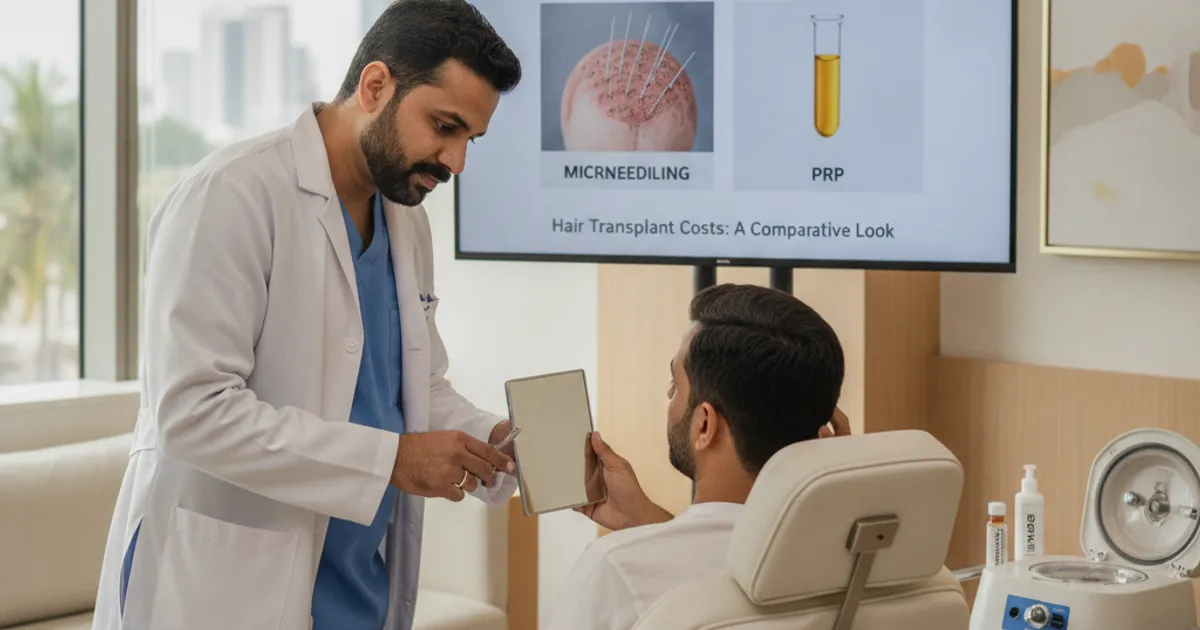
If you are weighing up microneedling vs PRP for hair loss, the short answer is that they do different jobs. Microneedling creates controlled micro-injuries in the scalp to trigger healing and improve absorption of topical treatments, while PRP injects concentrated growth factors from your own blood directly into the follicle environment. Many clinics now combine the two, and for a lot of people that combination outperforms either one alone.
What Is Microneedling?
Microneedling uses a device fitted with fine needles that stamp or roll across the scalp, creating thousands of tiny punctures in the upper layers of skin. These micro-wounds prompt the body to send collagen, elastin, and growth factors to the area, which can support a healthier environment for hair follicles. It is also used to help topical products like minoxidil penetrate deeper than they would on intact skin.
- Typically performed in a clinic, though at-home rollers and pens exist
- Sessions are usually short, often under half an hour
- Frequency depends on needle depth and your practitioner's protocol
- Minimal downtime — mild redness for a day or two is common
- Frequently combined with minoxidil, PRP, or other topicals
What Is PRP?
PRP stands for platelet-rich plasma. A small amount of your blood is drawn, spun in a centrifuge to separate the plasma and platelets, and then injected into the scalp at the level of the hair follicles. The platelets release growth factors that can stimulate dormant follicles, improve blood supply, and slow down miniaturisation in pattern hair loss. Because it uses your own blood, allergic reaction risk is very low.
- Involves a blood draw plus a centrifuge spin
- Injected with a fine needle or sometimes a micro-injection gun
- Typical protocol is a series of sessions spaced about a month apart, then maintenance
- Scalp can be tender for a day or two afterwards
- Sometimes paired with microneedling to boost absorption
Key Differences: Microneedling vs PRP
The core difference is mechanism. Microneedling works from the outside in — it disrupts the skin surface to trigger a healing response and open channels for topicals. PRP works from the inside out — it delivers concentrated growth factors straight to the follicle. That is why PRP is generally described as producing more noticeable regrowth on its own, while microneedling is often used as a supporting treatment rather than a standalone solution.
| Factor | Microneedling | PRP |
|---|---|---|
| How it works | Micro-injuries to scalp skin | Growth factors injected into scalp |
| Invasiveness | Low — surface level | Moderate — involves injections |
| Session time | Short — typically under 30 minutes | Longer — includes blood draw and spin |
| Pain | Mild, numbing cream often used | Mild to moderate, numbing cream recommended |
| Downtime | Mild redness for a day or two | Tenderness or swelling for a day or two |
| Typical frequency | Varies by protocol and needle depth | Monthly series, then periodic maintenance |
| Best for | Early thinning, boosting topicals | Early to moderate pattern hair loss |
| Cost per session | Lower | Higher |
| Can combine? | Yes — often done with PRP | Yes — often done with microneedling |
Cost: Microneedling vs PRP
Costs vary widely by city, clinic, and how many sessions you book. Microneedling is consistently the cheaper option per session because it does not require a blood draw, a centrifuge, or the same level of clinical setup. PRP costs more because of the equipment, consumables, and the fact that a trained practitioner is injecting across the whole scalp. Package pricing is common for both, and many clinics discount when you book a course of sessions upfront. Because pricing is so location-dependent, it is worth checking with clinics in your area for exact figures.
Results and Recovery: What to Expect
Neither treatment works overnight. Hair grows slowly, and you need to give follicles a full growth cycle before judging results. PRP tends to show visible changes a bit sooner in most people, while microneedling results build gradually and are often most noticeable when combined with minoxidil. Recovery for both is short, but PRP tends to leave the scalp more tender because of the injections.
- Microneedling: redness for a day or two, no real downtime
- PRP: tenderness, mild swelling, and possible bruising for a day or two
- First visible changes: PRP may show earlier; microneedling alone builds gradually
- Full results: several months, with maintenance sessions to hold gains
- Both work best alongside a broader plan — medication, nutrition, and treating any underlying cause
Which One Should You Choose?
There is no single right answer — it depends on your stage of hair loss, budget, and how much time you can commit. Microneedling is a sensible starting point if you are early in the process, want something low-cost, or are already using minoxidil. PRP is often described as the stronger standalone option if you want more noticeable regrowth and are comfortable with injections. If you can afford it, combining the two in one session is what many clinics recommend, because microneedling can help PRP spread more evenly across the scalp.
- Choose microneedling if: you are in early thinning, want a low-cost add-on, or are using topicals
- Choose PRP if: you want a stronger standalone treatment and can commit to a monthly course
- Choose both if: you want the best chance of visible improvement and your clinic offers combined sessions
- Consider a transplant instead if: follicles are already gone in the areas you want to restore — no injectable or needling treatment can bring back a dead follicle
Frequently Asked Questions
Can you do microneedling and PRP in the same session?
Yes, and many clinics do exactly that. Microneedling is often performed first to create channels in the scalp, then PRP is applied or injected. Some practitioners believe this improves absorption and spreads the PRP more evenly. Ask your clinic whether they offer a combined protocol and how they price it.
Is microneedling alone enough to regrow hair?
For most people, microneedling on its own produces modest results. It works best as a supporting treatment alongside minoxidil, PRP, or other therapies. If regrowth is your main goal, PRP or a combined approach is usually more effective.
How many PRP sessions do you need before seeing results?
A typical course is a series of sessions spaced about a month apart, followed by periodic maintenance. Most people notice early changes after a few months, with fuller results at six months or later.
Does either treatment work for advanced hair loss?
Both work best when follicles are still alive but miniaturised. In advanced hair loss where follicles have stopped producing hair entirely, neither microneedling nor PRP will bring them back. At that stage, a hair transplant is usually the more realistic option.
More Guides
- Clascoterone vs Minoxidil: Which Is Better for Hair Loss?
Clascoterone vs minoxidil: compare how they work, costs, results, and side effects to decide which hair loss treatment suits you best.
- Finasteride 5 mg vs 1 mg: Which Dose Works for Hair?
Finasteride 5 mg vs 1 mg for hair loss: compare effectiveness, side effects, cost, and which dose makes sense for you. Get the facts before you decide.
- Beard Transplant vs Scalp Transplant: A Complete Guide
Compare beard vs scalp transplants: costs, recovery, results, pain, and candidacy to decide which hair restoration procedure fits your goals.
- Hair Transplant vs Medication: Which Is Better for You?
Compare hair transplant vs medication for hair loss. Learn costs, results, recovery, and which option suits early, moderate, or advanced balding.