
Norwood 5 Treatment Options: What Actually Works
Norwood 5 hair loss treatment options explained: medication, transplants, and combination plans, plus what to expect at each stage.
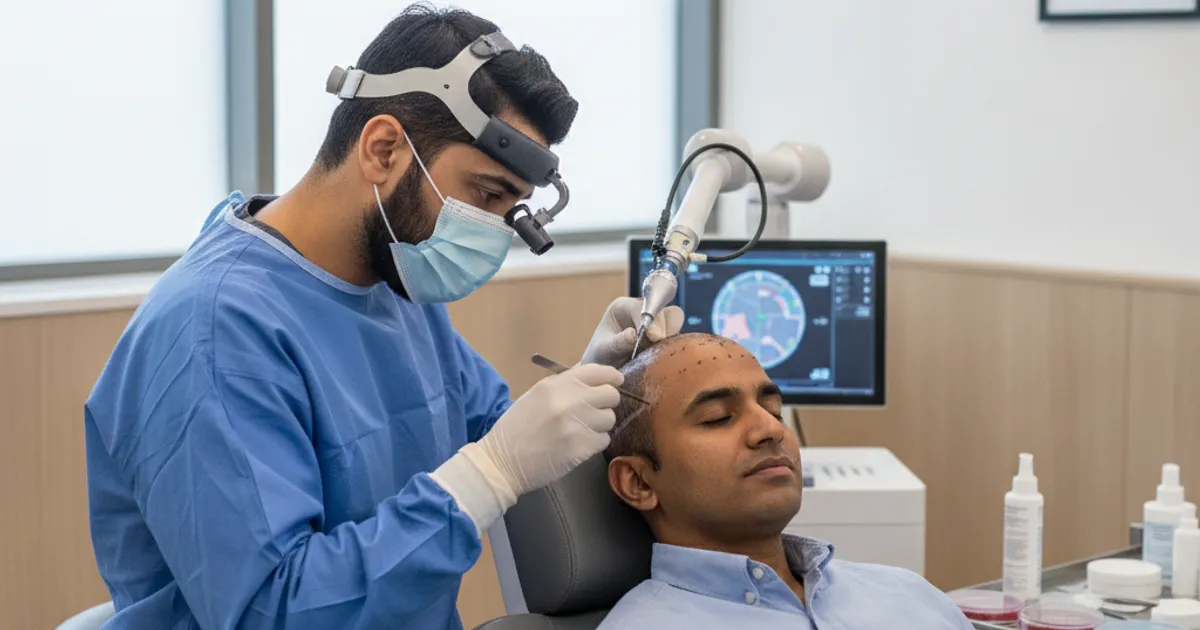
Norwood 5 treatment options come down to three realistic paths: medication to slow further loss, a hair transplant to rebuild the hairline and mid-scalp, or a combination of both. Most men at Norwood 5 get the best long-term result from medication plus a strategically planned transplant, not one or the other on its own.
What Is Norwood 5 Hair Loss?
The Norwood scale runs from 1 (no visible loss) to 7 (extensive loss). Norwood 5 sits in the moderate-to-advanced range. At this stage you typically have a receded hairline, a thinning or bald crown, and a bridge of hair separating the two that is getting narrower. The donor area at the back and sides is usually still strong enough for surgery, which is what separates Norwood 5 from Norwood 6 and 7.
- Hairline: noticeably receded at the temples, often with a deep M shape
- Mid-scalp: thinning but usually still has some coverage
- Crown: bald patch that is expanding and starting to merge with the front
- Donor area: generally still dense enough for a transplant
What Are the Main Norwood 5 Treatment Options?
There are four options worth considering at this stage. They are not mutually exclusive, and in practice most people combine at least two of them.
| Treatment | What It Does | Best For | Limitations |
|---|---|---|---|
| Finasteride | Blocks DHT to slow or stop further loss | Almost everyone at Norwood 5 | Daily pill, possible side effects, no regrowth of dead follicles |
| Minoxidil | Improves blood flow, thickens existing hair | Thinning mid-scalp and crown | Twice-daily application, results fade if stopped |
| Hair transplant (FUE or FUT) | Moves permanent donor hair to bald areas | Rebuilding hairline and mid-scalp | Limited donor supply, cost, needs maintenance meds |
| Scalp micropigmentation (SMP) | Tattooed dots mimic stubble or density | Camouflage, or donor scar concealment | Cosmetic only, no real hair, needs touch-ups |
Is a Hair Transplant Worth It at Norwood 5?
Yes, for most people with a healthy donor area. Norwood 5 is often considered a good stage for surgery: there is enough loss to justify the procedure, but enough donor hair to get meaningful coverage. The goal is not a teenage hairline. It is a mature, age-appropriate hairline with density through the front and mid-scalp, and a crown that may need a second session later.
- Realistic outcome: restored hairline and mid-scalp, thinner crown
- Second procedure: sometimes needed later for the crown
- Maintenance: finasteride and/or minoxidil long term
How Much Does Norwood 5 Treatment Cost?
Costs scale with the number of grafts needed, which tracks the stage of loss. The figures below are averaged case pricing medians for each stage, so you can see how Norwood 5 sits relative to earlier and later loss.
Medication vs Transplant: Which Comes First?
Medication comes first, almost always. Start finasteride (and minoxidil if you tolerate it) and give it time to work. This stabilises your loss and shows you what your baseline really is. Then plan surgery around what is left. Doing it the other way round is how people end up needing a second transplant sooner than expected.
Medication only
Low monthly cost
- ✓ Slows or stops further loss
- ✓ Can thicken existing hair
- ✓ No surgery, no downtime
- ✓ Cannot regrow hair in bald areas
Medication + transplant
One-off surgical cost plus monthly medication
- ✓ Restores hairline and mid-scalp
- ✓ Protects transplanted and native hair
- ✓ Best long-term coverage at Norwood 5
- ✓ Requires surgery and recovery time
How Do You Choose a Clinic for Norwood 5?
Norwood 5 is not a beginner case. You want a surgeon who regularly handles moderate-to-advanced loss and can show you before-and-after photos of similar patients. Ask about graft numbers, how they plan the hairline, and whether they recommend medication as part of the plan. If a clinic promises a full head of hair from a small number of grafts, walk away.
89% of Istanbul clinics on Clinic Reccy offer Free Consultation
92% of Istanbul clinics on Clinic Reccy offer Airport Transfers
What Results Can You Realistically Expect?
At Norwood 5, a good result means a natural hairline, decent density through the front and mid-scalp, and a crown that looks thinner but not bald. You will not get back the density you had at 20. What you can get is a look that reads as a normal head of hair at normal viewing distance, which is what most people actually want.
- Months 1 to 3: shock loss, then shedding of transplanted hairs
- Months 4 to 6: new growth starts, looks thin and patchy
- Months 9 to 12: most of the result is visible
- Months 12 to 18: final density and maturation
Frequently Asked Questions
Can Norwood 5 hair loss be reversed without surgery?
Partially. Finasteride and minoxidil can slow or stop further loss and thicken existing hair, but they cannot regrow hair in areas that are already bald. At Norwood 5, medication is best used alongside a transplant, not instead of one.
How many grafts do I need for Norwood 5?
The exact number depends on your donor density, hair calibre, and how much crown coverage you want. A surgeon will confirm this at consultation.
Will I need a second hair transplant later?
Often, yes. The crown tends to keep thinning, and many Norwood 5 patients have a second smaller session later. Staying on finasteride reduces how soon that happens.
Is Norwood 5 too late for a hair transplant?
No. Norwood 5 is a common and generally good stage for surgery because the donor area is usually still strong. Norwood 6 and 7 are where donor supply becomes the limiting factor.
More Guides
- Hair Transplant and Blood Thinners: Safety and Timing
Can you have a hair transplant on blood thinners? Learn why they matter, which ones raise bleeding risk, how long to stop before surgery, and when to restart.
- Finasteride and PSA Testing: What You Need to Know
Finasteride lowers PSA levels, so your test results need careful interpretation. Learn how finasteride affects PSA, the adjustment factor, and what to tell your
- Can You Cure a Receding Hairline? What's Realistic
Can you cure a receding hairline? Learn what's realistic with medications, transplants, and lifestyle changes, plus expected results and costs.
- Minoxidil Hair Thinning Before Growth: Is It Normal?
Is minoxidil hair thinning before growth normal? Yes, it's a common sign the treatment is working. Learn why it happens, how long it lasts, and when to worry.