
Can Norwood 6 Hair Loss Be Treated Without Surgery?
Norwood 6 without surgery: explore medications, PRP, laser therapy, hair systems and realistic results. Learn when a transplant may be the better option.
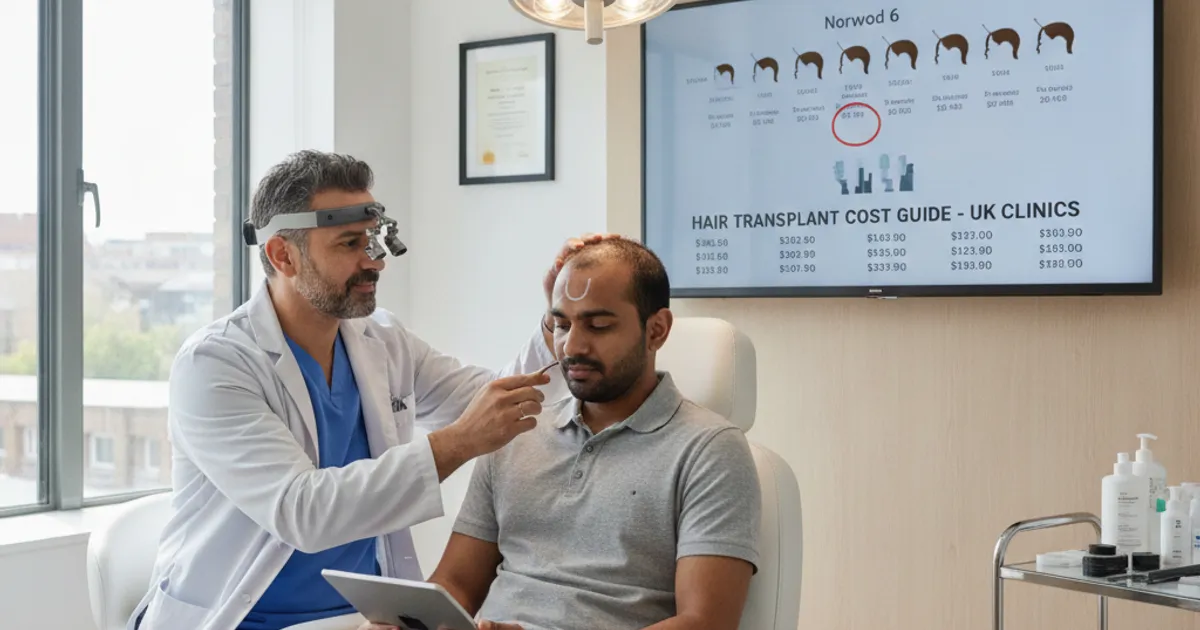
Can Norwood 6 hair loss be treated without surgery?
Norwood 6 is advanced male pattern baldness. At this stage, you have significant hair loss across the top of the scalp, a receding hairline, and often only a horseshoe-shaped band of hair remaining around the sides and back. It is a challenging stage to treat, and many men wonder if surgery is the only real option.
The short answer: yes, Norwood 6 can be treated without surgery, but the results are usually limited to slowing further loss, thickening existing hair, and improving coverage cosmetically. Non-surgical options rarely regrow a full head of hair at this stage.
- Medications like finasteride and minoxidil can slow or stop further hair loss and may thicken remaining hair.
- Low-level laser therapy and PRP (platelet-rich plasma) can improve hair density in some cases, but evidence is mixed.
- Hair systems and concealers can provide immediate cosmetic coverage without surgery.
- Realistic expectations are key: non-surgical treatments work best for maintaining what you have, not restoring a full hairline.
What non-surgical options exist for Norwood 6?
There are several non-surgical approaches for Norwood 6 hair loss. Each works differently, and results vary widely depending on how much active hair you still have and how you respond to treatment.
| Treatment | How it works | Typical results | Best for |
|---|---|---|---|
| Finasteride | Blocks DHT, the hormone that shrinks hair follicles | Slows loss, may regrow some hair | Men with some active follicles |
| Minoxidil | Increases blood flow and prolongs growth phase | Thickens existing hair, minor regrowth | Early to moderate loss, can help at Norwood 6 |
| Low-level laser therapy | Stimulates follicles with red light | Mixed evidence, possible density improvement | Those wanting a drug-free option |
| PRP injections | Growth factors from your own blood | May improve density, not hairline restoration | Combining with other treatments |
| Hair systems | Prosthetic hairpiece glued or taped to scalp | Full cosmetic coverage immediately | Anyone wanting a non-surgical full look |
| Concealers | Fibers or sprays that cling to existing hair | Temporary thickening, not for bare scalp | Men with some hair to work with |
- Medications are the most evidence-based non-surgical option for slowing hair loss.
- Laser therapy and PRP are often used as add-ons, not stand-alone fixes.
- Hair systems give the most dramatic cosmetic improvement without surgery.
- Concealers only work if you have enough hair for the fibers to attach to.
How effective are medications for Norwood 6?
Medications like finasteride and minoxidil are the first line of defence for male pattern baldness. At Norwood 6, they are unlikely to regrow a full head of hair, but they can still be valuable. Finasteride can slow or stop further loss in many men, and minoxidil can thicken the hair you still have. The key is to start early and stay consistent. Results take at least 6 to 12 months to show.
- Finasteride: many men see slowed hair loss after 1-2 years of use.
- Minoxidil: some users experience regrowth or thickening.
- Both work best on thinning areas, not completely bald patches.
- Side effects are possible but uncommon; discuss with a doctor.
What about low-level laser therapy and PRP?
Low-level laser therapy (LLLT) and platelet-rich plasma (PRP) are popular non-surgical treatments. LLLT uses red light to stimulate hair follicles, while PRP involves injecting concentrated growth factors from your own blood into the scalp. Both have shown some promise in studies, but results are inconsistent, especially for advanced hair loss like Norwood 6.
| Treatment | Evidence level | Typical cost (USD) | Sessions needed |
|---|---|---|---|
| Low-level laser therapy | Moderate for early loss, limited for Norwood 6 | Device cost varies; clinic sessions priced per visit | 3+ times per week, ongoing |
| PRP injections | Moderate, best combined with other treatments | Priced per session; varies by clinic | 3–4 initial sessions, then maintenance every 3–6 months |
Can hair systems or concealers work for Norwood 6?
Yes, hair systems and concealers can be effective cosmetic solutions for Norwood 6. A hair system is a custom-made hairpiece that is attached to your scalp, giving the appearance of a full head of hair. Concealers like fibers or sprays work by clinging to existing hair to make it look thicker. For Norwood 6, concealers are less effective because you need enough hair for the fibers to attach to. Hair systems, on the other hand, can provide a full look regardless of how much hair you have.
- Hair systems: immediate, full coverage; require regular maintenance and replacement every 2-4 weeks.
- Concealers: best for thinning areas, not bare scalp; can look unnatural if overused.
- Both are non-surgical and reversible, but require ongoing cost and upkeep.
- Hair systems can be a good option if you want a non-surgical full head of hair.
What results can you realistically expect without surgery?
At Norwood 6, non-surgical treatments are unlikely to restore a full head of hair. The best-case scenario is slowing further loss, thickening the hair you still have, and improving coverage cosmetically. Many men use a combination of medications, PRP, and hair systems to achieve a look they are happy with. But if you are expecting a full, dense hairline without surgery, you will likely be disappointed.
- Medications: can slow loss and thicken existing hair, but not regrow bald areas.
- PRP and LLLT: may improve density slightly, but results vary.
- Hair systems: provide immediate cosmetic coverage, but require maintenance.
- Concealers: temporary and only work with some existing hair.
- Realistic goal: maintain and enhance, not fully restore.
When should you consider a hair transplant instead?
If you want a permanent, natural-looking restoration of hair, a hair transplant is often the most effective option for Norwood 6. A skilled surgeon can redistribute hair from the back and sides of your scalp to the balding areas. However, not everyone is a candidate: you need enough donor hair, and your expectations must be realistic. A transplant at Norwood 6 usually requires a large number of grafts and may need two sessions. If you are unsure, consult with a clinic that specialises in advanced hair loss.
Frequently asked questions
Can Norwood 6 hair loss be reversed without surgery?
It cannot be fully reversed, but non-surgical treatments can slow further loss and improve the appearance of existing hair. Full regrowth of a bald area is not possible without surgery.
What is the best non-surgical treatment for Norwood 6?
Finasteride and minoxidil are the most evidence-based options. PRP and low-level laser therapy can be added, but results are less predictable. Hair systems offer the most dramatic cosmetic improvement.
How much do non-surgical treatments cost for Norwood 6?
Costs vary widely depending on the treatment and clinic. Medications are typically a monthly expense, PRP is priced per session, and hair systems have upfront and maintenance costs. It adds up over time.
Is a hair transplant better than non-surgical options for Norwood 6?
For permanent, natural-looking restoration, a hair transplant is usually more effective. But it depends on your donor hair and expectations. Non-surgical options can complement a transplant or be used if you are not a candidate.
More Guides
- Hair Transplant and Blood Thinners: Safety and Timing
Can you have a hair transplant on blood thinners? Learn why they matter, which ones raise bleeding risk, how long to stop before surgery, and when to restart.
- Finasteride and PSA Testing: What You Need to Know
Finasteride lowers PSA levels, so your test results need careful interpretation. Learn how finasteride affects PSA, the adjustment factor, and what to tell your
- Can You Cure a Receding Hairline? What's Realistic
Can you cure a receding hairline? Learn what's realistic with medications, transplants, and lifestyle changes, plus expected results and costs.
- Minoxidil Hair Thinning Before Growth: Is It Normal?
Is minoxidil hair thinning before growth normal? Yes, it's a common sign the treatment is working. Learn why it happens, how long it lasts, and when to worry.