
Norwood 6 Hair Transplant: Grafts, Cost, and Results
Norwood 6 hair transplant explained: candidacy, graft numbers, costs, and realistic results. Get the facts before you book a consultation.
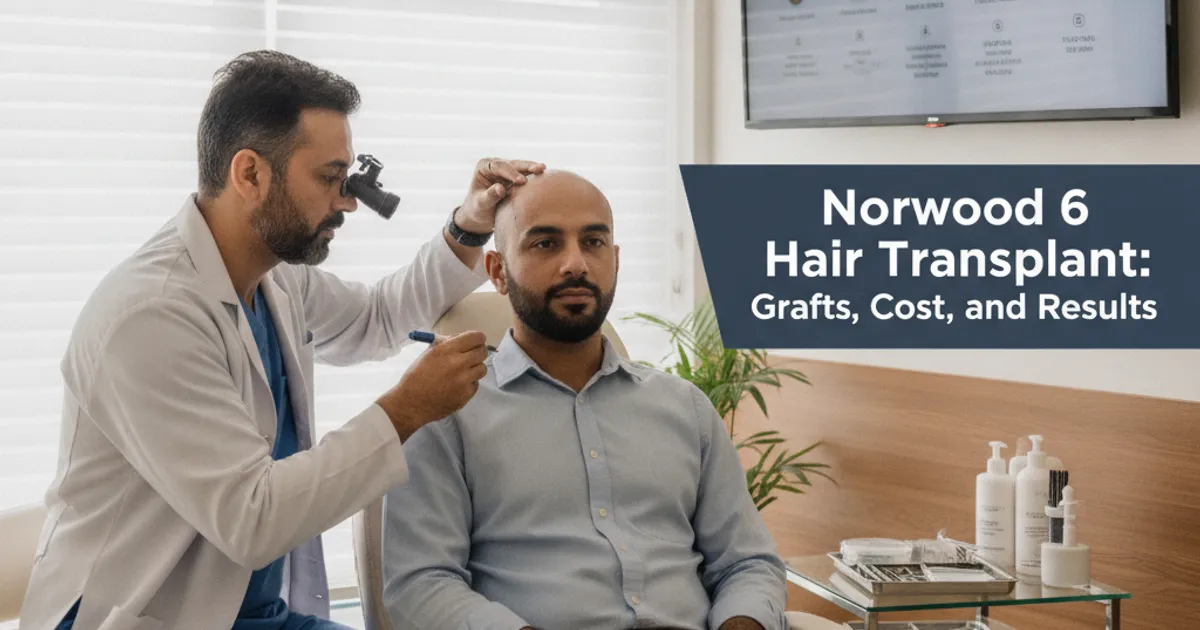
Norwood 6 Hair Transplant: What You Need to Know
A Norwood 6 hair transplant is a major restoration procedure for advanced hair loss. It typically requires a large number of grafts to rebuild a hairline, mid-scalp, and crown. The goal is not a teenage hairline but a natural, age-appropriate frame that covers the most visible areas. Because donor hair is limited, planning and surgeon skill matter more than at any earlier stage.
If you are researching Norwood 6 hair transplant options, you probably have two big questions: am I a candidate, and what will it cost? This guide answers both, plus graft estimates, realistic results, and how to pick a clinic. We also cover the difference between Norwood 6 and Norwood 7, since that line changes your treatment plan.
What Is a Norwood 6 Hair Transplant?
The Norwood scale measures male pattern baldness from minimal loss to extensive loss. Norwood 6 sits near the top: you have lost most hair on the top of the scalp, with a bridge of hair sometimes remaining between the front and crown. The sides and back still have donor hair, but the safe zone is narrower than in earlier stages.
A Norwood 6 hair transplant uses follicular unit extraction (FUE) or follicular unit transplantation (FUT) to move hair from the back and sides to the bald areas. Because the area to cover is large, surgeons often prioritise the front and mid-scalp first, then use remaining grafts for the crown. Some clinics combine surgery with medication to protect existing hair.
Am I a Candidate for a Norwood 6 Hair Transplant?
Most men with Norwood 6 loss are candidates if they have enough healthy donor hair and realistic expectations. But candidacy is not automatic. A surgeon will check your donor density, scalp laxity, and whether your hair loss has stabilised. If you are still losing hair rapidly, you may need medication first.
- Good donor density: enough usable grafts in the safe zone to cover the bald area.
- Stable hair loss: minimal change over recent months.
- Realistic goals: accepting a mature hairline rather than a low, dense one.
- Good general health: no uncontrolled bleeding disorders or scalp infections.
- Willingness to use medication: finasteride or minoxidil can protect non-transplanted hair.
If your donor area is thin or you have signs of Norwood 7, a surgeon may recommend a more conservative plan or discuss alternative options like a hair system. Always get a professional assessment before committing.
How Many Grafts Are Needed for Norwood 6?
Graft numbers vary by hair calibre, colour contrast, and the size of the bald area. For Norwood 6, most surgeons plan a large number of grafts in one or two sessions. The table below shows typical ranges based on the stage of hair loss.
| Stage of Hair Loss | Typical Graft Range | Sessions Needed |
|---|---|---|
| Early (Norwood 2–3) | Varies by case | 1 session |
| Moderate (Norwood 4–5) | Varies by case | 1–2 sessions |
| Advanced (Norwood 6–7) | Large number of grafts | 2 sessions often recommended |
Remember: more grafts does not always mean better results. Overharvesting the donor area can leave it looking thin. A good surgeon balances coverage with long-term donor health.
What Does a Norwood 6 Hair Transplant Cost?
Cost depends on the number of grafts, clinic location, and surgeon experience. Prices vary widely between countries and clinics. Below are average case prices by stage of hair loss, based on Clinic Reccy data.
These figures are guides, not quotes. Your final price will depend on your specific graft count and whether you need multiple sessions. Always ask for a written quote that includes follow-up care.
What Results Can You Expect from a Norwood 6 Transplant?
Results for Norwood 6 are transformative but not magical. You will not get back the density you had at 18. What you can expect is a restored hairline, improved coverage on top, and a more balanced look. The crown often needs a second session for full coverage.
- Hairline restoration: a natural, slightly receded frame that suits your age.
- Mid-scalp coverage: significant improvement in the front and middle areas.
- Crown coverage: partial to full, depending on graft availability.
- Donor area: may look slightly thinner but usually not noticeable.
- Timeline: initial growth in the first few months, full results after a year or more.
Managing expectations is key. A Norwood 6 transplant is about improvement, not perfection. Most patients are happy with the change, but it helps to look at before-and-after photos of similar cases.
How to Choose a Clinic for Norwood 6 Hair Transplant
Advanced cases require an experienced surgeon. Not every clinic handles Norwood 6 well. Look for doctors who specialise in high-graft-count procedures and show consistent results. Avoid clinics that promise a dense hairline or quote unusually low prices.
- Check the surgeon's credentials and whether they are registered with a recognised body.
- Ask to see before-and-after photos of Norwood 6 patients specifically.
- Read reviews on independent platforms, not just the clinic's website.
- Confirm who performs the surgery: the doctor or technicians?
- Ask about the clinic's policy on revisions and follow-up care.
For a broader view of options, see our guide to hair transplant clinics in Turkey. It covers costs, patient rights, and what to look for.
Norwood 6 vs Norwood 7: What's the Difference?
Norwood 7 is the most advanced stage of hair loss. The key difference is donor availability. In Norwood 6, you still have a decent band of hair on the sides and back. In Norwood 7, that band narrows, and the crown drops further. This affects how many grafts can be safely harvested.
| Feature | Norwood 6 | Norwood 7 |
|---|---|---|
| Hair loss pattern | Front, mid-scalp, and crown bald; bridge may remain | Extensive loss; only a horseshoe band remains |
| Donor area | Moderate to good density | Limited density; may be insufficient for full coverage |
| Typical graft count | Large number of grafts | Very large number of grafts (if possible) |
| Sessions needed | Often 2 sessions | May require 2–3 sessions or be deemed unsuitable |
| Realistic outcome | Good coverage with a mature hairline | Limited coverage; may need a hair system or scalp micropigmentation |
If you are borderline Norwood 6/7, a surgeon may recommend a conservative plan that preserves donor hair for future loss. Always get a second opinion if you are unsure.
Frequently Asked Questions
Can a Norwood 6 get a full head of hair back?
No. A Norwood 6 transplant can restore a hairline and significant coverage, but it will not give you the density of a full head of hair. The goal is improvement, not reversal.
How many grafts for Norwood 6 is too many?
There is no fixed number, but overharvesting the donor area can risk donor shock and poor growth. Most surgeons prefer to split the procedure into two sessions for better results.
Is a Norwood 6 transplant worth it?
For most men with realistic expectations, yes. It can dramatically improve appearance and confidence. But it requires commitment to aftercare and possibly medication.
How long does a Norwood 6 transplant take?
A single session typically takes several hours. If two sessions are needed, they are usually spaced several months apart.
For a detailed breakdown of costs by country and clinic, see our hair transplant cost guide. It covers everything from consultation fees to aftercare.
More Guides
- Hair Transplant and Blood Thinners: Safety and Timing
Can you have a hair transplant on blood thinners? Learn why they matter, which ones raise bleeding risk, how long to stop before surgery, and when to restart.
- Finasteride and PSA Testing: What You Need to Know
Finasteride lowers PSA levels, so your test results need careful interpretation. Learn how finasteride affects PSA, the adjustment factor, and what to tell your
- Can You Cure a Receding Hairline? What's Realistic
Can you cure a receding hairline? Learn what's realistic with medications, transplants, and lifestyle changes, plus expected results and costs.
- Minoxidil Hair Thinning Before Growth: Is It Normal?
Is minoxidil hair thinning before growth normal? Yes, it's a common sign the treatment is working. Learn why it happens, how long it lasts, and when to worry.