
PRP Centrifuge for Hair Restoration: How It Works
PRP centrifuge explained: how it separates platelets for hair restoration, the procedure, recovery, results, costs, and who it suits.
What Is a PRP Centrifuge?
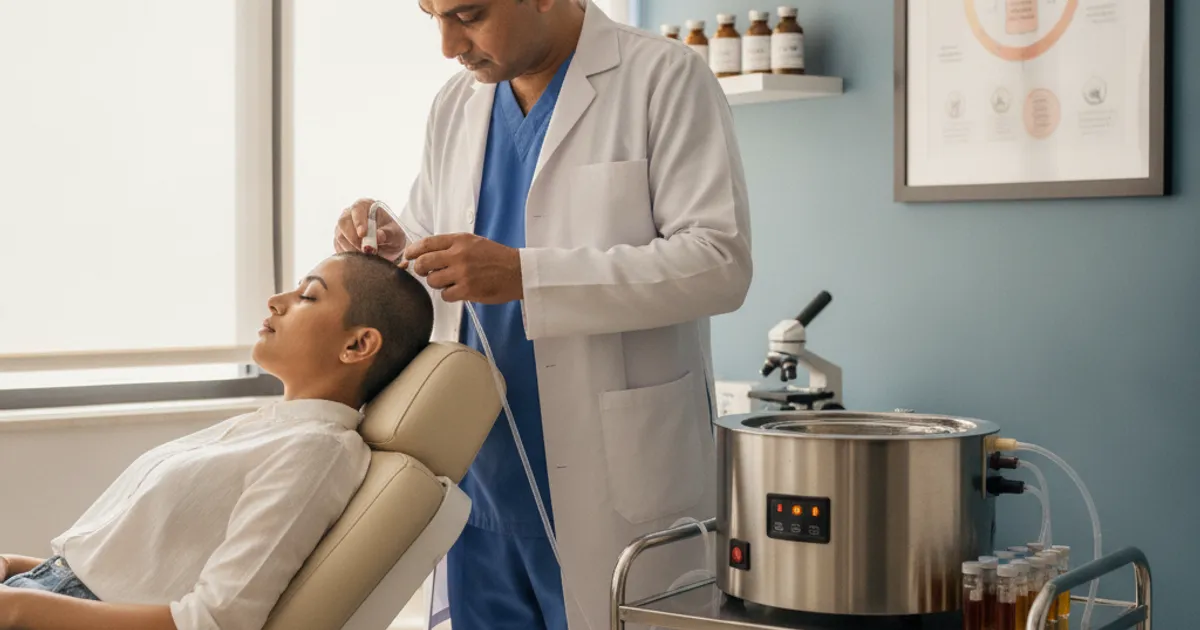
A PRP centrifuge is a laboratory-grade spinning device used to separate your blood into its component parts. In hair restoration, it's the machine that turns a small vial of your blood into platelet-rich plasma (PRP) — a concentrated dose of growth factors that gets injected into the scalp to stimulate hair follicles. Without a centrifuge, you can't make PRP. It's not a treatment on its own; it's the equipment that makes the treatment possible.
The device works on a simple principle: spin a liquid fast enough and denser components move outward while lighter ones stay near the center. Blood separates into three layers — red blood cells at the bottom, a thin buffy coat of white blood cells and platelets in the middle, and plasma on top. The centrifuge is calibrated to isolate that middle layer along with the plasma, giving you a platelet concentration higher than what circulates in your bloodstream.
- Centrifuges vary in speed (RPM), spin time, and rotor design — all of which affect the final platelet concentration.
- Some systems use a single spin; others use a double-spin protocol to achieve a higher concentration.
- The device itself is typically a benchtop unit about the size of a small microwave.
- Many clinics use closed-system kits where blood is drawn, spun, and processed in a sterile, sealed container.
- The quality of the centrifuge and the protocol used can make a noticeable difference in the consistency of the PRP.
How a PRP Centrifuge Works During Hair Restoration
The centrifuge is only one part of the PRP process, but it's the step that determines whether you get a usable concentration of growth factors. Here's how it fits into a typical hair restoration session.
The PRP Procedure: Step-by-Step
From your perspective as a patient, the centrifuge is invisible — you just see a small tube of blood go into a machine and come out as a golden-colored liquid. The full appointment usually takes under an hour, depending on how many injections are needed.
- Most people need a series of sessions spaced several weeks apart.
- Maintenance sessions are typically recommended at regular intervals.
- PRP is often combined with hair transplant surgery to support graft survival and healing.
- Some clinics offer PRP as a standalone treatment; others use it as an adjunct to medication or surgery.
Recovery After PRP with a Centrifuge
Recovery from PRP is minimal compared to surgery. There are no incisions, no stitches, and no general anesthesia. Most people return to work or normal activities the same day. The main thing you'll notice is some tenderness and possibly mild swelling at the injection sites.
- Mild redness, swelling, or tenderness at injection sites for a day or two.
- A headache or scalp tightness is possible but usually resolves within a day.
- Avoid washing your hair for a short period, depending on your clinic's instructions.
- Skip strenuous exercise, alcohol, and anti-inflammatory medications for a day or two.
- No sun exposure or harsh chemicals on the scalp for a few days.
- You can usually resume normal hair care within a couple of days.
Results and Realistic Expectations
PRP isn't a magic wand. It can improve hair density and thickness in some people, but results vary widely. The best candidates are usually people with early-stage thinning rather than advanced baldness. PRP works by stimulating existing follicles — it can't revive follicles that have completely stopped producing hair.
- Some people notice reduced shedding within a few weeks.
- Visible improvement in hair density often takes several months.
- Results are typically modest — think thickening and slowing loss, not full regrowth.
- PRP is often most effective when combined with minoxidil, finasteride, or a hair transplant.
- Response varies by individual; some people see little to no change.
- Maintenance sessions are needed to sustain results.
| Timeframe | What You Might Notice |
|---|---|
| 1–2 weeks | Minimal change; possible mild scalp tenderness |
| 4–6 weeks | Reduced shedding in some cases |
| 3–4 months | Early signs of thickening or new growth |
| 6–12 months | Peak visible results with continued sessions |
| 12+ months | Maintenance required to preserve gains |
Who Is a Good Candidate for PRP?
PRP isn't for everyone. It tends to work best for people with active, thinning hair rather than completely bald areas. Your candidacy depends on the cause and stage of your hair loss, your overall health, and your expectations.
- People with early to moderate androgenetic alopecia (male or female pattern hair loss).
- Those with diffuse thinning rather than large bald patches.
- People looking to complement a hair transplant or medication regimen.
- Individuals with healthy blood and no clotting disorders.
- Non-smokers tend to respond better.
- Not recommended for people with active scalp infections, blood disorders, or certain cancers.
| Candidate Profile | Likely Suitability |
|---|---|
| Early thinning, healthy | Good candidate |
| Moderate thinning, on medication | Good candidate as adjunct |
| Advanced baldness with no active follicles | Poor candidate |
| Active scalp infection | Not suitable until resolved |
| Blood clotting disorder | Not suitable |
| Pregnant or breastfeeding | Not recommended |
Cost of PRP Centrifuge Treatment
The cost of PRP hair restoration varies by clinic, location, and how many sessions you need. The centrifuge itself isn't billed separately — it's part of the overall PRP treatment fee. PRP is typically priced per session or as a package, not as a case-priced procedure like surgery.
Standalone PRP sessions typically cost less than a full hair transplant, but they also require multiple visits. If PRP is part of a transplant package, the cost is usually bundled into the surgical fee. Always ask for a breakdown of what's included — some clinics charge separately for PRP, medications, and follow-up visits.
PRP vs. Other Hair Restoration Options
PRP is one option among several. It's less invasive than surgery but also less dramatic in its results. Here's how it stacks up against the main alternatives.
| Treatment | Invasiveness | Typical Results | Maintenance |
|---|---|---|---|
| PRP | Minimal (injections) | Modest thickening, reduced shedding | Regular sessions |
| Hair transplant | Surgical | Permanent hair in transplanted areas | Minimal after healing |
| Minoxidil | Topical | Slows loss, some regrowth | Daily use |
| Finasteride | Oral | Slows loss, some regrowth | Daily use |
| Low-level laser therapy | Non-invasive | Modest improvement | Regular sessions |
- PRP is often used alongside minoxidil or finasteride for better results.
- Hair transplants can restore hair in bald areas; PRP cannot.
- PRP has fewer side effects than oral medications for some people.
- Combining PRP with a transplant may improve graft survival and healing.
- No single treatment works for everyone — a combination approach is common.
Choosing a Clinic for PRP Hair Restoration
Not all PRP treatments are created equal. The centrifuge, the protocol, and the experience of the injector all affect your results. When you're comparing clinics, ask specific questions about how they prepare and deliver PRP.
- Ask which centrifuge system they use and whether it's FDA-cleared for PRP preparation.
- Find out if they use a single- or double-spin protocol.
- Ask how many PRP sessions they typically recommend and how far apart.
- Check whether PRP is included in a transplant package or billed separately.
- Look for clinics with experience treating your type of hair loss.
- Read reviews and ask to see before-and-after photos of PRP patients.
Frequently Asked Questions About PRP Centrifuges
Is the centrifuge painful?
No. You don't feel the centrifuge at all — it's just a machine that spins a tube of your blood. The only discomfort is the initial blood draw and the injections into your scalp.
Can I get PRP without a centrifuge?
No. The centrifuge is what separates the platelets from the rest of your blood. Without it, you can't concentrate the growth factors needed for PRP therapy.
How many PRP sessions will I need?
Most clinics recommend an initial series of sessions spaced several weeks apart, followed by maintenance sessions at regular intervals. Your exact protocol depends on your hair loss and response.
Does PRP work for everyone?
No. PRP tends to work best for people with early to moderate thinning and active hair follicles. It's less effective for advanced baldness where follicles have stopped producing hair.
More Guides
- Hair Transplant for Curly Hair: Graft and Technique Tips
A plain-English guide to hair transplants for curly hair: how surgeons adapt graft harvesting and placement, recovery, results, costs, and who it suits.
- How Long Does a Hair Transplant Last? Long-Term Durability
How long does a hair transplant last? We explain the procedure, recovery, durability, costs by stage of hair loss, and how it compares to alternatives.
- Hair Transplant Revision: When a Second Procedure Makes Sense
Considering a hair transplant revision? Learn how a second procedure works, who it suits, recovery, results, and costs. Expert explainer from Clinic Reccy.
- Hair Transplant for Norwood 6 and 7: What's Possible
A clear look at hair transplant options for Norwood 6 and 7 hair loss: graft limits, staging, recovery, costs, and realistic results.