
Receding Hairline Corners: Why They Go First and What to Do
Receding hairline corners explained: causes, symptoms, diagnosis, and treatment options including hair transplant, finasteride, minoxidil, and PRP.
What Are Receding Hairline Corners?
Receding hairline corners — often called temple recession or a maturing hairline — is the gradual thinning and loss of hair at the two front corners of the scalp, above the temples. It's one of the earliest and most common signs of male pattern baldness (androgenetic alopecia), though it can affect anyone. The hairline doesn't move back evenly; instead, the corners retreat first, creating a widow's peak or an M-shaped hairline over time. For many people, this is the first visible change in a slow, progressive process that can continue for years or decades.
Why the Corners Go First: The Biology of Hair Loss
The hair at your temples is genetically more sensitive to dihydrotestosterone (DHT), a hormone derived from testosterone. DHT binds to receptors in hair follicles and gradually shrinks them — a process called miniaturization. Over time, the hair grows back thinner, shorter, and lighter until the follicle stops producing visible hair altogether. The corners of the hairline are hit first because the follicles there have a higher concentration of DHT-sensitive receptors compared to the back and sides of the scalp, which are typically resistant to DHT. That's why hair on the sides and back often remains for life, and why those areas are the preferred donor zones for hair transplants.
- DHT sensitivity: Temple follicles have more androgen receptors, making them vulnerable earlier.
- Miniaturization: Affected hairs shrink with each growth cycle until they stop growing.
- Growth cycle disruption: DHT shortens the anagen (growth) phase and lengthens the telogen (resting) phase.
- Genetic predisposition: Inherited traits determine how sensitive your follicles are to DHT and at what age loss begins.
- Donor dominance: Hair from the back and sides is usually DHT-resistant, which is why it survives and can be transplanted.
Causes of Receding Hairline Corners
The primary cause is genetics — specifically, a combination of inherited genes that make certain hair follicles sensitive to DHT. But genetics isn't the whole story. Several other factors can trigger, accelerate, or worsen corner recession. Understanding what's driving your hair loss helps you choose the right treatment.
- Genetics (androgenetic alopecia): The most common cause. You can inherit the trait from either side of your family.
- Hormonal changes: DHT is the main driver, but other hormonal shifts (thyroid issues, puberty, menopause) can affect hair.
- Age: The risk and severity increase with age, though recession can start in your late teens or early twenties.
- Stress: Severe physical or emotional stress can push hair into a shedding phase (telogen effluvium), which may unmask or speed up genetic thinning.
- Nutritional deficiencies: Low iron, vitamin D, zinc, or protein can weaken hair and make recession more noticeable.
- Medical conditions: Alopecia areata, scalp infections, or autoimmune disorders can cause hair loss that mimics or overlaps with pattern baldness.
- Medications: Some drugs (certain antidepressants, blood thinners, anabolic steroids) can contribute to hair thinning.
- Traction and styling: Tight hairstyles, frequent heat, or chemical treatments can damage follicles, especially around the hairline.
Symptoms and Stages: Recognizing the Progression
Receding hairline corners don't happen overnight. They follow a pattern that doctors classify using staging systems like the Norwood scale for men and the Ludwig scale for women. The earliest sign is usually a slight thinning at the temples, which can be easy to miss. As it progresses, the corners deepen, the hairline moves back, and the top of the scalp may start to thin. Here's a simplified breakdown of what you might see at each stage.
| Stage | What You See | What's Happening |
|---|---|---|
| Early | Slight thinning at the temples; hairline looks a bit uneven or M-shaped. | Miniaturization has started. Follicles are shrinking but still producing hair. |
| Moderate | Clearly receded corners; noticeable widow's peak; top of scalp may thin. | More follicles have miniaturized. Hairline is visibly higher and narrower. |
| Advanced | Deep recession; hairline and crown may connect; large bald areas. | Many follicles have stopped producing hair. Donor area may still be healthy. |
How Receding Hairline Corners Are Diagnosed
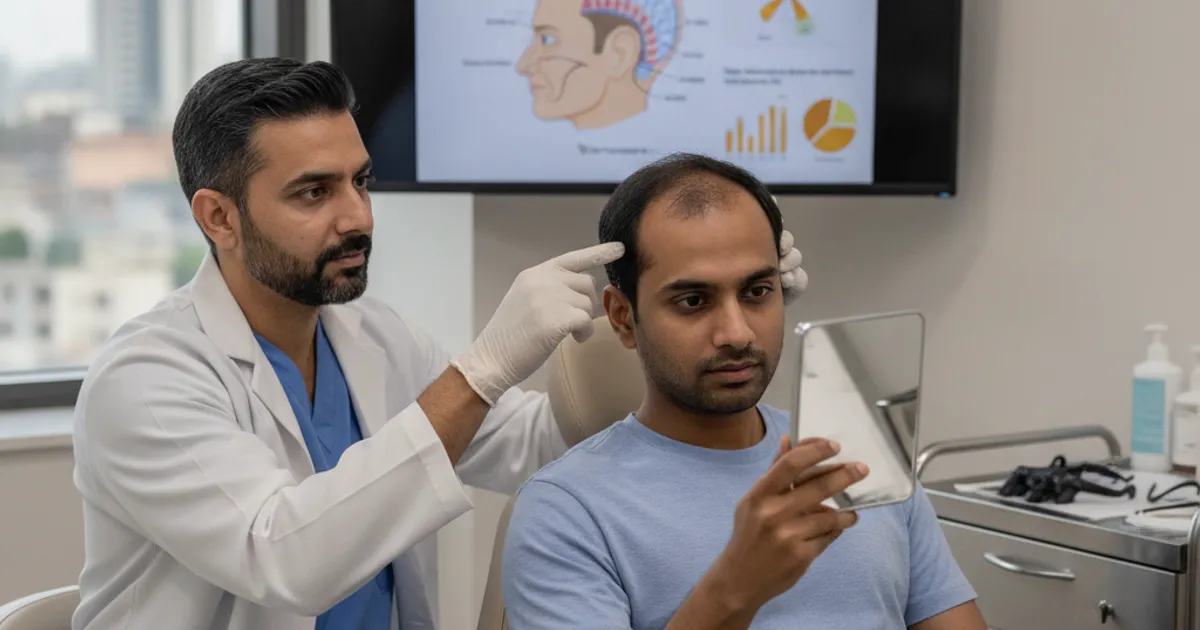
Diagnosis is usually straightforward and starts with a visual examination and medical history. A doctor or hair restoration specialist will look at your hairline, check for miniaturized hairs, and ask about your family history, medications, and lifestyle. They may also use a few tools to confirm the pattern and rule out other causes.
- Visual inspection: Assessing the shape of the hairline and density at the temples and crown.
- Medical and family history: Identifying genetic patterns and possible triggers.
- Hair pull test: Gently pulling a small group of hairs to see how many come out — helps detect active shedding.
- Dermoscopy: Using a magnified lens to look at hair shafts and follicles for signs of miniaturization.
- Blood tests: Checking for thyroid issues, iron deficiency, or hormonal imbalances that could mimic pattern baldness.
- Photographic documentation: Taking standardized photos to track progression over time.
- Scalp biopsy (rare): In unclear cases, a small sample may be taken to rule out other conditions.
Treatment Options for Receding Hairline Corners
Treatment depends on how far the recession has gone, your age, and your goals. The earlier you start, the more hair you can preserve. Options range from medications that slow or partially reverse miniaturization to procedures that restore hair in bald areas. Most people combine treatments for the best results.
- Finasteride: An oral prescription drug that blocks DHT production. It can slow hair loss and regrow some hair in many men. Results take months and require ongoing use.
- Minoxidil: A topical solution or foam applied to the scalp. It improves blood flow and prolongs the growth phase. Available over the counter. Works best on early thinning.
- PRP (platelet-rich plasma): Injections of your own concentrated platelets into the scalp to stimulate follicles. Often used alongside other treatments. Results vary.
- Low-level laser therapy: Devices that emit red light to stimulate hair follicles. Evidence is mixed but some people see benefit.
- Ketoconazole shampoo: An antifungal shampoo that may have mild anti-androgenic effects on the scalp. Sometimes used as a supportive treatment.
- Hair transplant surgery: Moving DHT-resistant follicles from the back of the scalp to the receding corners. The most permanent option for restoring a hairline.
- Lifestyle changes: Managing stress, improving nutrition, and avoiding tight hairstyles can support overall hair health.
Is a Hair Transplant Suitable for You?
A hair transplant can be an excellent solution for receding hairline corners — but it's not right for everyone. The ideal candidate has stable hair loss (or is on medication to stabilize it), a healthy donor area at the back and sides of the scalp, and realistic expectations. If your hair loss is still progressing rapidly, a transplant now might not look right in a few years as the hairline continues to recede. Most surgeons recommend stabilizing the loss with medication first, then transplanting to fill in the corners and rebuild the hairline.
- Good donor density: Enough healthy, DHT-resistant hair at the back and sides to move to the front.
- Stable or managed hair loss: Your recession should be slow or controlled with medication before surgery.
- Realistic goals: A transplant restores density and shape, but it won't give you a teenage hairline.
- Good general health: Surgery is safe for most people, but certain medical conditions may rule it out.
- Age considerations: Younger patients may be advised to wait until the pattern is clearer.
- Commitment to aftercare: You'll need to protect the transplanted hair and may need ongoing medication to keep the rest.
What to Expect from a Hair Transplant Consultation
A consultation is your chance to get a proper diagnosis, discuss your goals, and find out what's realistic. It usually involves a physical exam, a review of your medical history, and a discussion of techniques (FUE or FUT), costs, and recovery. Here's what typically happens.
- Hair and scalp examination: The doctor assesses your hairline, donor area, and overall density.
- Medical history review: They'll ask about medications, allergies, and family history of hair loss.
- Goal discussion: You'll talk about the hairline you want and what can be achieved.
- Technique options: FUE (follicular unit extraction) or FUT (follicular unit transplantation) — pros and cons of each.
- Cost estimate: Based on the number of grafts needed and the clinic's pricing.
- Recovery timeline: What to expect in the days, weeks, and months after surgery.
- Aftercare plan: Medications, follow-up visits, and how to protect your results.
Frequently Asked Questions
Can receding hairline corners grow back on their own?
No. Once a hair follicle has miniaturized to the point of not producing visible hair, it won't recover without treatment. Medications like finasteride and minoxidil can sometimes thicken miniaturized hairs and slow further loss, but they can't revive completely dormant follicles. A hair transplant is the only way to restore hair in areas that are already bald.
At what age do receding hairline corners usually start?
It varies widely. Some men notice thinning at the temples in their late teens or early twenties, while others don't see changes until their thirties or forties. Genetics plays the biggest role. If your father or grandfathers had early recession, you're more likely to experience it too.
Is a receding hairline always a sign of male pattern baldness?
Not always. A maturing hairline — a slight, even shift back — is normal for many men. But if the corners are deepening, the hair is thinning, and the recession is progressing, it's usually androgenetic alopecia. Other conditions like alopecia areata or telogen effluvium can also cause hairline changes, so a proper diagnosis is important.
Can I get a hair transplant if my hair loss is still active?
Most surgeons prefer that your hair loss is stable or being managed with medication before surgery. If your recession is still progressing quickly, a transplant now could leave you with an unnatural-looking hairline later as the native hair continues to fall out. Stabilizing with finasteride or minoxidil first is often recommended.
How much does a hair transplant for receding corners cost?
Costs vary depending on the clinic, location, and number of grafts needed. Early-stage recession may require fewer grafts, while advanced loss needs more. It's best to get a personalized quote after a consultation. Many clinics offer financing options.
Are there any risks with hair transplant surgery?
Hair transplants are generally safe when performed by a qualified surgeon. Risks include infection, scarring, poor graft survival, and unnatural-looking results if the hairline is designed poorly. Choosing an experienced surgeon and following aftercare instructions reduces these risks.
Will I need to take medication after a hair transplant?
Many surgeons recommend continuing finasteride or minoxidil after a transplant to protect your remaining natural hair and slow further loss. The transplanted hair itself is DHT-resistant and should last, but the rest of your hair can still be affected by pattern baldness.
More Guides
- Hair Loss After Weight Loss Surgery: Timeline & Fixes
Hair loss after weight loss surgery is common. Learn the timeline, causes, treatments like minoxidil and PRP, and whether a hair transplant is right for you.
- Stress-Related Hair Loss: Recovery Time and Treatment
How long does stress-induced hair loss take to recover? Learn about telogen effluvium, diagnosis, treatments, and when a transplant may help.
- Female Hair Loss at the Back of the Head: Causes & Fixes
Learn why women lose hair at the back of the head, how it's diagnosed, and the best treatment options including minoxidil, PRP, and hair transplant suitability.
- Wellbutrin and Hair Loss: What You Need to Know
Learn how Wellbutrin may cause hair loss, how it's diagnosed, and what treatments—including hair transplant—can help you regrow hair.