
Receding Hairline in Black Men: Unique Considerations
Receding hairline in Black men: causes, symptoms, diagnosis, and treatment options including hair transplant suitability. Expert guide.
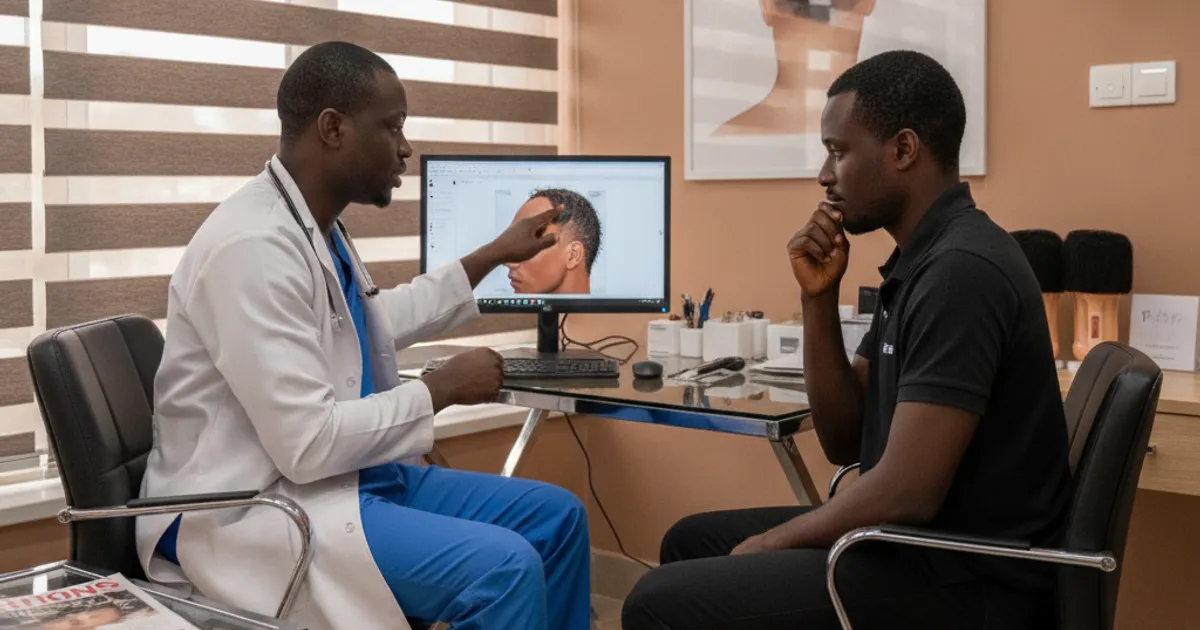
What Is a Receding Hairline?
A receding hairline is the gradual loss of hair along the front of the scalp, where the hairline normally sits. It often starts as a slight thinning at the temples and moves backward over time, creating a widow's peak or an M-shaped pattern. For Black men, this process can look different because of hair texture, styling habits, and the shape of the hairline itself. It's not just about losing hair; it's about how that loss interacts with the unique characteristics of Afro-textured hair.
- Temple recession: hair thins at the corners, making the forehead appear wider.
- Frontal hairline thinning: the entire front edge becomes sparse or uneven.
- Widow's peak: a V-shaped hairline remains while sides recede.
- Diffuse thinning: overall density drops, but the hairline may also move back.
Why Black Men Experience Unique Hairline Changes
Black men often have tightly coiled hair that grows in a spiral pattern. This makes the hairline more susceptible to tension from certain hairstyles like tight braids, cornrows, or dreadlocks. Over time, constant pulling can lead to traction alopecia, a type of hair loss that specifically affects the edges. Additionally, the shape of the hairline in Black men tends to be more rounded or squared off, so recession can be less obvious at first. The contrast between dark hair and skin also means that any thinning is more visible, which can make early signs easier to spot but also more distressing.
Causes of a Receding Hairline in Black Men
The reasons behind a receding hairline in Black men are a mix of genetics, styling practices, and overall health. While male pattern baldness is the most common cause, other factors can accelerate or mimic it. Understanding the root cause is key to choosing the right treatment.
- Genetics (androgenetic alopecia): inherited sensitivity to DHT, a hormone that shrinks hair follicles.
- Traction alopecia: repeated tension from tight hairstyles, weaves, or braids.
- Chemical damage: relaxers and dyes can weaken hair and irritate the scalp.
- Medical conditions: thyroid issues, anemia, or scalp infections.
- Nutritional deficiencies: lack of iron, vitamin D, or protein.
- Stress: physical or emotional stress can trigger temporary shedding.
Symptoms and Stages: How to Recognize It Early
Spotting a receding hairline early gives you more options. In Black men, the first signs might be a change in the hairline shape, thinning at the temples, or a widening part. It's not always a smooth line moving back; sometimes it's patchy or uneven. The Norwood scale is commonly used to classify male pattern baldness, but it doesn't always capture traction alopecia or other types. Here's a simplified breakdown of stages:
| Stage | What You Might Notice |
|---|---|
| Early | Slight thinning at temples, hairline still looks full but less dense. |
| Moderate | Clear M-shape or widening forehead, noticeable recession at corners. |
| Advanced | Hairline significantly receded, possibly connecting to thinning crown. |
How a Receding Hairline Is Diagnosed
A proper diagnosis starts with a visit to a dermatologist or hair restoration specialist. They'll ask about your hair care routine, family history, and any medical conditions. A physical exam of the scalp checks for signs of inflammation, scarring, or traction. Sometimes a pull test or scalp biopsy is done to rule out other causes. For Black men, it's important to find a doctor who understands Afro-textured hair and common styling practices.
- Medical history: family pattern, hairstyles, medications.
- Scalp examination: looking for thinning patterns, redness, or scarring.
- Hair pull test: gently pulling a few hairs to see how many come out.
- Blood tests: checking for thyroid, iron, or hormone imbalances.
- Dermoscopy: using a magnified lens to see hair follicles and scalp health.
Non-Surgical Treatment Options
If you catch hair loss early, non-surgical treatments can slow it down or even regrow some hair. The most proven options are finasteride and minoxidil. Finasteride is an oral medication that blocks DHT, the hormone responsible for male pattern baldness. Minoxidil is a topical solution that increases blood flow to the scalp. Both require consistent use to maintain results. Other options include PRP (platelet-rich plasma) injections, which use your own blood to stimulate hair growth, and low-level laser therapy. For traction alopecia, the first step is to stop the tension and let the hair recover.
- Finasteride: daily pill, prescription only, not for women.
- Minoxidil: topical liquid or foam, available over the counter.
- PRP therapy: injections of concentrated platelets to promote healing.
- Low-level laser therapy: devices that emit red light to stimulate follicles.
- Ketoconazole shampoo: helps with dandruff and may have mild anti-DHT effects.
Is a Hair Transplant Suitable for Black Men?
Yes, hair transplants can work well for Black men, but there are unique considerations. The curly nature of Afro-textured hair means that individual follicular units are often more curved and can be more fragile during extraction. This requires a surgeon experienced with this hair type. The technique used is usually FUE (follicular unit extraction), which leaves less scarring than FUT. However, scarring can be more visible in Black skin due to keloid tendencies, so a skilled surgeon is crucial. Also, if the hair loss is due to traction alopecia and the scalp is scarred, transplants may not take as well. A thorough evaluation is needed.
- Surgeon experience: choose a doctor who regularly works with Afro-textured hair.
- Donor hair quality: curly hair can be more challenging to extract and implant.
- Scarring risk: Black skin may be prone to keloids; FUE is often preferred.
- Underlying cause: if traction alopecia is active, treat that first.
- Realistic expectations: transplants restore hairline but don't stop future loss.
What to Expect During and After a Hair Transplant
A hair transplant is usually an outpatient procedure. You'll be awake but sedated. The surgeon extracts hair from the back of your scalp and implants it into the thinning areas. For Black men, the procedure may take longer because of the hair's curl. Afterward, you'll have some scabbing and redness. The transplanted hair often falls out within a few weeks, then regrows over several months. Full results take about a year. You'll need to avoid tight hairstyles and strenuous activity for a while.
- Before: stop blood thinners, avoid alcohol, wash hair with medicated shampoo.
- During: local anesthesia, extraction, and implantation; duration varies by case.
- After: mild pain, swelling, and scabbing; sleep elevated for a few days.
- Recovery: protect the scalp from friction, sweat, and sun while healing.
- Results: new hair grows gradually and matures over many months.
Frequently Asked Questions
Can a hair transplant fix traction alopecia?
If the traction alopecia has caused permanent scarring, a transplant may not work. But if the follicles are still alive, it can help. The first step is to stop the tension.
Is finasteride safe for Black men?
Yes, finasteride is effective for Black men, but like anyone, you should discuss potential side effects with your doctor.
How much does a hair transplant cost?
Costs vary widely depending on the clinic, location, and number of grafts. It's best to consult with a clinic for a personalized quote.
Will my hair look natural after a transplant?
When done by an experienced surgeon, a hair transplant can look very natural. The key is to match the curl pattern and angle of your existing hair.
Can I wear braids after a hair transplant?
You should avoid tight braids for a while to protect the transplanted hair. Even after that, it's wise to choose looser styles.
How Hair Transplant Techniques Are Adapted for Afro-Textured Hair
Afro-textured hair has unique structural properties that require specific surgical adjustments during a hair transplant. The hair follicles are often curved or coiled beneath the skin, and the hair shaft itself is elliptical with a tighter curl pattern. This means that the angle of extraction and implantation must be carefully controlled to avoid transecting (cutting) the follicles, which would reduce graft survival. Surgeons experienced with this hair type typically use smaller punch sizes and a slower, more deliberate extraction technique. They also pay close attention to the direction of hair growth to ensure the transplanted hair emerges at a natural angle, blending seamlessly with the surrounding hair.
- Smaller punch sizes (often 0.8–0.9 mm) reduce damage to curved follicles.
- Slower extraction speed to minimize follicle transection.
- Careful angle matching to preserve natural curl direction.
- Use of implanters or forceps designed for curly hair to avoid crushing grafts.
- Donor area management to avoid overharvesting, which can lead to visible thinning.
Additionally, because Black skin is more prone to keloid scarring and hyperpigmentation, surgeons often modify the technique to minimize trauma. FUE is generally preferred over FUT because it leaves only tiny dot scars that tend to be less noticeable. However, even with FUE, the surgeon must be cautious not to create too much tension on the skin during extraction. Post-operative care instructions may also be tailored to reduce the risk of scarring, such as avoiding tight headwear and using gentle cleansing routines.
Comparing Hair Restoration Options: What Works Best for Black Men
When considering hair restoration, Black men have several options, each with pros and cons. The best choice depends on the cause of hair loss, the stage of recession, and personal preferences. Below is a comparison of the most common approaches, focusing on their suitability for Afro-textured hair and the specific challenges they address.
- Medications (finasteride, minoxidil): Effective for slowing or reversing male pattern baldness, but require lifelong use. They do not address traction alopecia or scarring. Finasteride is oral and prescription-only; minoxidil is topical and over-the-counter. Both can have side effects and may not work for everyone.
- Platelet-Rich Plasma (PRP): Uses your own blood platelets to stimulate follicles. Less invasive than surgery, but results vary and multiple sessions are needed. It can be combined with other treatments. Not a standalone cure for advanced baldness.
- Low-Level Laser Therapy (LLLT): Non-invasive, at-home devices or in-clinic treatments. May improve hair density, but evidence is moderate. Best for early thinning, not for significant recession.
- Hair Transplant (FUE/FUT): Permanent solution for restoring hairline, but requires sufficient donor hair and a skilled surgeon. FUE is often preferred for Black men due to less scarring. Not suitable if hair loss is active or if donor area is insufficient.
- Scalp Micropigmentation (SMP): Cosmetic tattooing that mimics hair follicles. Good for creating the illusion of density, but doesn't grow hair. Can be an alternative for those not ready for surgery or with scarring.
For many Black men, a combination approach works best: medications to stabilize loss, followed by a transplant to restore the hairline, and perhaps PRP or LLLT to support healing. It's important to have realistic expectations and to consult a specialist who understands the unique aspects of Afro-textured hair.
Frequently Asked Questions About Receding Hairlines in Black Men
Can traction alopecia be reversed?
If caught early, traction alopecia is often reversible by stopping the tension-causing hairstyles and allowing the hair to recover. However, if the follicles are permanently damaged or scarred, regrowth may not occur, and a hair transplant might be needed.
Is a hair transplant safe for Black skin?
Yes, when performed by an experienced surgeon. The main concern is scarring, as Black skin can be prone to keloids. FUE is generally recommended over FUT to minimize scarring. Proper post-operative care is also crucial.
How do I choose a surgeon for a hair transplant?
Look for a board-certified dermatologist or hair restoration surgeon who has specific experience with Afro-textured hair. Ask to see before-and-after photos of Black patients and inquire about their technique for curly hair. A good surgeon will also assess the cause of your hair loss and discuss realistic expectations.
Can I wear braids or dreadlocks after a hair transplant?
You should avoid tight hairstyles for several weeks after surgery to allow the grafts to heal. Once healed, you can return to your usual style, but it's wise to avoid excessive tension to protect the transplanted hair and prevent traction alopecia in the future.
Does minoxidil work for Black men?
Minoxidil can be effective for Black men, but some studies suggest that Afro-textured hair may require a different application method or concentration. It's best to consult a doctor to determine the right approach. Consistency is key for results.
More Guides
- Hair Loss After Weight Loss Surgery: Timeline & Fixes
Hair loss after weight loss surgery is common. Learn the timeline, causes, treatments like minoxidil and PRP, and whether a hair transplant is right for you.
- Stress-Related Hair Loss: Recovery Time and Treatment
How long does stress-induced hair loss take to recover? Learn about telogen effluvium, diagnosis, treatments, and when a transplant may help.
- Female Hair Loss at the Back of the Head: Causes & Fixes
Learn why women lose hair at the back of the head, how it's diagnosed, and the best treatment options including minoxidil, PRP, and hair transplant suitability.
- Wellbutrin and Hair Loss: What You Need to Know
Learn how Wellbutrin may cause hair loss, how it's diagnosed, and what treatments—including hair transplant—can help you regrow hair.