
SMP vs Hair Transplant: Which Is Better?
SMP vs hair transplant: compare cost, results, recovery, and suitability. Find out which option fits your hair loss stage and goals.
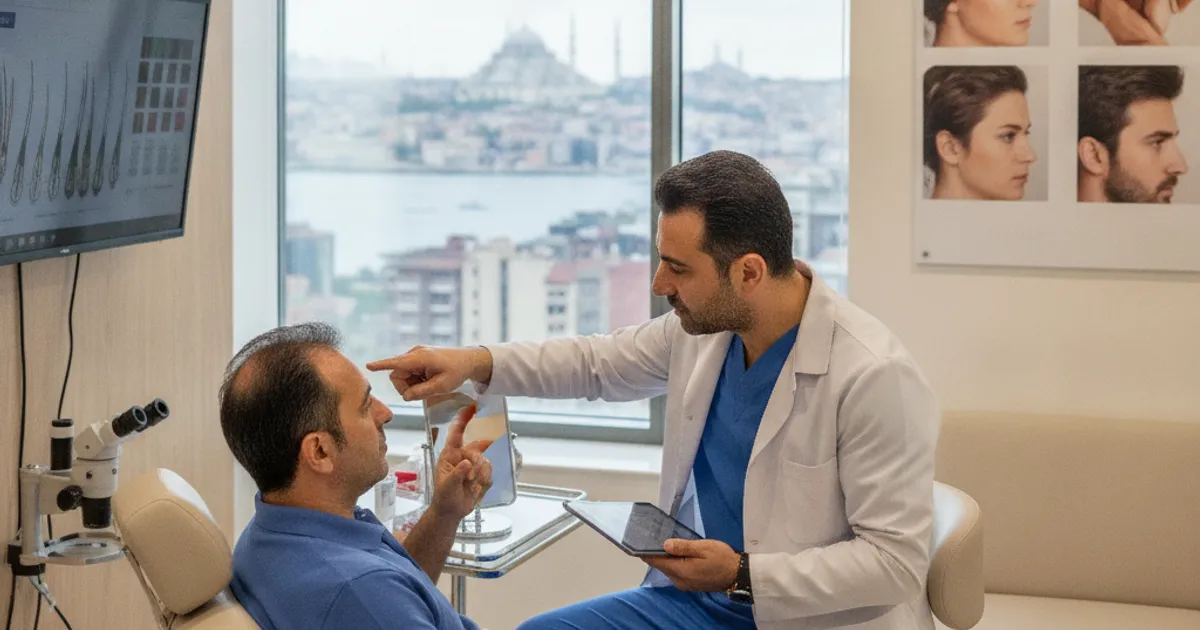
If you want the short answer: a hair transplant is better if you want real hair that grows and you have enough donor hair to work with. SMP is better if you want a low-maintenance, non-surgical way to create the look of density, or if you are not a good candidate for surgery. They solve the same problem in completely different ways, and the right choice depends on your budget, your hair loss pattern, and how much upkeep you are willing to accept.
What Is SMP?
Scalp micropigmentation (SMP) is a cosmetic tattoo procedure. A trained technician uses a fine needle to deposit pigment into the upper layer of your scalp, mimicking the look of tiny hair follicles. It does not grow hair. It creates the illusion of a fuller hairline or a closely shaved head. Sessions usually take a few hours, and most people need two to four sessions spaced a week or two apart.
- Non-surgical, no incisions, no stitches
- Works for almost all skin tones and hair colors when done by a skilled technician
- Can camouflage FUT or FUE scars
- Results fade over time and need touch-ups every few years
- Best for people who keep their hair very short or shaved
What Is a Hair Transplant?
A hair transplant is a surgical procedure where hair follicles are moved from a donor area (usually the back or sides of your head) to thinning or bald spots. The two main techniques are FUE (follicular unit extraction) and FUT (follicular unit transplantation). The transplanted hair grows naturally for years, though it can thin over time as you age. It is a real medical procedure with real recovery time.
- Surgical procedure performed under local anesthesia
- Results are permanent hair that grows like your natural hair
- Requires enough healthy donor hair to be a candidate
- Recovery involves scabbing, redness, and a shedding phase
- Full results take 12 to 18 months to show
Key Differences: SMP vs Hair Transplant
The biggest difference is that SMP is an illusion and a transplant is real hair. That single fact drives almost every other difference, from cost to recovery to how long results last. Here is how they stack up side by side.
| Factor | SMP | Hair Transplant |
|---|---|---|
| Type | Cosmetic tattoo | Surgical procedure |
| Results | Illusion of density, no growth | Real hair that grows |
| Duration | Fades in 3–6 years, needs touch-ups | Permanent, though natural thinning can occur |
| Pain | Mild, often described as scratching | Local anesthesia, soreness for days after |
| Recovery | 1–3 days of redness | 1–2 weeks of visible healing, months for full result |
| Best for | Shaved look, scars, diffuse thinning | Pattern baldness with good donor hair |
| Reversibility | Largely permanent pigment | Permanent once grafts take |
Cost: SMP vs Hair Transplant
SMP is almost always cheaper upfront because it is non-surgical and does not require a medical team. A hair transplant costs more because it involves surgery, anesthesia, and a longer procedure. But SMP is not a one-time cost — touch-ups every few years add up. Hair transplant pricing also depends heavily on how many grafts you need, which is tied to your stage of hair loss.
SMP typically costs a few hundred to a few thousand dollars per session, and most people need multiple sessions. Over a decade, SMP touch-ups can approach the cost of a smaller transplant. If you are comparing countries for surgery, our guide to hair transplant costs abroad breaks down how location changes the price.
Results and Recovery: SMP vs Hair Transplant
Recovery is where SMP wins easily. You can go back to work the next day with SMP, though your scalp will look red for a day or two. A hair transplant means scabbing, tenderness, and avoiding strenuous activity for a week or two. You also go through a shedding phase where transplanted hair falls out before new growth starts. Full results take a year or more.
- SMP: visible result immediately, no downtime, fades over years
- Hair transplant: visible scabbing for 1–2 weeks, shedding at 2–8 weeks, real growth from 4 months, full result at 12–18 months
- SMP does not change how your hair feels or grows
- Hair transplant gives you hair you can cut, style, and color
- SMP can hide transplant scars; a transplant cannot hide SMP
Which Should You Choose?
There is no universal winner. The right choice comes down to what you want your hair to do and what you are willing to go through to get there. If you want real hair and you have good donor density, a transplant is usually the better long-term investment. If you are not a surgical candidate, you want a shaved look, or you need scar camouflage, SMP is the practical option. Some people do both — a transplant for coverage and SMP for density or scar blending.
- Choose a hair transplant if you want permanent, growing hair and have enough donor hair
- Choose SMP if you want a non-surgical option, keep your hair short, or need scar camouflage
- Choose SMP if you are not a candidate for surgery due to donor supply or health
- Consider both if you want maximum density or scar coverage after a transplant
- Talk to a clinic about your stage of hair loss before deciding
If you are still weighing surgical options, our guide to FUE vs DHI explains how the two main transplant techniques differ.
Related Guides
Frequently Asked Questions
Can SMP replace a hair transplant?
For some people, yes. SMP can create the look of a shaved head with a defined hairline, which works well if you keep your hair very short. But SMP does not grow hair, so it cannot replace a transplant if you want length or a natural hairline with real hair.
Does SMP hurt more than a hair transplant?
Most people find SMP less painful. A hair transplant uses local anesthesia, so you do not feel the surgery itself, but recovery involves soreness and scabbing. SMP feels like light scratching or vibration, and there is no surgical recovery.
How long does SMP last compared to a hair transplant?
SMP fades over three to six years and needs touch-ups to stay sharp. A hair transplant gives you permanent hair, though the transplanted hair can thin naturally as you age. Many people need only one transplant for long-term results.
Can I get SMP after a hair transplant?
Yes. SMP is often used after a transplant to add density, blend the hairline, or camouflage donor scars. Wait until your transplant has fully healed and your surgeon clears you before booking SMP sessions.
More Guides
- Clascoterone vs Minoxidil: Which Is Better for Hair Loss?
Clascoterone vs minoxidil: compare how they work, costs, results, and side effects to decide which hair loss treatment suits you best.
- Finasteride 5 mg vs 1 mg: Which Dose Works for Hair?
Finasteride 5 mg vs 1 mg for hair loss: compare effectiveness, side effects, cost, and which dose makes sense for you. Get the facts before you decide.
- Beard Transplant vs Scalp Transplant: A Complete Guide
Compare beard vs scalp transplants: costs, recovery, results, pain, and candidacy to decide which hair restoration procedure fits your goals.
- Hair Transplant vs Medication: Which Is Better for You?
Compare hair transplant vs medication for hair loss. Learn costs, results, recovery, and which option suits early, moderate, or advanced balding.