
Sleep and Hair Loss: Causes, Treatments, and Transplants
Explore how sleep affects hair loss, from causes to treatments like finasteride and minoxidil. Learn when a hair transplant is suitable.
What Is the Connection Between Sleep and Hair Loss?
Sleep and hair loss are more connected than most people realize. Hair growth depends on a complex mix of hormones, blood flow, and cellular repair, and all of those processes are heavily influenced by how well you sleep. When sleep is chronically poor, whether from insomnia, sleep apnea, shift work, or just stress, the body shifts into survival mode. It prioritizes essential functions and deprioritizes things like growing hair. Over time, that can lead to noticeable thinning or shedding. It's not that one bad night's sleep makes your hair fall out. It's the cumulative effect of poor sleep on your body's systems that matters.
- Sleep is when your body repairs tissue, including hair follicles.
- Poor sleep raises cortisol, which can disrupt the hair growth cycle.
- Sleep apnea and other sleep disorders reduce oxygen delivery to tissues, including the scalp.
- Chronic sleep deprivation can trigger or worsen telogen effluvium, a common form of temporary shedding.
How Sleep Affects Hair Growth: The Science
Hair grows in cycles: anagen (growth), catagen (transition), and telogen (resting). Most people shed 50 to 100 hairs a day as part of this cycle. But when the body is under stress, a larger percentage of follicles can be pushed into the telogen phase at once, leading to a sudden increase in shedding a few months later. Sleep is one of the biggest regulators of that stress response. During deep sleep, your body lowers cortisol and increases growth hormone, which helps repair cells and regulate the hair cycle. Poor sleep throws that balance off.
- Cortisol: Chronic sleep loss raises cortisol, which can disrupt the hair growth cycle and contribute to follicle miniaturization.
- Melatonin: This sleep hormone also has antioxidant properties that may protect hair follicles from damage.
- Growth hormone: Released mainly during deep sleep, it supports tissue repair and cell regeneration.
- Blood flow: Sleep supports healthy circulation, which delivers oxygen and nutrients to hair follicles.
Causes of Sleep-Related Hair Loss
Sleep-related hair loss doesn't have a single cause. It's usually the result of several overlapping factors. Some are directly tied to sleep quality, while others are linked to the conditions that cause poor sleep in the first place. Here are the most common drivers.
- Chronic insomnia: Ongoing difficulty falling or staying asleep keeps cortisol levels elevated.
- Obstructive sleep apnea: Repeated pauses in breathing reduce oxygen in the blood, which can stress hair follicles.
- Shift work: Working nights disrupts circadian rhythms and hormone production.
- Stress and anxiety: These both cause poor sleep and directly trigger telogen effluvium.
- Medications: Some sleep aids and antidepressants can have hair loss as a side effect.
- Poor sleep hygiene: Irregular bedtimes, screen use before bed, and caffeine late in the day all reduce sleep quality.
| Sleep Issue | How It Affects Hair | Typical Pattern |
|---|---|---|
| Insomnia | Raises cortisol, disrupts hair cycle | Diffuse thinning over months |
| Sleep apnea | Reduces oxygen to scalp, increases inflammation | General shedding, worse over time |
| Shift work | Disrupts melatonin and growth hormone | Slow, steady thinning |
| Stress-related poor sleep | Triggers telogen effluvium | Sudden shedding 2–3 months later |
Symptoms: Is Your Hair Loss Linked to Poor Sleep?
It can be tricky to tell whether your hair loss is caused by sleep or something else, like genetics or a nutritional deficiency. But there are some clues that point toward a sleep connection. The biggest one is timing: if your shedding started or got worse after a period of bad sleep, that's a strong signal. Another is pattern: sleep-related shedding tends to be diffuse, meaning it affects the whole scalp rather than just the temples or crown.
- Increased shedding on your pillow or in the shower
- Thinning that's spread evenly across the scalp
- Hair that feels thinner but not necessarily receding
- Fatigue, brain fog, or other signs of poor sleep
- Shedding that started 2–3 months after a stressful or sleepless period
How Sleep-Related Hair Loss Is Diagnosed
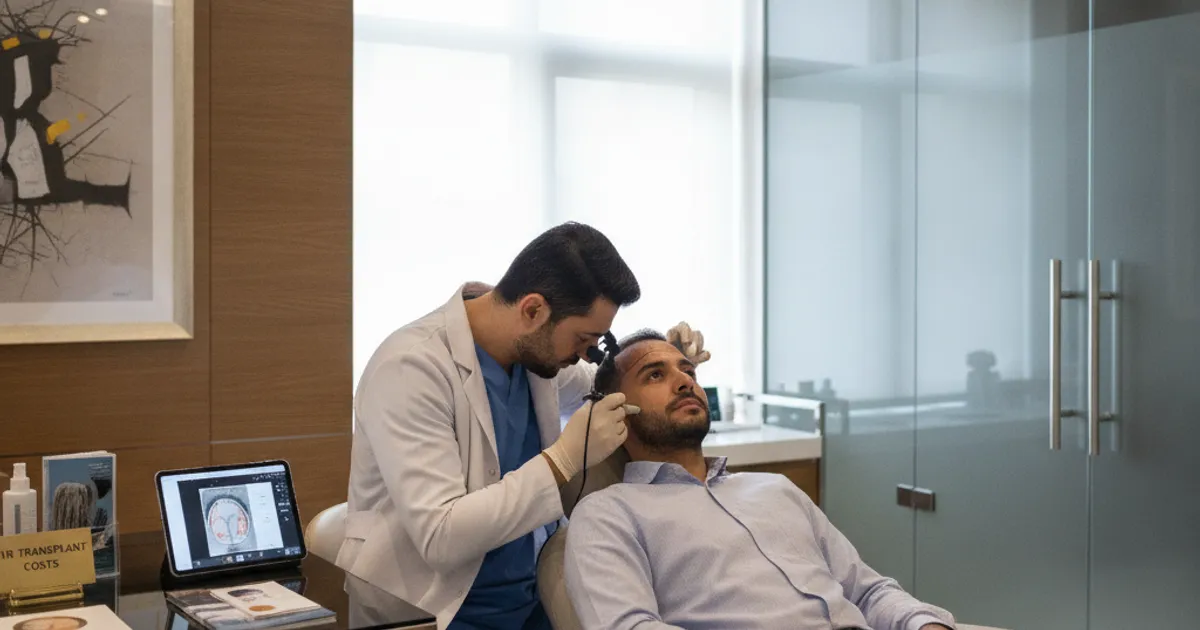
There's no single test for sleep-related hair loss. Diagnosis is usually a process of elimination. A dermatologist or trichologist will ask about your sleep habits, stress levels, diet, and family history. They'll also examine your scalp and hair under a microscope to look at the hair cycle. In some cases, blood tests can rule out other causes like thyroid issues, iron deficiency, or hormonal imbalances.
- Medical history: Sleep patterns, stress, medications, and family history of hair loss.
- Physical exam: Scalp inspection and hair pull test to check shedding rate.
- Blood tests: Ferritin, thyroid, vitamin D, and hormone levels.
- Sleep study: If sleep apnea is suspected, a polysomnogram may be recommended.
- Trichoscopy: A close-up look at the scalp and hair follicles.
| Diagnostic Step | What It Checks | Who Needs It |
|---|---|---|
| Hair pull test | Active shedding rate | Most people with sudden hair loss |
| Blood work | Thyroid, iron, hormones | If other causes are suspected |
| Sleep study | Sleep apnea or other disorders | If you snore or wake gasping |
| Scalp biopsy | Follicle health and inflammation | Rarely, for unclear cases |
Treatment Options for Sleep-Related Hair Loss
Treatment for sleep-related hair loss usually involves two tracks: fixing the sleep problem and treating the hair loss itself. If you have sleep apnea, treating it with a CPAP machine or other therapy can stop the oxygen deprivation that's stressing your follicles. For insomnia, cognitive behavioral therapy for insomnia (CBT-I) is often more effective than medication. On the hair side, there are several proven treatments that can help speed up recovery and regrow hair.
- Minoxidil: A topical or oral treatment that improves blood flow to hair follicles and prolongs the growth phase. Oral minoxidil is used off-label for hair loss.
- Finasteride: An oral medication that blocks DHT, a hormone that shrinks hair follicles in genetically prone people. It is not appropriate for women of childbearing potential.
- PRP (platelet-rich plasma): Injections that use your own blood platelets to stimulate hair growth.
- Low-level laser therapy: A device that uses light energy to improve follicle health. Evidence for its effectiveness is mixed.
- Nutritional support: Correcting deficiencies in iron, vitamin D, or zinc if blood tests show low levels.
| Treatment | How It Works | Best For | Typical Duration |
|---|---|---|---|
| Minoxidil | Improves blood flow, prolongs growth phase | Diffuse thinning, early hair loss | Daily use, results in 3–6 months |
| Finasteride | Blocks DHT, prevents follicle shrinkage | Genetic hair loss made worse by sleep | Daily use, results in 6–12 months |
| PRP | Stimulates follicles with growth factors | People wanting a non-drug option | 3–6 sessions, then maintenance |
| CPAP | Treats sleep apnea, restores oxygen | Sleep apnea-related shedding | Nightly use, shedding improves in months |
Is a Hair Transplant Suitable for Sleep-Related Hair Loss?
A hair transplant is usually not the first line of treatment for sleep-related hair loss. That's because sleep-related shedding is often temporary and diffuse. A transplant works best for stable, localized hair loss, like a receding hairline or a bald spot on the crown. If your hair loss is caused by poor sleep and you're still shedding, a transplant could end up looking patchy as your natural hair continues to thin around the transplanted follicles. Most surgeons will want to see your hair loss stabilized for at least 6 to 12 months before considering surgery.
- Good candidate: Hair loss has stabilized, and you have healthy donor hair on the back and sides of your scalp.
- Poor candidate: You're still experiencing active, diffuse shedding from poor sleep or stress.
- Ideal timing: After sleep issues are treated and hair loss has been stable for 6 to 12 months.
- Realistic expectations: A transplant restores hair in specific areas, but it won't stop future shedding if sleep problems return.
Preventing Sleep-Related Hair Loss: Lifestyle and Sleep Hygiene
The best way to prevent sleep-related hair loss is to protect your sleep. That means building habits that support consistent, deep rest. It's not just about getting eight hours; it's about quality. A regular sleep schedule, a dark and cool bedroom, and limiting stimulants late in the day can make a big difference. If you suspect a sleep disorder like apnea, get it checked. Treating that can improve both your sleep and your hair.
- Stick to a consistent sleep and wake time, even on weekends.
- Keep your bedroom cool, dark, and quiet.
- Avoid caffeine after 2 p.m. and limit alcohol before bed.
- Turn off screens at least an hour before sleep.
- Manage stress with exercise, meditation, or therapy.
- Get evaluated for sleep apnea if you snore or wake up gasping.
| Habit | Impact on Sleep | Impact on Hair |
|---|---|---|
| Consistent schedule | Improves sleep quality | Supports stable hormone levels |
| Cool, dark room | Deepens sleep | Reduces cortisol spikes |
| No late caffeine | Helps you fall asleep faster | Lowers stress on follicles |
| Stress management | Reduces insomnia | Prevents telogen effluvium |
Frequently Asked Questions
Can lack of sleep cause hair loss?
Yes, chronic lack of sleep can contribute to hair loss. It raises cortisol, disrupts the hair growth cycle, and can trigger telogen effluvium, a temporary shedding condition. It can also worsen genetic hair loss.
How much sleep do you need to prevent hair loss?
Most adults need 7 to 9 hours of quality sleep per night. But quality matters as much as quantity. If you're waking frequently or not reaching deep sleep, you may still be at risk even with 8 hours in bed.
Will my hair grow back if I start sleeping better?
If your hair loss is primarily due to poor sleep and stress, improving sleep can help your hair recover over several months. But if you also have genetic hair loss, sleep alone won't regrow hair. You may need treatments like minoxidil or finasteride.
Is sleep apnea linked to hair loss?
Some research suggests a possible link between sleep apnea and hair loss, though the evidence is still limited and mostly observational. The repeated drops in oxygen and the chronic stress response may disrupt hair growth. Treating sleep apnea with CPAP or other therapies may help improve hair shedding.
Can a hair transplant fix sleep-related hair loss?
A hair transplant is not usually recommended for active sleep-related shedding. It's better suited for stable, localized hair loss. If your hair loss is diffuse and ongoing, a transplant may not give you the results you want. Focus on treating the sleep issue first.
What treatments work best for sleep-related hair loss?
The most effective approach is to treat the sleep problem and use proven hair loss treatments. Minoxidil and finasteride are common options. PRP and low-level laser therapy can also help. Always talk to a doctor before starting any treatment.
More Guides
- Hair Loss After Weight Loss Surgery: Timeline & Fixes
Hair loss after weight loss surgery is common. Learn the timeline, causes, treatments like minoxidil and PRP, and whether a hair transplant is right for you.
- Stress-Related Hair Loss: Recovery Time and Treatment
How long does stress-induced hair loss take to recover? Learn about telogen effluvium, diagnosis, treatments, and when a transplant may help.
- Female Hair Loss at the Back of the Head: Causes & Fixes
Learn why women lose hair at the back of the head, how it's diagnosed, and the best treatment options including minoxidil, PRP, and hair transplant suitability.
- Wellbutrin and Hair Loss: What You Need to Know
Learn how Wellbutrin may cause hair loss, how it's diagnosed, and what treatments—including hair transplant—can help you regrow hair.