
Savin Scale for Female Hair Loss: How to Use It
Learn how to use the Savin Scale for female hair loss. Identify your stage, plan treatment, and track progress with this practical guide.
What Is the Savin Scale and Why Does It Matter?
The Savin Scale is a visual tool doctors use to classify female pattern hair loss. It was developed by Dr. Richard Savin in the 1990s and is sometimes called the Savin Scale for female hair loss. It typically shows around nine stages of thinning, from minimal widening of the part to advanced loss across the top of the scalp. Unlike the Norwood scale for men, the Savin Scale focuses on the central part and crown, which is where women typically lose hair first.
Why does it matter? Because your stage on the Savin Scale helps determine what treatments might work for you. Early stages often respond well to medications or low-level laser therapy. More advanced stages may need a combination of treatments or a hair transplant. The scale also gives you a common language to use with doctors, so you can discuss your options clearly.
- Provides a standard way to describe female hair loss severity.
- Helps guide treatment decisions, from topical solutions to surgery.
- Allows you to track changes over time objectively.
- Makes it easier to compare opinions from different clinics.
How to Identify Your Savin Stage at Home
You can get a rough idea of your Savin stage at home before seeing a specialist. You'll need good lighting, a handheld mirror, and a second mirror or a phone camera to see the top of your head. Part your hair down the middle and look at the width of the part and the density around it. Compare what you see to the Savin Scale images you can find online. Remember, this is only a guide. A doctor will give you a more accurate assessment.
Savin Stages Explained: From Minimal to Advanced Loss
The Savin Scale has around nine stages, but they are often grouped into three broad categories: early, moderate, and advanced. Here's a simple breakdown of what each group looks like. Keep in mind that the scale is a guide, not a diagnosis. Your doctor will consider your medical history, family pattern, and other factors.
| Stage Group | Typical Appearance | What It Means |
|---|---|---|
| Early (Stages I–III) | Slight widening of the center part. Minimal thinning on top. | Hair loss is just beginning. Often the best time to start treatment. |
| Moderate (Stages IV–VI) | Noticeable widening of the part. Thinning spreads across the top of the scalp. Crown may show scalp. | Hair loss is more established. Treatment may need to be more aggressive. |
| Advanced (Stages VII–IX) | Severe thinning or baldness on top. Hairline may recede. Only a rim of hair remains. | Extensive loss. Hair transplant may be an option, but donor hair is limited. |
How Your Savin Stage Affects Treatment Planning
Your Savin stage is one of the first things a hair restoration specialist will look at. It helps them decide whether you're a candidate for medication, surgery, or a combination. For example, if you're in an early stage, a doctor might recommend minoxidil or finasteride (if appropriate) to slow loss and possibly regrow hair. Note that finasteride is generally not recommended for women of childbearing age due to risks of birth defects, and it is often contraindicated in pregnancy. If you're in a moderate stage, they might suggest platelet-rich plasma (PRP) or low-level laser therapy alongside medication. In advanced stages, a hair transplant may be considered, but only if you have enough donor hair. The scale also helps set realistic expectations. Someone with early loss might hope for thicker hair, while someone with advanced loss might aim for improved coverage.
- Early stages: often managed with topical or oral medications.
- Moderate stages: may benefit from PRP, laser therapy, or combination treatments.
- Advanced stages: hair transplant may be an option, but candidacy depends on donor supply.
- Your stage can change over time, so re-evaluation is important.
What to Expect During a Clinical Savin Assessment
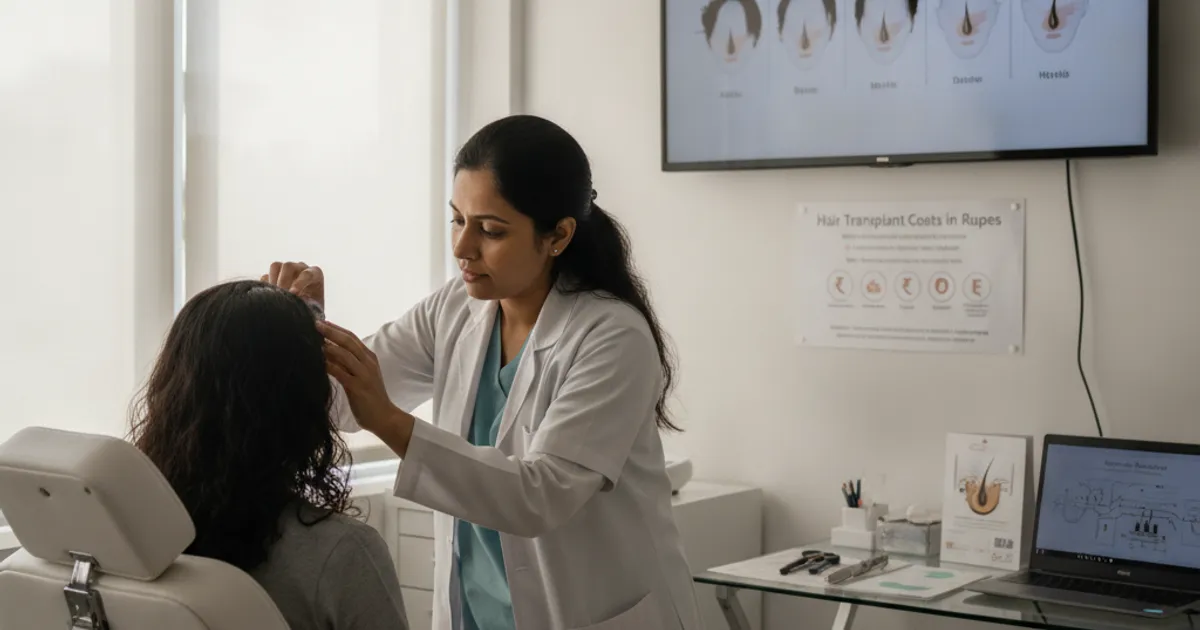
A clinical assessment is more thorough than a self-check. Your doctor will examine your scalp, take measurements, and may use a dermatoscope to look at hair density and miniaturization. They'll also ask about your medical history, medications, and family history of hair loss. The whole process usually takes about 15 to 30 minutes, though this can vary. You might be asked to come back for follow-up photos to track changes.
Using the Savin Scale to Compare Clinics and Quotes
When you contact clinics for consultations, they should be able to tell you your Savin stage and explain how it affects their recommended plan. If a clinic can't or won't discuss your stage, that's a red flag. A good clinic will also provide a written quote that breaks down costs by procedure and explains what's included. You can use your stage to compare quotes fairly. For example, a clinic quoting a very low price for an advanced stage might be cutting corners. On the other hand, a high price doesn't always mean better quality. Ask what's included: follow-up visits, medications, PRP sessions, and so on.
- Ask each clinic to state your Savin stage in writing.
- Request an itemized quote that lists all procedures and fees.
- Check whether follow-up care and medications are included.
- Compare the number of grafts recommended for your stage.
- Look for clinics that offer a range of treatments, not just surgery.
Aftercare and Monitoring: Tracking Your Progress Over Time
Once you start treatment, you'll want to track your progress. The Savin Scale can help you see if your hair loss is stable, improving, or getting worse. Take photos every three to six months using the same lighting and angle. Note any changes in the width of your part or density on top. If you had a hair transplant, your doctor will monitor your growth and may adjust your aftercare plan. Be patient: hair growth takes time, and it can be months before you see results.
Frequently Asked Questions
Can the Savin Scale predict how fast my hair loss will progress?
No, the Savin Scale only describes the current pattern and severity. The speed of progression varies widely from person to person. Factors like genetics, hormones, and overall health play a role. Your doctor can help you understand your likely course.
Is the Savin Scale used for all types of female hair loss?
It's specifically designed for female pattern hair loss (androgenetic alopecia). Other types, like telogen effluvium or alopecia areata, have different patterns and may not fit the Savin Scale well.
Can I improve my Savin stage with treatment?
It's possible to slow or stop progression and sometimes regrow hair, which may move you to a lower stage. However, the scale is not a perfect measure of treatment success. Your doctor will use other assessments too.
Should I choose a clinic based only on my Savin stage?
No. Your stage is just one factor. Consider the clinic's experience with female hair loss, their range of treatments, patient reviews, and whether they offer a thorough consultation. Always get a personalized treatment plan.
Savin Scale vs. Other Female Hair Loss Classification Systems
The Savin Scale is not the only tool used to describe female hair loss, and knowing how it compares to alternatives helps you follow what different clinicians are saying. The Ludwig scale, developed earlier, uses three broad grades of diffuse thinning over the crown and is simpler but less granular. The Sinclair scale uses a five-point visual scale focused mainly on part width and is often used in research because it is quick to apply. The Savin Scale sits between these in detail, offering more stages than Ludwig while remaining a visual, pattern-based system rather than a measurement-based one. Some specialists also use the Olsen scale, which emphasizes the frontal hairline and pattern differences. In practice, many clinics use more than one system or combine a visual scale with objective measurements such as hair density counts or hair shaft diameter under magnification. If two clinics describe your loss differently, it may simply reflect different scales rather than disagreement about your actual hair. Asking which scale a clinic uses, and whether they also take measurements, helps you interpret their assessment correctly.
What the Savin Scale Does Not Capture
The Savin Scale is a visual pattern tool, and it has real limits worth understanding before you rely on it. It describes the appearance of thinning over the central scalp but does not measure how fast your hair is shedding, how dense your donor area is, or whether your loss is stable or actively progressing. It also does not distinguish between different causes of hair loss. Female hair loss can stem from pattern hair loss, telogen effluvium after illness or stress, thyroid problems, iron deficiency, hormonal conditions such as polycystic ovary syndrome, or scarring alopecias, and several of these can look similar on the surface. A visual stage cannot tell these apart; that requires history, blood tests, and sometimes a scalp biopsy. The scale also does not account well for diffuse thinning that affects the sides and back, or for hairline recession patterns that fall outside the typical central-loss picture. For these reasons, your Savin stage should be treated as one piece of information among several, not a complete diagnosis.
How Your Stage Interacts With Donor Hair and Surgical Candidacy
For women considering a hair transplant, the Savin stage tells only part of the story. What matters just as much is donor hair quality and density at the back and sides of the scalp, because transplanted follicles are taken from there. Some women with early visible thinning on top can still have limited donor supply, while others with more advanced central loss may have adequate donor hair. This is why a surgeon assesses donor density separately, often with magnification or digital imaging, rather than relying on the stage alone. Diffuse unpatterned alopecia, where thinning spreads across the donor area too, is a particular concern because it can make someone a poor surgical candidate even if their central loss looks moderate. Age, general health, and whether loss has stabilized also factor in. A responsible surgeon will explain that a transplant redistributes existing hair rather than creating new hair, and will discuss whether your donor area can support the coverage you want. If a clinic recommends surgery based on your Savin stage alone without evaluating your donor area, ask how they reached that conclusion.
Can my Savin stage improve, or does it only get worse?
With effective treatment, some women see improved density and a narrower part, which can move them to an earlier-appearing stage. Others stabilize rather than improve. The scale is a snapshot, so tracking over time with consistent photos is more informative than any single assessment.
Is the Savin Scale used for men too?
It was designed for female pattern hair loss and focuses on central part widening and crown thinning. Men are usually assessed with the Norwood scale, which describes frontal recession and crown loss differently. Some clinicians use both scales where patterns overlap.
Do I need a specific Savin stage to start treatment?
No. Treatment decisions consider your stage alongside your history, rate of change, medical factors, and goals. Many treatments are appropriate across a range of stages, and some are started early to slow progression rather than to reverse advanced loss.
How often should my stage be reassessed?
There is no fixed rule, but reassessment every six to twelve months, or whenever you notice a change, is reasonable. Consistent photographs taken under the same lighting and angle make comparisons far more reliable than memory.
More Guides
- How Long After Finasteride Before a Hair Transplant?
Planning a hair transplant while on finasteride? Learn the typical waiting period, why timing matters, and how to coordinate with your surgeon for best results.
- Early Symptoms of Hair Loss: What to Watch For First
Learn the early symptoms of hair loss, how to track them, and when to see a specialist. Plan ahead with treatment options and costs.
- Alopecia Treatment: A Comprehensive Guide
A practical guide to alopecia treatment: types, diagnosis, medications, surgery, recovery timeline, and aftercare. Plan your hair restoration with confidence.
- Hair Loss Causes: What You Can and Can't Control
Understand hair loss causes, what's controllable, and how to plan a transplant. Practical guide to factors, aftercare, and when to see a specialist.