
What Percentage of Hair Should Be in the Growth Phase?
Learn what percentage of hair should be in the growth phase, why it matters for transplant planning, and how to protect growth phase hair.
What Percentage of Hair Should Be in the Growth Phase?
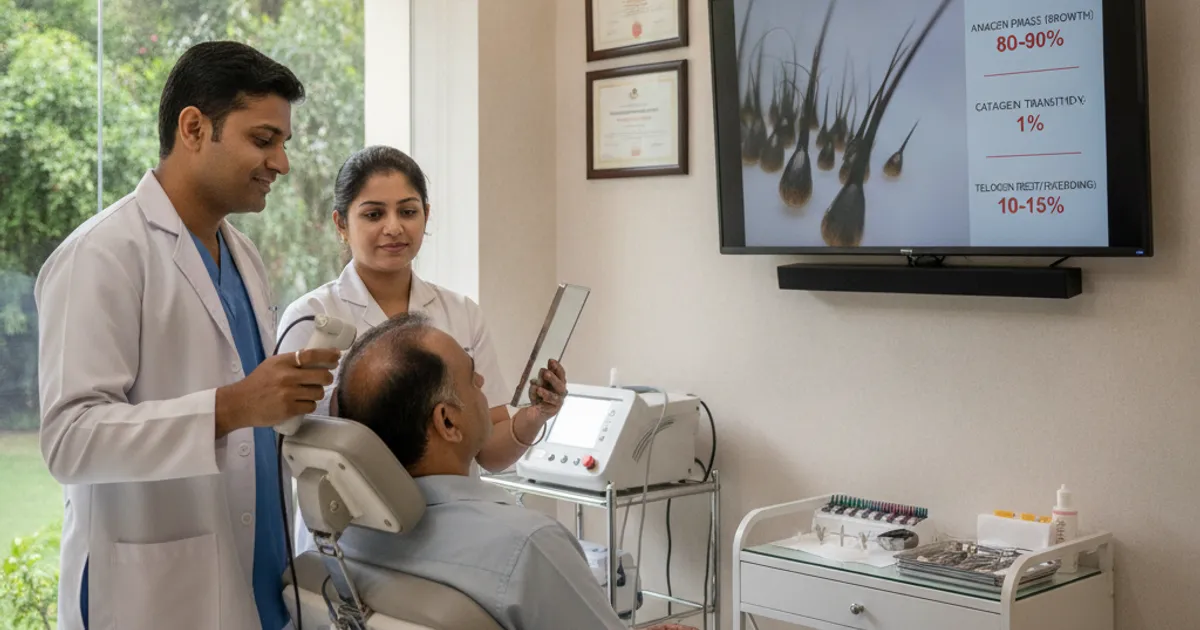
Most healthy scalps keep roughly 85 to 90 percent of hair follicles in the growth phase at any given time. That phase is called anagen, and it is the period when a hair strand actively grows. The remaining 10 to 15 percent are split between a short transition phase (catagen) and a resting phase (telogen), where hair eventually sheds and restarts the cycle. If you are planning a hair transplant, that ratio matters because surgeons want to harvest follicles that are actively growing and resilient, not ones about to shed.
The Hair Growth Cycle in Plain English
Every follicle on your head runs its own independent cycle. At any moment, some hairs are growing, some are transitioning, and some are resting. This is why you normally shed a small amount of hair each day without going bald. The cycle has three main stages:
- Anagen (growth phase): Lasts roughly two to seven years. About 85 to 90 percent of scalp hair is here. Hair grows about half an inch per month.
- Catagen (transition phase): Lasts a few weeks. The follicle shrinks and detaches from the blood supply. Only a small percentage of hair is in this stage.
- Telogen (resting phase): Lasts about three months. Hair sits dormant, then sheds. Around 10 to 15 percent of hair is here, and shedding is normal.
- Exogen (shedding): The final release of the telogen hair. It overlaps with the start of a new anagen phase for that follicle.
Why the Growth Phase Percentage Matters for Transplant Planning
When a clinic evaluates you for a hair transplant, they are not just counting how many grafts you have. They are also assessing how many of those grafts are in the growth phase. Follicles in anagen tend to survive harvesting and transplantation better. If too many follicles are stuck in telogen, the surgeon may need to adjust the plan, delay surgery, or treat an underlying issue first. A low anagen ratio can also signal shedding conditions like telogen effluvium, which should be resolved before surgery.
What a Healthy Growth Phase Ratio Looks Like
There is no single perfect number, but most dermatology and hair restoration guidelines point to a range. Your ratio can shift with age, stress, nutrition, hormones, and recent illness. Here is what a typical healthy scalp looks like:
- Anagen: roughly 85 to 90 percent of scalp hairs
- Catagen: about 1 to 2 percent
- Telogen: about 10 to 15 percent
- Daily shedding: around 50 to 100 hairs per day is normal
- Any sudden increase in shedding or a noticeable drop in growth phase percentage is worth investigating
How to Support Hair in the Growth Phase Before and After a Transplant
You cannot force every follicle into anagen, but you can create conditions that keep the ratio healthy. Good habits before surgery help ensure more grafts are in the right phase on the day of the procedure. Good habits after surgery protect the newly transplanted follicles as they enter their own growth cycles.
Aftercare Timeline: Protecting Growth Phase Hair During Recovery
After a transplant, the newly placed grafts go through their own shock and recovery. The transplanted follicles often shed their hair shafts in the first few weeks, then re-enter anagen and start growing. Your job is to avoid anything that disrupts that process. Here is a simple timeline:
| Time After Surgery | What Is Happening | What to Do |
|---|---|---|
| First 3 days | Grafts are settling; scabs form | Sleep upright, avoid touching or washing the area unless instructed |
| Days 4 to 10 | Scabs loosen; initial healing | Follow clinic washing instructions gently; no scratching |
| Weeks 2 to 4 | Shock shedding of transplanted hair shafts | Do not panic; this is normal and temporary |
| Months 2 to 3 | Follicles enter new anagen phase | Keep scalp clean, avoid harsh chemicals, continue medications as advised |
| Months 4 to 6 | Visible new growth begins | Maintain nutrition and stress management |
| Months 9 to 12 | Most growth is visible | Review results with your clinic; discuss any concerns |
Planning Your Transplant Around the Growth Cycle
Timing your surgery around your hair's natural cycle can improve outcomes. If you have a big event coming up, plan for the shedding phase and the slow growth phase. Most people see real results around the nine to twelve month mark. Here are practical planning points:
- Schedule surgery when you are not under unusual stress or recovering from illness.
- Avoid scheduling right before a major event; shock shedding happens in the first month.
- Give yourself at least a year before a wedding or public appearance if you want full growth.
- Ask your clinic whether they recommend a growth phase test or trichoscopy before surgery.
- If you use minoxidil or finasteride, confirm the timing with your surgeon.
- Plan for follow-up visits so your clinic can track how the grafts are cycling.
When to Ask a Clinic About Growth Phase Testing
Not every clinic performs a formal growth phase test, but many will examine your scalp with a trichoscope or do a pull test. If you have unexplained shedding, a family history of early hair loss, or a previous transplant that did not grow well, it is reasonable to ask. A simple question at your consultation can reveal whether your anagen ratio is in a healthy range or whether something else needs attention first.
FAQ: Growth Phase and Hair Transplant Questions
What percentage of hair should be in the growth phase for a transplant?
Most healthy scalps have about 85 to 90 percent of hair in the anagen growth phase. Clinics generally prefer to see a ratio in that range before proceeding, because follicles in anagen tend to survive harvesting and transplantation better.
Can a hair transplant change my growth phase percentage?
Surgery itself can temporarily push some follicles into telogen, which is why shock shedding happens. Over time, the transplanted follicles re-enter anagen and grow normally. Your overall ratio usually stabilizes within a year.
How do I know if my growth phase ratio is too low?
Signs include sudden or excessive shedding, thinning that seems faster than usual, or a previous transplant that did not grow well. A dermatologist or hair restoration surgeon can measure it with a trichoscope or a pull test.
Does the growth phase percentage affect how many grafts I need?
It can. If a large portion of your donor hair is in telogen, the surgeon may need to harvest more grafts to get the same number of viable growing follicles, or they may recommend treating the underlying cause first.
How the Growth Phase Ratio Is Actually Measured
Patients often assume there is a single blood test or scan that reports a growth phase percentage. In practice, clinicians estimate the ratio by sampling a small area of scalp and classifying the hairs they see. The most common method is the trichogram, where a clinician plucks a bundle of hairs from a defined region and examines the roots under a microscope. Anagen hairs have a pigmented, well-formed root, while telogen hairs have a club-shaped, unpigmented root. Counting the two gives an approximate ratio. A less invasive option is trichoscopy, which uses a magnified camera to look at hair density, caliber variation, and signs of miniaturization without plucking. Some clinics combine both. The key point for patients is that these are sampling methods, so the result is an estimate rather than an exact whole-scalp figure. Results can also vary depending on which part of the scalp is sampled, since the crown, hairline, and sides can behave differently.
What Can Push the Ratio Out of Range
A low anagen percentage is usually a symptom rather than a diagnosis on its own. Several common conditions shift more hairs into the resting phase at once, which is why shedding tends to be diffuse rather than patchy. Knowing the usual suspects helps you have a more productive conversation with a clinician.
- Telogen effluvium: a stress response after illness, surgery, childbirth, rapid weight loss, or severe emotional stress that pushes many follicles into rest at the same time.
- Androgenetic alopecia: inherited pattern hair loss that gradually miniaturizes follicles and shortens the anagen phase over time.
- Thyroid and hormonal imbalances: can disrupt the cycle and cause generalized shedding.
- Nutritional deficiencies: low iron, low vitamin D, and inadequate protein intake are commonly checked before surgery.
- Medications and treatments: some drugs, including certain acne and mood medications, are associated with increased shedding.
- Crash dieting and heavy physical stress: abrupt calorie restriction and intense training loads can affect the cycle.
What to Expect If Your Ratio Is Low Before Surgery
If your clinic finds more hairs in telogen than expected, the typical response is to pause and investigate rather than proceed immediately. You may be asked about recent illness, major life stress, diet, medications, and family history of hair loss. Blood tests for thyroid function, iron stores, vitamin D, and sometimes hormones are common next steps. Depending on what turns up, the plan might involve correcting a deficiency, adjusting a medication with your prescribing doctor, or treating an underlying scalp condition. In pattern hair loss, the clinic may discuss medical therapy to stabilize the follicles before harvesting. The timeline varies by cause. Some shedding resolves within a few months once the trigger is gone, while pattern hair loss is managed rather than cured. The practical takeaway is that a delayed surgery date is often a sign of careful planning, not a problem with you as a candidate.
Can my growth phase percentage change over time?
Yes. The ratio is not fixed. It shifts with age, stress, illness, nutrition, hormones, and treatment. That is why clinics may re-test rather than rely on a single older result.
Does a low anagen ratio mean my transplant will fail?
Not necessarily. It is one factor among many. Surgeons assess donor density, scalp health, and the cause of any shedding. A low ratio often prompts treatment or a delay rather than cancellation.
Is the growth phase ratio the same all over my scalp?
No. Different regions can show different ratios, and pattern hair loss affects some areas more than others. This is one reason sampling location matters.
Should I get tested before booking a transplant?
It is reasonable to ask your clinic whether they recommend trichoscopy or a trichogram, especially if you have unexplained shedding, a strong family history of hair loss, or a previous transplant that grew poorly.
More Guides
- How Long After Finasteride Before a Hair Transplant?
Planning a hair transplant while on finasteride? Learn the typical waiting period, why timing matters, and how to coordinate with your surgeon for best results.
- Early Symptoms of Hair Loss: What to Watch For First
Learn the early symptoms of hair loss, how to track them, and when to see a specialist. Plan ahead with treatment options and costs.
- Alopecia Treatment: A Comprehensive Guide
A practical guide to alopecia treatment: types, diagnosis, medications, surgery, recovery timeline, and aftercare. Plan your hair restoration with confidence.
- Hair Loss Causes: What You Can and Can't Control
Understand hair loss causes, what's controllable, and how to plan a transplant. Practical guide to factors, aftercare, and when to see a specialist.