
What Happens 10 Days After a Hair Transplant?
At 10 days after a hair transplant, scabs are mostly gone and grafts are secure. Learn what's normal, when to wash normally, and when shedding starts.
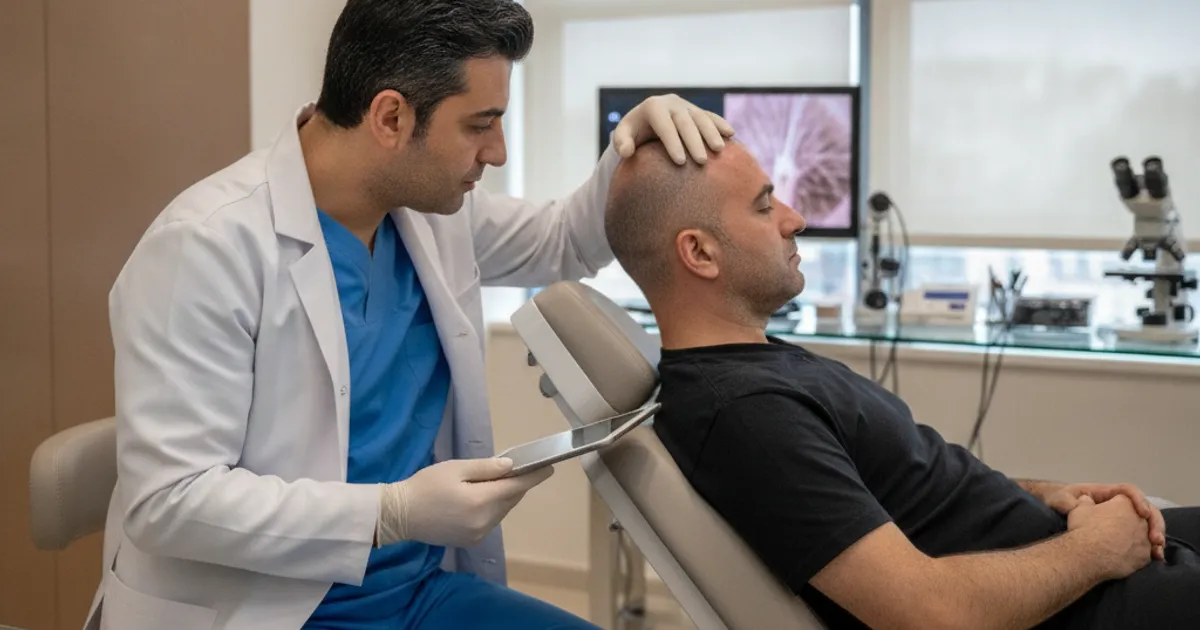
Ten days after a hair transplant, your scalp is usually past the most fragile stage: the grafts are anchored, scabs and crusts are mostly gone or falling away, and you can typically return to normal washing. Redness may still be visible, and the first shedding phase is often just around the corner.
What happens 10 days after a hair transplant?
By day 10, the acute healing phase is winding down. The tiny wounds around each graft have closed, and the transplanted follicles are held in place by the surrounding tissue. Most clinics consider this the point where you can relax a little — but not completely.
- Grafts are now firmly anchored; light contact won't dislodge them.
- Scabs and crusts are drying, flaking, or already gone.
- Redness in the recipient area is common and can last weeks.
- Some numbness or tightness in the donor area is still normal.
- Shock loss (shedding of transplanted hairs) may begin any day now.
10 days after hair transplant: healing timeline at a glance
Here's how day 10 fits into the broader recovery picture. Everyone heals at a slightly different pace, but this is the typical sequence most surgeons describe.
| Day | What's happening | What you can usually do |
|---|---|---|
| Day 1–3 | Grafts are fragile; scabs form | Sleep upright, no touching, clinic-guided washing only |
| Day 4–7 | Scabs begin to dry and lift | Gentle washing per clinic instructions |
| Day 8–10 | Most scabs gone or flaking off | Return to normal washing; light exercise may be OK |
| Day 10–14 | Grafts fully secure | Back to most daily routines; avoid harsh chemicals |
| Week 3–8 | Shock loss / shedding phase | Expect transplanted hairs to fall out |
| Month 3–4 | New growth starts | First visible regrowth |
| Month 12+ | Final results | Full maturity of the transplant |
Day 10 sits right at the transition between 'handle with care' and 'mostly back to normal.' It's not the finish line, but it's a meaningful milestone.
What does the scalp look like 10 days after a hair transplant?
Visually, day 10 is a mixed bag. Some people look almost back to normal; others still have visible redness and flaking. Both are within the range of normal.
- Pink or reddish tint across the recipient area — very common.
- Small white or yellowish flakes where scabs are shedding.
- Tiny crusts may still cling to a few grafts; don't pick them.
- Donor area may look patchy or slightly pink but is usually healing well.
- No visible new hair growth yet — that comes months later.
Can I wash my hair normally 10 days after a transplant?
In most cases, yes — but 'normally' still means gently. By day 10, many clinics give the green light to resume your regular washing routine, though you should still avoid aggressive scrubbing, hot water, and harsh products for a while longer.
- Step 1: Wet your hair with lukewarm water — not hot.
- Step 2: Apply a mild, fragrance-free shampoo in your palm first.
- Step 3: Pat it onto the scalp; don't rub or scrub vigorously.
- Step 4: Rinse gently with lukewarm water.
- Step 5: Pat dry with a soft towel — no rubbing.
- Step 6: Avoid hair dryers on high heat and skip styling products.
If your clinic gave you specific instructions that differ from this, follow theirs. Protocols vary between surgeons.
Are scabs and crusts gone by day 10?
For most people, the majority of scabs are gone or actively flaking off by day 10. A few stubborn crusts can linger into day 12 or 14, and that's still normal.
- Most scabs: gone or flaking by day 10.
- A few remaining crusts: normal up to about day 14.
- Scabs that are thick, painful, or oozing: contact your clinic.
- Never force scabs off — let washing and time do the work.
When do transplanted hairs start to shed?
Shedding — often called shock loss — typically starts between weeks 2 and 4 after a hair transplant. By day 10, you're usually just before this phase, though some people notice the first loose hairs a little earlier.
| Timeline | What to expect |
|---|---|
| Day 10–14 | Grafts secure; shedding may begin soon |
| Week 2–4 | Shock loss starts; transplanted hairs fall out |
| Week 4–8 | Peak shedding; scalp may look thinner than before |
| Month 3–4 | New growth becomes visible |
| Month 6 | Noticeable improvement in density |
| Month 12–18 | Final results mature |
Shedding feels alarming, but it's expected. The follicle stays in place; only the hair shaft falls out. New growth follows.
What can I do (and avoid) 10 days after a hair transplant?
Safe at day 10
- ✓ Gentle washing with mild shampoo
- ✓ Light walking and low-impact activity
- ✓ Wearing a loose hat if needed
- ✓ Sleeping normally (if clinic approves)
- ✓ Returning to desk work
Avoid at day 10
- ✓ Vigorous scrubbing or scratching
- ✓ Swimming pools, saunas, hot tubs
- ✓ Heavy lifting or intense cardio
- ✓ Direct sun exposure on the scalp
- ✓ Harsh chemicals, dyes, or styling products
- Check with your clinic before restarting gym workouts.
- Wear a loose-fitting cap if you must cover up outdoors.
- Keep the scalp moisturised if it feels tight — ask your clinic what to use.
- Stay hydrated and eat well; healing is still happening underneath.
When should I contact my clinic at day 10?
Most day-10 experiences are uneventful. But some signs warrant a call to your surgeon rather than a wait-and-see approach.
- Signs of infection: spreading redness, pus, fever, or increasing pain.
- Sudden, significant swelling that wasn't there before.
- Grafts that appear to have come out with scabs.
- Severe itching that doesn't improve with gentle washing.
- Any concern that just doesn't feel right — trust your gut.
How do I choose a clinic for aftercare support?
Aftercare matters as much as the procedure itself. A clinic that answers questions at day 10 — and at month 6 — is worth more than one that disappears after surgery. When comparing clinics, look for clear post-op protocols, accessible follow-up, and transparent pricing.
You can also browse clinic listings by city to compare aftercare offerings side by side.
Frequently asked questions about 10 days after hair transplant
Can I sleep normally 10 days after a hair transplant?
In most cases, yes. Many clinics allow normal sleeping positions by day 10, though some advise avoiding direct pressure on the recipient area for a bit longer. Follow your surgeon's specific guidance.
Is it normal to still have scabs at day 10?
Yes. While most scabs are gone or flaking by day 10, a few stubborn crusts can linger until around day 14. Don't pick them — let them fall off naturally.
Can I exercise 10 days after a hair transplant?
Light activity like walking is usually fine. Strenuous exercise, heavy lifting, and activities that cause sweating or straining are typically off-limits until your clinic clears you — often around week 2 to 3.
Why is my scalp still red at day 10?
Redness in the recipient area is normal and can last several weeks. It fades gradually as healing continues. If redness worsens, spreads, or comes with pain or pus, contact your clinic.
More Guides
- Hair Transplant and Blood Thinners: Safety and Timing
Can you have a hair transplant on blood thinners? Learn why they matter, which ones raise bleeding risk, how long to stop before surgery, and when to restart.
- Finasteride and PSA Testing: What You Need to Know
Finasteride lowers PSA levels, so your test results need careful interpretation. Learn how finasteride affects PSA, the adjustment factor, and what to tell your
- Can You Cure a Receding Hairline? What's Realistic
Can you cure a receding hairline? Learn what's realistic with medications, transplants, and lifestyle changes, plus expected results and costs.
- Minoxidil Hair Thinning Before Growth: Is It Normal?
Is minoxidil hair thinning before growth normal? Yes, it's a common sign the treatment is working. Learn why it happens, how long it lasts, and when to worry.