
Dermatologist vs Hair Transplant Clinic for Receding Hairline
Compare dermatologist vs hair transplant clinic for a receding hairline: costs, results, recovery, and which option suits your stage of hair loss.
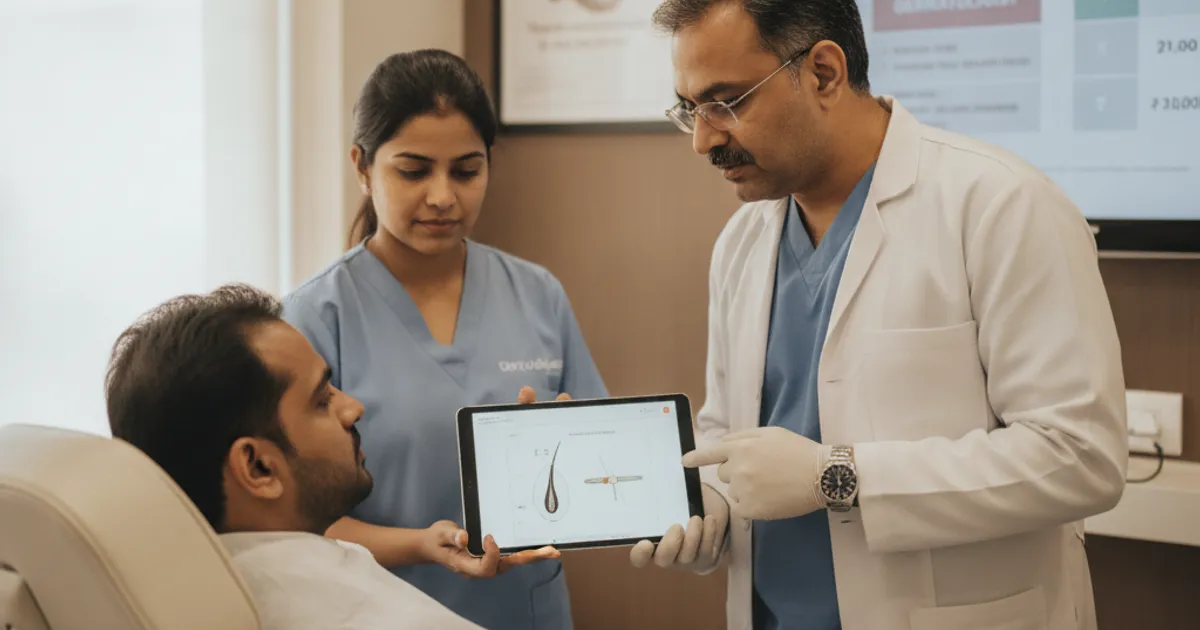
If your hairline is creeping back, you've probably asked yourself whether to see a dermatologist or head straight to a hair transplant clinic. The short answer: for early thinning, a dermatologist is usually the smarter first move. For significant recession where you want surgical restoration, a hair transplant clinic is the better fit. But it's rarely that black and white, so let's break down the differences, the costs, the recovery, and how to decide which path makes sense for you.
What Each One Actually Does
A dermatologist is a medical doctor who specializes in skin, hair, and nails. They diagnose hair loss conditions, prescribe medications, and offer non-surgical treatments. A hair transplant clinic is a facility focused on surgical hair restoration, typically performing procedures like FUE (follicular unit extraction) and FUT (follicular unit transplantation). Some clinics also employ dermatologists on staff, but their primary business is surgery.
- Dermatologist: Medical diagnosis, prescription treatments (minoxidil, finasteride), PRP therapy, and monitoring of hair loss progression.
- Hair transplant clinic: Surgical hair restoration, graft placement, and often post-op care packages. Some also offer non-surgical add-ons like PRP.
Key Differences at a Glance
| Factor | Dermatologist | Hair Transplant Clinic |
|---|---|---|
| Primary focus | Medical management of hair loss | Surgical restoration |
| Cost | Lower per visit; ongoing if treatments continue | Higher upfront; varies by graft count |
| Recovery | No downtime | 1–2 weeks of visible healing; full recovery months |
| Results | Slows loss, may regrow some hair; not permanent for everyone | Permanent relocation of hair follicles; results visible in 6–12 months |
| Pain | Minimal (injections, topical treatments) | Local anesthesia; discomfort post-op manageable with meds |
| Suitability | Early-stage recession, diffuse thinning, or those not ready for surgery | Stable hair loss, good donor supply, realistic expectations |
Cost: Dermatologist vs Hair Transplant Clinic
Dermatologist visits are typically pay-per-consultation or covered by insurance if deemed medically necessary. Ongoing treatments like minoxidil or finasteride are relatively inexpensive monthly costs. Hair transplant clinics charge by procedure, often based on the number of grafts needed. Costs vary widely by location and clinic reputation, but generally, a hair transplant is a significant investment compared to dermatologist-led treatments.
Because hair transplant pricing depends heavily on how much restoration you need, it's most useful to look at costs by stage of hair loss. The figures below are averaged case pricing medians from clinics listed on Clinic Reccy, broken down by early, moderate, and advanced cases. Early-stage cases typically require fewer grafts, while advanced cases need more extensive work.
Results and Recovery
Dermatologist-led treatments can slow hair loss and sometimes regrow hair, but results vary and require ongoing use. Hair transplant clinics offer permanent results because follicles are relocated from the back of the scalp to the thinning areas. Recovery from a transplant involves scabbing, redness, and sensitivity for a week or two, with final results taking up to a year. Dermatologist treatments have no downtime.
- Dermatologist: No downtime, gradual improvement over months, requires consistent use of medications.
- Hair transplant clinic: 1–2 weeks of visible healing, shock loss possible, final results in 6–12 months, permanent once healed.
Which Should You Choose for a Receding Hairline?
The right choice depends on how far your hair loss has progressed and what you're comfortable with. If you're in the early stages, a dermatologist can help you explore non-surgical options and monitor your progress. If you've already lost significant density and want a permanent fix, a hair transplant clinic is the way to go. Some people do both: see a dermatologist first to stabilize loss, then consider surgery later.
What to Expect at Your First Appointment
At a dermatologist visit, expect a scalp examination, a discussion of your medical history, and possibly blood tests to rule out underlying conditions like thyroid issues or nutritional deficiencies. They'll likely recommend a treatment plan that may include topical minoxidil, oral finasteride, or other medications. At a hair transplant clinic, the consultation focuses on your donor hair supply, the number of grafts needed, and the surgical approach. They'll show you before-and-after photos and explain the procedure step by step.
Risks and Limitations
Dermatologist treatments aren't a cure. They can slow loss and sometimes regrow hair, but you need to keep using them to maintain results. Side effects from medications are possible and should be discussed with your doctor. Hair transplants carry surgical risks: infection, scarring, and shock loss (temporary shedding of transplanted hair). Results depend on the skill of the surgeon and your individual healing. Neither option is a quick fix, and unrealistic expectations are a common reason people end up disappointed.
FAQ
Can a dermatologist perform a hair transplant?
Some dermatologists are trained in hair restoration surgery, but most focus on medical treatments. Hair transplant clinics specialize in surgical procedures and typically have more experience with graft placement.
Is it better to see a dermatologist before a hair transplant?
Yes, it can be helpful. A dermatologist can diagnose the cause of your hair loss, rule out underlying conditions, and stabilize your hair loss before surgery. This can improve transplant outcomes.
How much does a dermatologist visit cost compared to a hair transplant?
Dermatologist consultations are generally much less expensive than a hair transplant procedure. However, ongoing treatments can add up over time. Hair transplants are a larger upfront investment but offer permanent results.
Will a dermatologist be able to regrow my receding hairline?
Dermatologists can prescribe medications that may slow loss and sometimes regrow hair, but results vary. For a significantly receded hairline, a hair transplant is usually more effective at restoring density.
More Guides
- SMP vs Hair Transplant for Alopecia: Which Suits You?
Compare SMP vs hair transplant for alopecia: costs, results, recovery, pain, and suitability. Find out which option fits your stage of hair loss.
- Exosomes vs PRP for Hair Loss: Which Is Worth It?
Exosomes vs PRP for hair loss compared: costs, results, recovery, and who each treatment suits. Find out which is worth it for your stage of hair loss.
- Hair Transplant vs Hair System: Long-Term Cost and Results
Compare hair transplant vs hair system: long-term costs, results, recovery, and suitability to decide which option fits your needs and budget.
- Clascoterone vs Minoxidil: Which Is Better for Hair Loss?
Clascoterone vs minoxidil: compare how they work, costs, results, and side effects to decide which hair loss treatment suits you best.