
Does PRP Work for Hair Loss? What the Evidence Shows
PRP for hair loss: how it works, what the evidence shows, treatment frequency, results timeline, side effects, cost, and how it compares to other options.
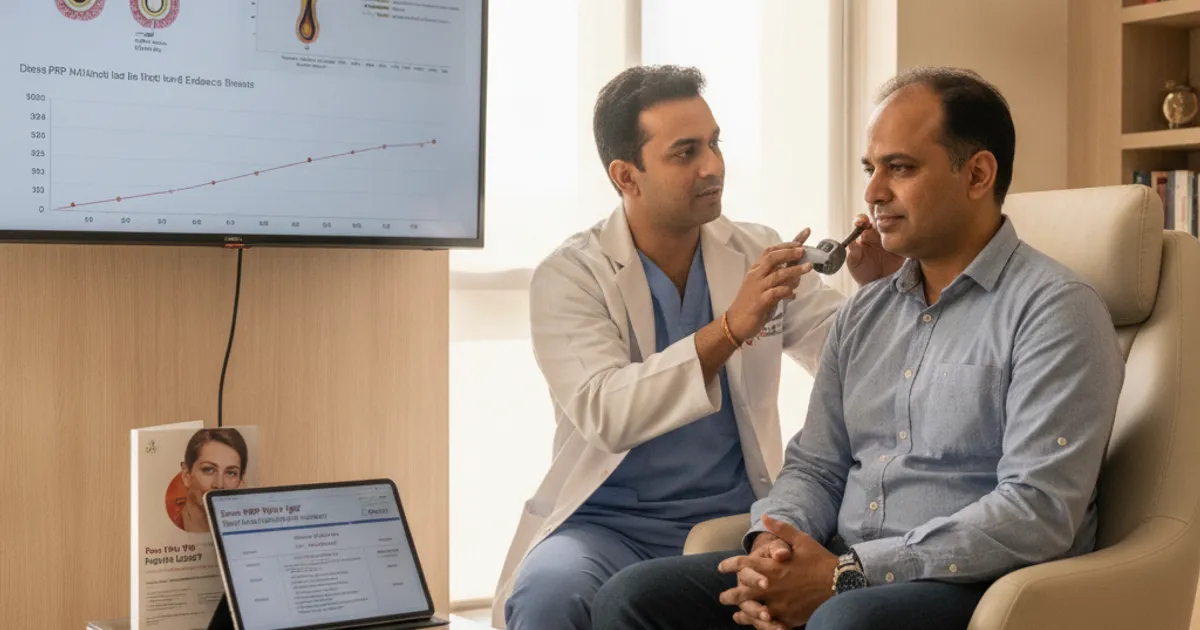
PRP for hair loss has become one of the most requested add-on treatments at hair restoration clinics, but the marketing often runs ahead of the science. So does it actually work? The short answer is that platelet-rich plasma can modestly increase hair density and thickness in some people with androgenetic alopecia, but the evidence is mixed, the results are rarely dramatic on their own, and it works best as part of a broader treatment plan. This guide breaks down what PRP is, what the clinical research actually shows, how it is used, what it costs, and who is most likely to benefit.
What Is PRP and How Does It Work for Hair Loss?
Platelet-rich plasma (PRP) is a concentrate made from your own blood. A small sample is drawn, spun in a centrifuge to separate the red blood cells from the plasma, and the resulting plasma — which contains a much higher concentration of platelets and growth factors than normal blood — is injected into the scalp. The theory is that these growth factors stimulate dormant hair follicles, improve blood supply to the follicle, and prolong the growth phase of the hair cycle.
- It uses your own blood, so there is no risk of allergic reaction or rejection.
- The growth factors involved include platelet-derived growth factor (PDGF), vascular endothelial growth factor (VEGF), and insulin-like growth factor (IGF-1).
- It is typically used for androgenetic alopecia (male and female pattern hair loss) and sometimes as an adjunct after hair transplant surgery.
- It is not a cure for hair loss and does not regrow hair on completely bald, scarred, or long-dormant follicles.
The Evidence: Does PRP Actually Grow Hair?
There is a reasonable body of research on PRP for androgenetic alopecia, but it is not as strong as the evidence for established medications like minoxidil and finasteride. Most studies are small, use different preparation methods, and measure outcomes in different ways, which makes them hard to compare directly. That said, several randomized controlled trials and meta-analyses have found statistically significant improvements in hair density and hair diameter compared with placebo or baseline.
- Multiple meta-analyses have concluded that PRP injections can increase hair count and thickness in people with pattern hair loss, though the effect size is generally modest.
- Results tend to be better in men with mild to moderate hair loss than in advanced cases.
- Some studies show benefit when PRP is combined with minoxidil or finasteride, suggesting an additive effect.
- Evidence for PRP as a standalone treatment in women is more limited, though some trials report improvements in female pattern hair loss.
- Many studies have a high risk of bias, short follow-up, or industry funding, so the overall certainty of evidence is low to moderate.
| Outcome | What the research generally shows |
|---|---|
| Hair density | Modest increase in several RCTs and meta-analyses, especially at 3–6 months |
| Hair thickness (diameter) | Some studies report improvement, others find no significant difference |
| Hair count | Mixed results; positive trends in most meta-analyses but not universal |
| Regrowth in completely bald areas | Little to no evidence of regrowth on slick bald scalp |
| Combination with medication | Often better than PRP alone in head-to-head or add-on studies |
How PRP Is Used: Dosage, Frequency, and Treatment Protocol
There is no single standardized PRP protocol, which is one reason results vary so much between clinics. Most practitioners follow a loading phase followed by maintenance. The exact number of injections, the volume of PRP, and the concentration of platelets depend on the device used and the clinic's approach.
- A typical course starts with 3 to 4 sessions spaced about 4 weeks apart.
- After the loading phase, maintenance sessions are usually every 3 to 6 months.
- Each session involves multiple small injections across the thinning area, often with a numbing cream or local anesthetic.
- Some clinics use microneedling alongside PRP to improve absorption and stimulate the scalp.
- The whole appointment usually takes 30 to 60 minutes, including blood draw and centrifugation.
| Phase | Typical frequency | Notes |
|---|---|---|
| Loading phase | 3–4 sessions, 4 weeks apart | Builds initial stimulation of follicles |
| Maintenance phase | Every 3–6 months | Keeps results going; frequency varies by response |
| After hair transplant | Often 1–3 sessions in the first few months | Some surgeons use it to support graft survival |
Expected Results and Timeline: What to Realistically Expect
PRP is not a quick fix. Hair grows slowly, and any change in density or thickness takes months to become visible. Most people who respond will notice some improvement in hair quality and shedding by 3 to 6 months, with more noticeable changes around 6 to 12 months if they continue maintenance. It is important to set expectations: PRP is better at thickening existing hair and slowing loss than at regrowing hair on bald areas.
- Weeks 1–4: little visible change; some temporary scalp tenderness.
- Months 2–3: possible reduction in shedding for some patients.
- Months 3–6: early improvements in hair texture and density may appear.
- Months 6–12: maximum benefit is usually seen with continued sessions.
- If there is no response after 6 months of consistent treatment, it is unlikely to work for you.
Side Effects and Risks of PRP for Hair Loss
Because PRP uses your own blood, serious side effects are rare. Most issues are mild and temporary. The main risks come from the injection itself rather than the plasma. As with any treatment that breaks the skin, there is a small risk of infection, and clinics should follow sterile technique.
- Pain or burning during injections, usually eased by numbing cream.
- Temporary redness, swelling, or tenderness at injection sites.
- Mild bruising or a headache in some cases.
- Very small risk of infection or scalp folliculitis if aftercare is poor.
- Not recommended for people with certain blood disorders, active infections, or some cancers without medical clearance.
| Side effect | How common | How long it lasts |
|---|---|---|
| Injection pain | Common | During the session |
| Redness or swelling | Common | A few hours to 2 days |
| Bruising | Occasional | A few days |
| Headache | Uncommon | Usually resolves within a day |
| Infection | Rare | Requires medical treatment if it occurs |
Who Is a Good Candidate for PRP?
PRP tends to work best for people with early to moderate androgenetic alopecia who still have active hair follicles in the thinning area. It is less useful for advanced baldness, scarring alopecia, or hair loss caused by medical conditions or nutritional deficiencies. A proper diagnosis matters — if your hair loss is due to thyroid issues, iron deficiency, or another underlying cause, PRP will not fix it.
- Men with Norwood 2–4 pattern hair loss and visible thinning but not full baldness.
- Women with diffuse thinning or early female pattern hair loss.
- People looking to add PRP to a regimen of minoxidil, finasteride, or low-level laser therapy.
- Hair transplant patients who want to support graft survival and healing.
- Not ideal for those with active scalp infections, blood disorders, or unrealistic expectations of dramatic regrowth.
How Much Does PRP for Hair Loss Cost?
PRP pricing varies widely by clinic, city, and whether it is bundled with other treatments. In the context of hair restoration, it is often priced per session, with package deals for the loading phase. PRP itself is usually a fraction of the cost of a hair transplant, but it is an ongoing expense because maintenance sessions are needed to keep results. Because PRP is not a one-time procedure, the total cost over a year or more can add up.
| Cost factor | What to expect |
|---|---|
| Per session | Varies by clinic and city; often quoted as a package for 3–4 sessions |
| Loading phase | Usually the largest upfront cost |
| Maintenance | Ongoing every 3–6 months, so budget for the long term |
| Add-ons | Microneedling or combining with other treatments may increase cost |
To give you a sense of the broader cost landscape, hair transplant procedures are priced by stage of hair loss. The figures below are averaged case pricing medians for hair transplant procedures, which can help you understand the range of surgical costs if you are considering PRP alongside surgery. PRP itself is typically much less expensive per session, but it is an ongoing cost because maintenance is required.
PRP vs. Other Hair Loss Treatments: How It Compares
PRP is rarely the first-line treatment for hair loss. Medications like minoxidil and finasteride have stronger evidence and lower ongoing costs, while hair transplant surgery is the only option that can restore hair in bald areas. PRP sits somewhere in the middle: more invasive than a topical or pill, less effective than surgery for advanced loss, and best used as part of a combined approach.
| Treatment | Evidence strength | Invasiveness | Ongoing cost | Best for |
|---|---|---|---|---|
| Minoxidil | Strong | Topical, non-invasive | Low | Early to moderate thinning, both sexes |
| Finasteride | Strong | Oral pill | Low | Men with pattern hair loss |
| PRP | Moderate | Injections | Moderate to high | Early to moderate thinning, add-on therapy |
| Low-level laser | Moderate | Non-invasive | Moderate | Adjunct treatment |
| Hair transplant | Strong for suitable candidates | Surgical | High upfront | Advanced loss, bald areas |
- PRP is more expensive than medication over time because it requires repeated sessions.
- It is less effective than surgery for regrowing hair in completely bald areas.
- It can be combined with minoxidil, finasteride, or surgery for a more comprehensive plan.
- Unlike medication, PRP does not require daily use, but it does require clinic visits.
- If you are looking for the strongest evidence, start with medication and consider PRP as an add-on.
Frequently Asked Questions About PRP for Hair Loss
Does PRP really work for hair loss?
The evidence suggests PRP can modestly improve hair density and thickness in some people with androgenetic alopecia, especially in early to moderate stages. However, results are not guaranteed, the effect is usually modest, and it works best alongside other treatments like minoxidil or finasteride.
How many PRP sessions do I need for hair loss?
Most protocols start with 3 to 4 sessions spaced about 4 weeks apart, followed by maintenance sessions every 3 to 6 months. The exact number depends on your response and the clinic's approach.
Is PRP for hair loss safe?
Because PRP uses your own blood, serious side effects are rare. Most people experience temporary pain, redness, or swelling at the injection sites. Infection is uncommon but possible if sterile technique is not followed.
How long does it take to see results from PRP?
Some people notice reduced shedding by 2 to 3 months, but visible improvements in density usually take 3 to 6 months, with maximum benefit around 6 to 12 months if maintenance continues. If there is no response after 6 months, it is unlikely to work for you.
More Guides
- Alopecia Hair Treatment: Options for Every Type
Explore alopecia hair treatment options, from minoxidil to transplants. Learn about types, evidence, usage, results, side effects, and suitability.
- Alopecia Shampoo Treatment: What to Look For and What Works
A practical guide to alopecia shampoo treatment: how it works, evidence, key ingredients, usage, results timeline, side effects, cost, and alternatives.
- FDA-Approved Treatments for Alopecia: Your Options
Explore FDA-approved treatments for alopecia: how they work, evidence, usage, results, side effects, cost, and how they compare to alternatives.
- Dermaroller for Hair Loss: Session Guide and Results
A practical guide to dermaroller treatment for hair loss: how it works, session frequency, expected results timeline, side effects, cost, and who it suits.