
Finasteride and Blood Pressure: Any Interaction?
Does finasteride affect blood pressure? We break down the evidence, dosage, side effects, and how it compares to other hair loss treatments.
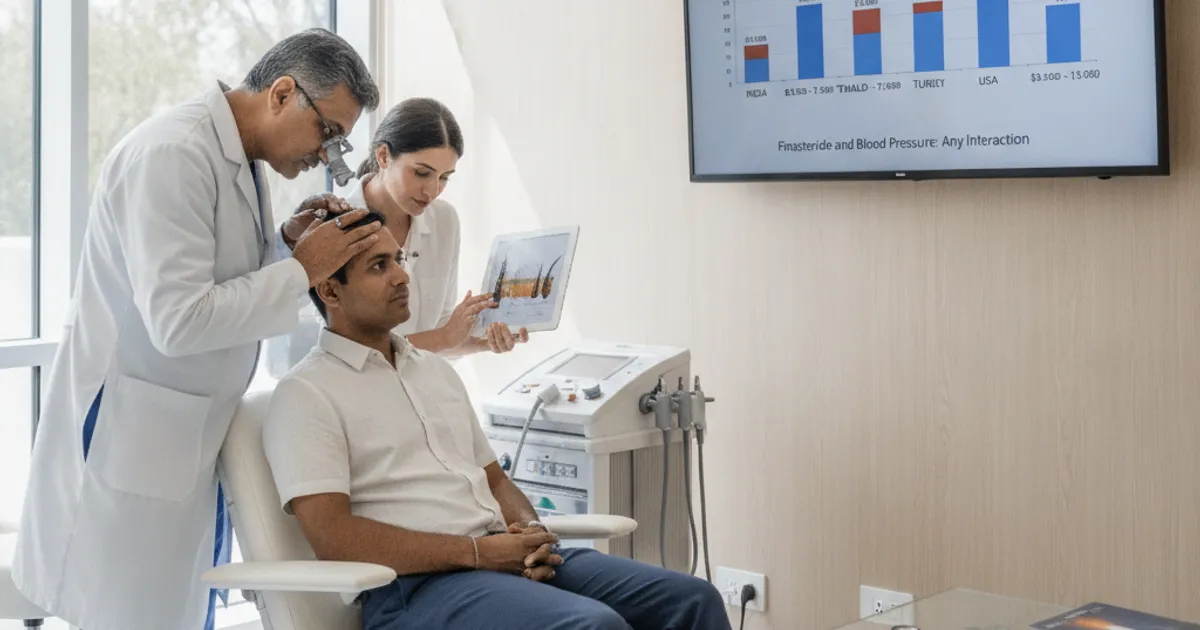
What Is Finasteride and How Does It Work?
Finasteride is an oral prescription medication that was originally developed to treat an enlarged prostate. It later turned out to be effective for male pattern baldness, and today it is one of the most widely prescribed hair loss treatments in the world. It works by blocking the enzyme 5-alpha-reductase, which converts testosterone into dihydrotestosterone (DHT). DHT is the hormone primarily responsible for shrinking hair follicles on the scalp in men who are genetically predisposed to hair loss. By lowering DHT levels, finasteride slows down or stops the miniaturization of hair follicles, and in many cases, it can trigger some regrowth.
- Type: Oral prescription medication (tablet)
- Brand names: Propecia, Proscar (and generic versions)
- Mechanism: 5-alpha-reductase inhibitor — reduces DHT production
- Primary use for hair: Male pattern baldness (androgenetic alopecia)
- Also used for: Benign prostatic hyperplasia (BPH) at higher doses
Finasteride and Blood Pressure: Is There a Direct Interaction?
The short answer is no — finasteride is not known to directly affect blood pressure in a clinically significant way. It is not listed as a blood pressure medication, nor is it a common cause of hypertension or hypotension. However, there are a few indirect factors worth understanding. First, finasteride can cause dizziness or lightheadedness in some users, which could be mistaken for a blood pressure issue. Second, if you are already taking blood pressure medication, there is no well-established dangerous interaction between finasteride and common antihypertensives like ACE inhibitors, beta-blockers, or calcium channel blockers. That said, any medication that affects hormones or blood flow can theoretically have subtle effects, so it's always worth mentioning to your doctor.
- No direct mechanism: Finasteride does not target blood vessels or heart rate.
- No known major interactions with common blood pressure drugs.
- Dizziness is a possible side effect but is not typically caused by blood pressure changes.
- If you have existing heart or blood pressure conditions, consult your doctor before starting.
- Some men report palpitations or mild dizziness — these are rare and usually temporary.
Evidence for Hair Growth: What Clinical Studies Show
Finasteride has been studied extensively for male pattern baldness. The landmark clinical trials showed that after two years, a majority of men taking 1 mg daily experienced either a halt in hair loss or some regrowth. The effect is most pronounced on the crown and mid-scalp, though it can also help the frontal hairline in some cases. It's important to note that finasteride is not a cure — it manages the condition, and benefits last only as long as you continue taking it.
- Many men show no further hair loss after 2 years of use.
- Some experience visible regrowth, usually on the crown.
- Effects are dose-dependent: 1 mg is standard for hair loss; 5 mg is for prostate issues.
- Results vary based on age, genetics, and how early treatment starts.
- Long-term use (5+ years) maintains benefits in most responders.
| Study Focus | Duration | Key Finding |
|---|---|---|
| Hair count change | 24 months | Significant increase in hair count vs. placebo |
| Physician assessment | 12 months | Improved hair growth in majority of users |
| Long-term maintenance | 5 years | Sustained benefit with continued use |
| Frontal hairline | 12 months | Modest improvement, less than crown |
How to Use Finasteride: Dosage, Frequency, and Best Practices
For hair loss, the standard dose is 1 mg taken once daily. It can be taken with or without food. Some men split a 5 mg tablet (Proscar) into quarters to save money, but this is off-label and can lead to inconsistent dosing. It's best to follow your prescriber's instructions. Consistency is key — missing doses reduces effectiveness. If you stop taking finasteride, any benefits will reverse within 6–12 months.
- Standard dose: 1 mg once daily
- Timing: Same time each day, with or without food
- Do not double up on missed doses
- Tablet splitting: Only if prescribed and using a pill cutter
- Do not share with women who are pregnant or may become pregnant
| Form | Typical Dose | Frequency | Notes |
|---|---|---|---|
| Generic finasteride 1 mg | 1 mg | Once daily | Most common for hair loss |
| Propecia 1 mg | 1 mg | Once daily | Brand version, same active ingredient |
| Proscar 5 mg | 1.25 mg (quarter tablet) | Once daily | Off-label for hair loss, requires splitting |
Expected Results and Timeline: What to Expect Month by Month
Finasteride is not an overnight fix. It takes time to lower DHT levels and for hair follicles to respond. Most men see noticeable changes between 3 and 6 months, with full benefits at 12–24 months. Here's a realistic timeline.
- Don't judge results before 6 months.
- Take photos monthly to track progress objectively.
- If you see no change after 12 months, talk to your doctor about alternatives.
- Stopping the drug reverses benefits within a year.
Side Effects and Risks: What You Need to Know
Finasteride is generally well tolerated, but it does have side effects. The most common ones are sexual in nature: decreased libido, erectile dysfunction, and reduced ejaculate volume. These occur in a small percentage of users and usually go away if the drug is stopped. There are also reports of persistent sexual side effects after stopping, though this is rare and not fully understood. Other possible side effects include breast tenderness, depression, and allergic reactions. Importantly, finasteride can reduce PSA levels, which is a marker for prostate cancer, so your doctor needs to know you're on it before interpreting PSA tests.
- Sexual side effects: occur in a small percentage of users in clinical trials
- Decreased libido, erectile dysfunction, ejaculation issues
- Breast tenderness or enlargement (rare)
- Mood changes or depression (rare)
- PSA test interference — always inform your doctor
- Persistent side effects after stopping: very rare but reported
Who Is Finasteride Suitable For?
Finasteride is approved for men aged 18 and older with male pattern baldness. It works best for those who are still in the early to moderate stages of hair loss, as it's more effective at preserving existing hair than regrowing lost hair. It is not typically recommended for women, especially those of childbearing age, due to the risk of birth defects. Postmenopausal women may sometimes be prescribed it off-label, but this is less common. If you have liver disease or prostate cancer, you should discuss risks with your doctor first.
- Best for: Men 18+ with early to moderate androgenetic alopecia
- Less effective for: Advanced baldness with significant scarring
- Not for: Women of childbearing age, pregnant women
- Caution: Liver disease, prostate cancer, or unexplained PSA elevations
- Off-label: Postmenopausal women (under medical supervision)
| Group | Suitability | Notes |
|---|---|---|
| Men 18–40 | Highly suitable | Best results when started early |
| Men 40+ | Suitable | Still effective but may need combination therapy |
| Women (premenopausal) | Not recommended | Risk of birth defects |
| Women (postmenopausal) | Off-label only | Discuss with doctor |
| Men with liver disease | Caution | May need dose adjustment or monitoring |
Cost of Finasteride: What Affects the Price
Finasteride is available as a generic, which makes it relatively affordable compared to many other hair loss treatments. The cost depends on whether you buy brand-name Propecia or generic finasteride, your pharmacy, your insurance coverage, and whether you get a 30-day or 90-day supply. In the US, generic finasteride is typically much cheaper than brand-name Propecia. Prices in other countries vary widely. Because hair transplant costs are often discussed alongside medication, here's a breakdown of average hair transplant pricing by stage of hair loss for context.
- Generic finasteride: typically much cheaper than brand-name Propecia
- Brand Propecia: significantly more expensive than generic
- Insurance: Usually not covered for hair loss
- Online pharmacies: Can be cheaper but verify legitimacy
- Bulk buying: 90-day supplies often reduce monthly cost
How Finasteride Compares to Other Hair Loss Treatments
Finasteride is just one option. Minoxidil (topical) is the other FDA-approved hair loss drug. They work differently and are often used together. Other options include low-level laser therapy, PRP injections, and hair transplant surgery. Here's how they stack up.
| Treatment | How It Works | Effectiveness | Cost | Prescription? |
|---|---|---|---|---|
| Finasteride | Blocks DHT | High for prevention, moderate for regrowth | Varies; generic is affordable | Yes |
| Minoxidil | Increases blood flow to follicles | Moderate, best for crown | Varies; available over the counter | No (topical) |
| Low-level laser | Stimulates follicles with light | Low to moderate | Device cost varies | No |
| PRP injections | Growth factors from your blood | Moderate, variable | Per-session cost varies | No |
| Hair transplant | Moves hair follicles surgically | High for transplanted areas | Varies by stage and clinic | No |
- Finasteride + minoxidil is a common and effective combo.
- Finasteride is better at stopping loss; minoxidil is better at stimulating growth.
- Surgery is the only option for areas that are already bald.
- Medication is usually needed after a transplant to maintain results.
Frequently Asked Questions
Does finasteride raise or lower blood pressure?
Finasteride is not known to directly raise or lower blood pressure. It does not target the cardiovascular system. Some users report dizziness, which can be a symptom of blood pressure changes, but this is not a common or direct effect of the drug. If you have concerns, monitor your blood pressure and speak to your doctor.
Can I take finasteride if I'm on blood pressure medication?
There are no well-established dangerous interactions between finasteride and common blood pressure medications. However, because everyone's health situation is different, you should always tell your prescribing doctor about all medications you take, including blood pressure drugs, before starting finasteride.
How long does finasteride take to work for hair loss?
Most men see noticeable results within 3 to 6 months, with maximum benefits at 12 to 24 months. It's important to be consistent and patient. If you stop taking it, any benefits will reverse within 6 to 12 months.
Is finasteride safe for long-term use?
Clinical studies have followed men taking finasteride for up to 5 years with no major safety concerns beyond the known side effects. However, long-term use should be monitored by a doctor, especially if you have other health conditions or take other medications.
More Guides
- Alopecia Hair Treatment: Options for Every Type
Explore alopecia hair treatment options, from minoxidil to transplants. Learn about types, evidence, usage, results, side effects, and suitability.
- Alopecia Shampoo Treatment: What to Look For and What Works
A practical guide to alopecia shampoo treatment: how it works, evidence, key ingredients, usage, results timeline, side effects, cost, and alternatives.
- FDA-Approved Treatments for Alopecia: Your Options
Explore FDA-approved treatments for alopecia: how they work, evidence, usage, results, side effects, cost, and how they compare to alternatives.
- Dermaroller for Hair Loss: Session Guide and Results
A practical guide to dermaroller treatment for hair loss: how it works, session frequency, expected results timeline, side effects, cost, and who it suits.