
Chemotherapy Hair Loss: Regrowth Timeline and Options
Hair loss from chemotherapy is usually temporary. Learn the regrowth timeline month by month, treatment options, and whether a hair transplant is suitable.
What Is Chemotherapy-Induced Hair Loss?
Chemotherapy-induced hair loss, medically known as chemotherapy-induced alopecia, is hair loss that occurs as a side effect of cancer treatment. It happens because chemotherapy drugs target rapidly dividing cells — and hair follicle cells divide quickly, making them collateral damage. The result is often dramatic shedding, sometimes within weeks of starting treatment. For many people, this is one of the most distressing aspects of cancer therapy, but it's important to know that in most cases the hair grows back after treatment ends. The regrowth timeline varies from person to person, and there are options to manage the process along the way.
Why Chemotherapy Causes Hair Loss
Chemotherapy works by attacking cells that divide rapidly — a hallmark of cancer cells. Unfortunately, several normal tissues also have fast-dividing cells, including hair follicles, the lining of the mouth, and bone marrow. When chemo drugs reach the hair follicles, they disrupt the hair growth cycle, pushing hairs into a resting phase and causing them to fall out. The severity depends on the drug, dose, and how it's administered. Here's a quick breakdown of common patterns:
- Drug type: Anthracyclines (e.g., doxorubicin) and taxanes (e.g., paclitaxel) are more likely to cause complete hair loss.
- Dose and schedule: Higher doses and more frequent cycles increase the risk and speed of hair loss.
- Method of delivery: Intravenous chemo is more likely to affect scalp hair than oral forms.
- Individual factors: Some people are more sensitive than others, even on the same regimen.
Symptoms and Patterns of Hair Loss During Treatment
Hair loss from chemo doesn't happen overnight. It usually starts a few weeks after the first treatment and progresses gradually. You might notice more hair on your pillow, in the shower drain, or when brushing. Some people experience tingling or tenderness of the scalp before shedding begins. The pattern is typically diffuse — hair thins evenly across the scalp rather than in a receding hairline pattern. Body hair, eyebrows, eyelashes, and pubic hair can also be affected, though usually to a lesser degree. Here's what to watch for:
- Gradual thinning rather than patchy baldness.
- Increased shedding during washing or combing.
- Scalp sensitivity or itching in the early stages.
- Loss of eyebrows and eyelashes (often later in treatment).
- Regrowth may start while still on treatment, but often hair is finer or a different texture.
How Hair Loss Is Assessed and Diagnosed
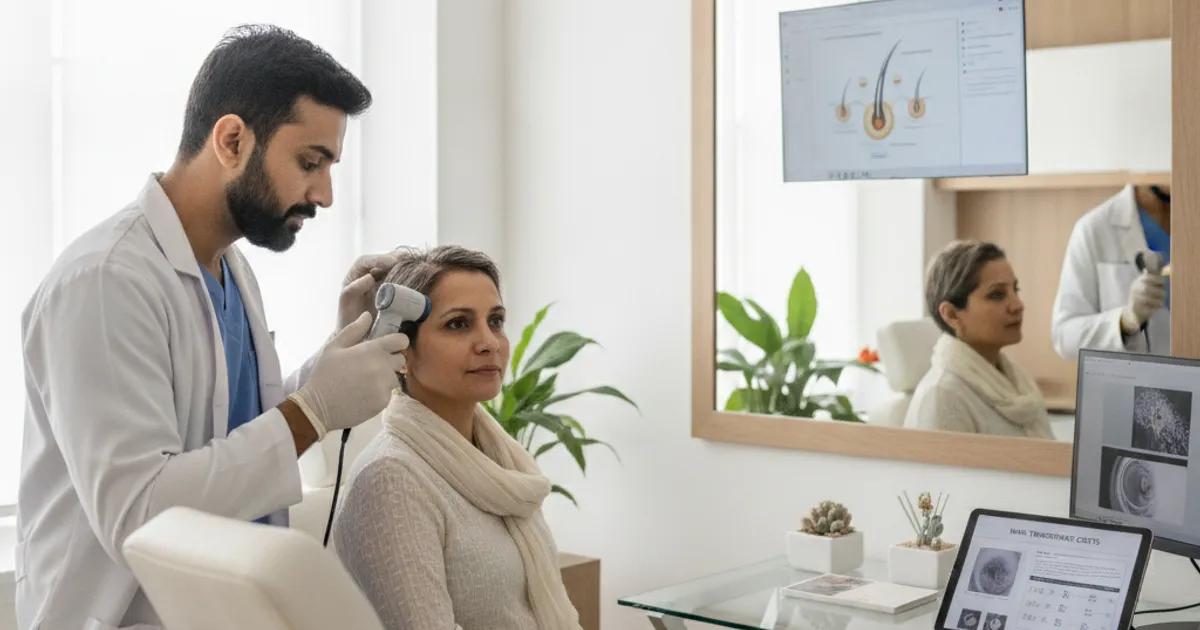
In most cases, chemotherapy-induced hair loss is diagnosed simply by taking a history and examining the scalp. Your oncologist or dermatologist will ask about your treatment regimen, timing of hair loss, and pattern. There's usually no need for biopsies or blood tests unless there's a suspicion of another cause (like thyroid issues or iron deficiency). A pull test — gently tugging a small group of hairs — can help assess active shedding. Here's what the assessment typically involves:
- Medical history: cancer type, chemo drugs, cycle timing.
- Visual inspection: pattern and extent of hair loss.
- Hair pull test: to check for active shedding.
- Blood tests: only if other causes are suspected (e.g., thyroid, iron, vitamin D).
- Scalp examination: to rule out infections or other skin conditions.
Regrowth Timeline: What to Expect Month by Month
The good news is that hair usually starts growing back after chemotherapy ends. The exact timeline depends on the drugs used, treatment duration, and your individual biology. Most people see noticeable regrowth within a few months after finishing treatment, but full recovery can take a year or more. Here's a general month-by-month guide based on typical clinical experience (these are approximate ranges, not exact predictions):
| Time After Treatment | What to Expect |
|---|---|
| 1–2 months | Hair may still shed; scalp may feel smooth. Some fine fuzz may appear. |
| 3–4 months | Noticeable regrowth begins. Hair often comes in thin, soft, and sometimes a different color or texture. |
| 5–6 months | Hair thickens and covers the scalp more evenly. Texture may start to normalize. |
| 7–9 months | Significant improvement in density and length. Many people feel comfortable going without a wig. |
| 10–12 months | Hair continues to mature. Some may still see improvements beyond a year. |
Treatment Options for Chemotherapy-Induced Hair Loss
While there's no way to completely prevent chemo-induced hair loss, several strategies can help manage it or support regrowth. Some options are used during treatment, others after. It's important to talk to your oncology team before starting any new treatment, as some products may interact with your therapy. Here are the main options:
- Scalp cooling (cold caps): Worn during chemo sessions to reduce blood flow to hair follicles, which can lessen hair loss. Effectiveness varies by drug.
- Minoxidil (Rogaine): A topical treatment that can stimulate hair growth. Some studies suggest it may speed up regrowth after chemo, but evidence is limited.
- Finasteride: An oral medication for male pattern baldness. It is not typically used for chemo-induced hair loss unless there's concurrent androgenetic alopecia.
- PRP (platelet-rich plasma): Injections that may stimulate hair follicles. Evidence for chemo-induced alopecia is still emerging.
- Wigs, scarves, and hats: Practical and emotional support during the shedding phase.
- Gentle hair care: Avoid harsh chemicals, heat styling, and tight hairstyles to protect fragile regrowth.
| Treatment | How It Works | When to Use | Evidence Level |
|---|---|---|---|
| Scalp cooling | Reduces chemo delivery to hair follicles | During chemo sessions | Strong for prevention |
| Minoxidil | Stimulates blood flow to follicles | After chemo, once hair starts regrowing | Moderate for regrowth |
| Finasteride | Blocks DHT (male hormone) | Not typically for chemo-induced loss | Limited relevance |
| PRP | Growth factors from your own blood | After chemo, as adjunct | Emerging |
Is a Hair Transplant Suitable After Chemotherapy?
A hair transplant is rarely the first choice for chemotherapy-induced hair loss because the hair usually grows back on its own. However, in cases where regrowth is incomplete or there's permanent thinning (which can happen with certain high-dose regimens or if you also have genetic hair loss), a transplant might be considered. The key is to wait until your hair loss has stabilized — typically at least a year after finishing chemo — and to get clearance from your oncology team. Here are the main considerations:
- Wait for stabilization: Hair loss should be stable for at least 6–12 months before surgery.
- Medical clearance: Your oncologist must confirm you're healthy enough for surgery and that it's safe.
- Donor hair quality: Chemo can affect donor hair, so a surgeon will assess density and quality.
- Realistic expectations: Transplant works best for localized thinning, not diffuse chemo-induced loss.
- Alternative: If hair is still regrowing, give it time — many people see improvement up to 18 months post-chemo.
Frequently Asked Questions
Will my hair definitely grow back after chemotherapy?
In most cases, yes. Hair regrowth is common after chemotherapy ends, though the timeline and texture can vary. Some people experience permanent thinning, but that's less common.
How long does it take for hair to grow back after chemo?
Most people see noticeable regrowth within a few months after finishing treatment. Full recovery can take a year or more. The timeline depends on the drugs used and your individual factors.
Can I use minoxidil during chemotherapy?
You should talk to your oncologist first. Minoxidil is generally not recommended during active chemo because of potential interactions and limited safety data. It's often used after treatment to support regrowth.
Is a hair transplant safe after chemotherapy?
It can be, but only after you've fully recovered and your oncologist has cleared you. Most surgeons recommend waiting at least a year after treatment and ensuring hair loss has stabilized.
What is scalp cooling and does it work?
Scalp cooling (cold caps) reduces blood flow to hair follicles during chemo, which can lessen hair loss. It works better for some chemo drugs than others. Ask your oncology team if it's an option for you.
Can I color or perm my hair during regrowth?
It's best to wait until hair is stronger, usually several months after treatment. New hair is fragile, and chemicals can cause damage. Use gentle products and avoid heat styling.
Preparing for Hair Loss Before Treatment Starts
If your regimen is likely to cause hair loss, a few practical steps before the first infusion can make the experience more manageable. Many oncology centers offer a pre-treatment consultation with a nurse or wig specialist, and some insurance plans or charities help cover the cost of a cranial prosthesis. Ask your care team what is available locally.
- Cut hair short before treatment begins; shorter hair makes shedding less visible and easier to manage.
- Choose a wig or head covering early, while you still have hair to match color and style, and before you feel rushed.
- Switch to a gentle, fragrance-free shampoo and avoid harsh treatments like perms or dyes during and shortly after chemo.
- Use a soft-bristle brush or wide-tooth comb and avoid tight hairstyles, which can pull on fragile hair.
- Consider a silk pillowcase to reduce friction and scalp irritation at night.
- Ask your oncology team about scalp cooling availability and whether it is appropriate for your specific drug regimen.
What Regrowth Looks Like: Texture, Color, and Expectations
The first regrowth is often soft, fine, and sometimes lighter or grayer than your original hair. It may come in unevenly, with patches filling in at different rates. Many people find that texture changes temporarily — hair may be curlier or straighter than before. These changes are usually temporary, and hair tends to return to its previous characteristics over time, though some people notice lasting differences. Eyebrows and eyelashes typically grow back more slowly than scalp hair and may need extra patience.
- Initial regrowth may be vellus-like (fine and downy) before thickening.
- Color can appear lighter or gray at first, then darken over months.
- Texture changes (e.g., curly becoming straight or vice versa) are common and often temporary.
- Regrowth may be uneven, with some areas filling in faster than others.
- Eyebrows and eyelashes often lag behind scalp hair by several weeks to months.
Common Questions About Chemotherapy Hair Loss and Regrowth
Will my hair grow back exactly as it was before chemotherapy?
In most cases, hair regrows with the same color and texture as before, but temporary changes are common. Some people notice permanent differences, such as a slightly different texture or color, though this is less common. It can take a full year or more for hair to mature and return to its previous state.
Can I color or perm my hair during regrowth?
It is generally advised to wait until hair has grown back substantially and the scalp is no longer sensitive. Harsh chemicals can damage fragile new hair and irritate the scalp. Ask your oncologist or dermatologist for guidance on timing, and consider patch tests before full application.
Does scalp cooling work for all chemotherapy drugs?
No. Scalp cooling is more effective with some drug regimens than others. It tends to work better with certain classes of chemotherapy, but results vary by drug, dose, and individual. Your oncology team can tell you whether it is likely to help with your specific treatment.
When should I consider a hair transplant after chemotherapy?
A hair transplant is rarely needed because hair usually regrows on its own. If regrowth is incomplete after a year or more, or if you also have genetic hair loss, a transplant may be an option. It is important to wait until hair loss has stabilized and to be evaluated by a dermatologist or hair restoration surgeon.
Are there any treatments that can speed up regrowth?
Some evidence suggests topical minoxidil may help speed regrowth after chemotherapy, but it is not a guaranteed solution and should only be used under medical supervision. Other options like platelet-rich plasma are still being studied. Always consult your oncology team before starting any new treatment.
More Guides
- Hair Loss After Weight Loss Surgery: Timeline & Fixes
Hair loss after weight loss surgery is common. Learn the timeline, causes, treatments like minoxidil and PRP, and whether a hair transplant is right for you.
- Stress-Related Hair Loss: Recovery Time and Treatment
How long does stress-induced hair loss take to recover? Learn about telogen effluvium, diagnosis, treatments, and when a transplant may help.
- Female Hair Loss at the Back of the Head: Causes & Fixes
Learn why women lose hair at the back of the head, how it's diagnosed, and the best treatment options including minoxidil, PRP, and hair transplant suitability.
- Wellbutrin and Hair Loss: What You Need to Know
Learn how Wellbutrin may cause hair loss, how it's diagnosed, and what treatments—including hair transplant—can help you regrow hair.