
Diffuse Thinning: Causes, Treatments & Transplant Options
Diffuse thinning (unpatterned alopecia) explained: causes, symptoms, diagnosis, and whether a hair transplant can help. Compare treatments and clinics.
What Is Diffuse Thinning (Unpatterned Alopecia)?
Diffuse thinning, also called unpatterned alopecia, is a type of hair loss where hair sheds evenly across the scalp rather than in the typical receding hairline or crown pattern of androgenetic alopecia. Instead of distinct bald patches, you lose density overall — the part may look wider, the scalp becomes more visible under light, and ponytails feel thinner. It can affect both men and women, though it's more commonly reported by women because it's harder to hide with styling. The key feature is that the loss is spread out, not concentrated in one area. Unlike patterned baldness, which follows a predictable shape, diffuse thinning can be a reaction to many different triggers, and identifying the cause is the first step toward effective treatment.
Diffuse Thinning vs. Patterned Hair Loss: Key Differences
It's easy to confuse diffuse thinning with male or female pattern baldness, but the distribution and underlying causes are different. Patterned loss follows a predictable shape — temples, crown, or widening part — while diffuse thinning spreads across the whole scalp. This matters because treatments and transplant suitability differ significantly between the two. For example, a man with early crown thinning might be a great candidate for a hair transplant, while someone with diffuse thinning across the entire scalp may need medical treatment first. Understanding which type you have is critical before considering any procedure.
| Feature | Diffuse Thinning (Unpatterned) | Patterned Hair Loss (Androgenetic) |
|---|---|---|
| Distribution | Even across the scalp | Temples, crown, or mid-scalp |
| Typical pattern | No distinct bald patches | Receding hairline or thinning crown |
| Common triggers | Stress, illness, nutrition, hormones, meds | Genetics and DHT sensitivity |
| Reversibility | Often reversible if trigger is removed | Progressive without treatment |
| Transplant suitability | Case-dependent; donor area may also thin | Usually good if donor is stable |
Common Causes of Diffuse Thinning
Because diffuse thinning is a reaction rather than a single condition, the list of possible causes is long. In practice, most cases come down to a handful of categories. A dermatologist or trichologist will usually work through these systematically. The most common cause is telogen effluvium, a stress-related shedding phase that pushes hair follicles into a resting state prematurely. This can happen after childbirth, surgery, a severe illness, or even a crash diet. Other causes include nutritional deficiencies (especially iron, vitamin D, and zinc), thyroid disorders, hormonal changes like menopause or PCOS, and certain medications. In some cases, genetics also play a role — particularly in women who experience diffuse thinning without a clear pattern.
- Telogen effluvium — a stress-related shedding phase triggered by illness, surgery, childbirth, crash diets, or emotional stress.
- Androgenetic alopecia — genetics can also cause diffuse thinning, especially in women, without a clear pattern.
- Nutritional deficiencies — low iron, ferritin, vitamin D, zinc, or protein intake.
- Thyroid disorders — both hypothyroidism and hyperthyroidism can cause widespread shedding.
- Hormonal changes — menopause, PCOS, pregnancy, or stopping hormonal birth control.
- Medications — certain antidepressants, blood thinners, retinoids, and chemotherapy drugs.
- Chronic illness or autoimmune conditions — lupus, for example, can cause diffuse loss.
- Traction or chemical damage — tight hairstyles or repeated chemical treatments can thin hair over time.
Symptoms and Warning Signs
Diffuse thinning tends to creep up gradually, which is why many people don't notice it until density has dropped noticeably. The signs are usually about overall volume rather than specific bald spots. You might see more scalp than usual when you part your hair, or notice that your ponytail feels thinner. Some people also experience increased shedding on pillows, in the shower, or on brushes. Unlike patterned baldness, there's no clear receding hairline or crown bald spot. In some cases, the scalp may feel tender, itchy, or irritated, which can indicate an underlying inflammatory condition.
- A widening part that becomes more obvious over months.
- More scalp visible under direct light or in photos.
- Increased shedding on pillows, in the shower, or on brushes.
- Thinner ponytail or less volume when styling.
- Hair that feels finer or weaker across the whole head.
- No clear receding hairline or crown bald spot.
- Scalp may feel tender, itchy, or irritated in some cases.
How Diffuse Thinning Is Diagnosed
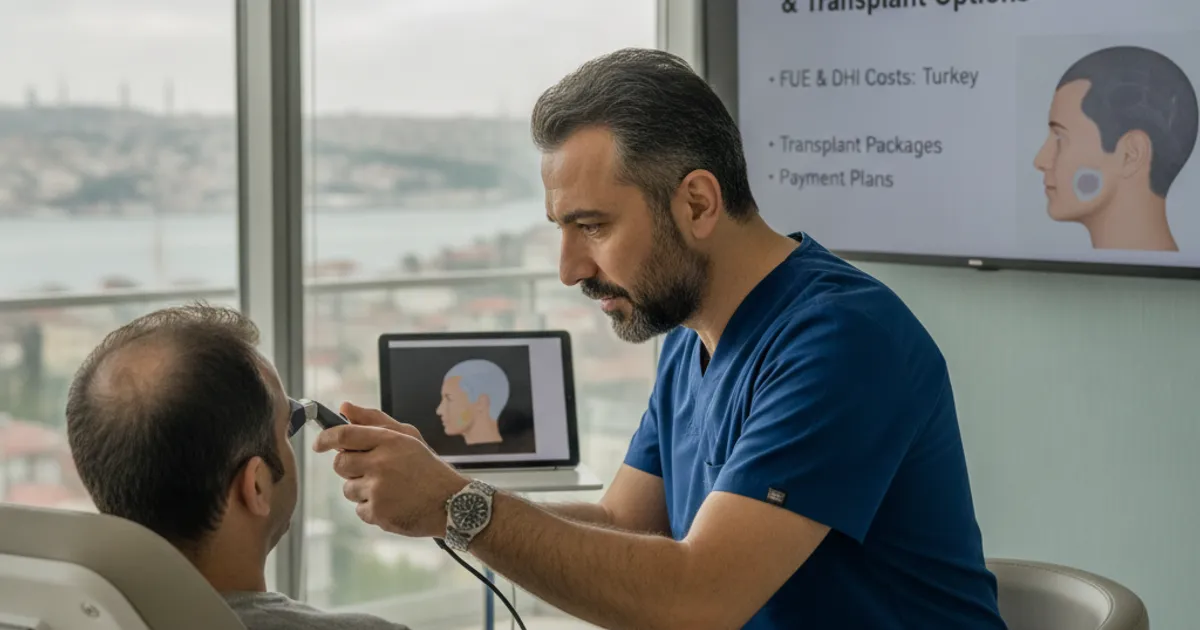
Diagnosis starts with a detailed history — when the shedding began, whether it was sudden or gradual, recent illnesses, medications, diet, and family history. From there, a doctor will usually examine the scalp under magnification and may run blood tests. In some cases, a scalp biopsy is needed to rule out scarring alopecia or autoimmune causes. A pull test, where a small section of hair is gently tugged to count how many strands come out, can give a quick indication of active shedding. Trichoscopy, which uses a specialized magnifying device, allows the doctor to look at hair shaft variability and follicle density. Blood tests typically include ferritin, CBC, thyroid panel, vitamin D, zinc, and hormone levels. If a scarring condition is suspected, a biopsy may be necessary.
- Pull test — gently tugging a small section of hair to count how many strands come out.
- Trichoscopy — dermoscopy of the scalp to look at hair shaft variability and follicle density.
- Blood panel — ferritin, CBC, thyroid, vitamin D, zinc, and hormone levels.
- Hair density mapping — sometimes used to track density changes over time.
- Scalp biopsy — reserved for suspected scarring or autoimmune conditions.
Treatment Options for Diffuse Thinning
Treatment depends entirely on the cause. If a nutritional deficiency or thyroid issue is behind the shedding, correcting it often restores density. If the cause is genetic, treatment looks more like standard androgenetic alopecia management. Many people end up combining approaches. For genetic hair loss, finasteride and minoxidil are the most commonly prescribed treatments. Finasteride is an oral DHT blocker for men, while minoxidil is available topically for both men and women. PRP (platelet-rich plasma) injections may help improve density in some cases, often used alongside other treatments. If a deficiency is confirmed, supplements can help — but only if you're actually deficient. Thyroid or hormone treatment is necessary when an underlying endocrine condition is identified. In some cases, switching or adjusting medications that trigger shedding can resolve the issue. Low-level laser therapy is sometimes used as an adjunct, though evidence is mixed. Finally, scalp-friendly hair care — avoiding tight styles and harsh chemical treatments — can prevent further damage.
- Finasteride — a prescription oral DHT blocker, effective for genetic hair loss in men.
- Minoxidil — topical or oral, helps prolong the growth phase and is used in both men and women.
- PRP (platelet-rich plasma) — injections that may improve density in some cases, often used alongside other treatments.
- Nutritional correction — iron, vitamin D, zinc, or protein supplementation when deficiencies are confirmed.
- Thyroid or hormone treatment — when an underlying condition is identified.
- Medication review — switching or adjusting drugs that trigger shedding.
- Low-level laser therapy — sometimes used as an adjunct, though evidence is mixed.
- Scalp-friendly hair care — avoiding tight styles and harsh chemical treatments.
| Treatment | Best For | Typical Form | Notes |
|---|---|---|---|
| Finasteride | Genetic hair loss in men | Oral tablet | Prescription only; not for women of childbearing age |
| Minoxidil | Diffuse thinning, men and women | Topical solution/foam or oral | Available OTC topically; oral requires prescription |
| PRP | Adjunct for density | Scalp injections | Multiple sessions usually needed |
| Supplements | Confirmed deficiencies | Oral | Only effective if a deficiency exists |
| Thyroid/hormone meds | Underlying endocrine cause | Oral | Prescribed by a doctor after testing |
Is a Hair Transplant Suitable for Diffuse Thinning?
This is the question most people searching for diffuse thinning want answered, and the honest answer is: sometimes, but not always. A hair transplant works by moving healthy follicles from a stable donor area (usually the back and sides of the scalp) to thinning areas. If your donor area is also thinning — which is common in diffuse unpatterned alopecia — the transplant may not hold up long-term. Surgeons typically assess donor density, stability, and the underlying cause before recommending surgery. If your diffuse thinning is caused by telogen effluvium, a nutritional deficiency, or a thyroid issue, a transplant is usually the wrong first step. Treat the cause first — many people regrow density without surgery. If the cause is genetic and your donor area is stable, a transplant may be an option, but it's often combined with medical treatment to preserve existing hair.
Frequently Asked Questions About Diffuse Thinning
Can diffuse thinning grow back?
Often yes, if the cause is reversible — such as a nutritional deficiency, thyroid issue, or telogen effluvium triggered by stress or illness. Genetic diffuse thinning is progressive but can usually be slowed or partially reversed with treatment.
Is diffuse thinning the same as male pattern baldness?
No. Male pattern baldness follows a predictable shape (temples, crown). Diffuse thinning spreads evenly across the scalp and can have many different causes, only one of which is genetics.
Can I get a hair transplant with diffuse thinning?
Sometimes. It depends on whether your donor area is stable and dense enough. If the donor area is also thinning, a transplant may not be advisable. A surgeon will assess this in person.
What's the first step if I notice diffuse thinning?
See a dermatologist or trichologist for a proper diagnosis. Blood tests for ferritin, thyroid, vitamin D, and hormones can rule out the most common reversible causes before considering any treatment.
Does minoxidil work for diffuse thinning?
Minoxidil can help in many cases of diffuse thinning, especially when the cause is genetic or when used alongside other treatments. It's not a cure, and results vary.
How long before I see results from treatment?
Most treatments take 3–6 months before noticeable changes, and up to 12 months for full results. Take dated photos so you can track progress objectively.
More Guides
- Minoxidil Contact Dermatitis: Signs and Alternatives
Learn the signs of minoxidil contact dermatitis, how it's diagnosed, treatment options, and alternatives like finasteride, PRP, and hair transplant surgery.
- Can Radiotherapy Cause Hair Loss? What to Expect
Radiotherapy can cause temporary or permanent hair loss. Learn the causes, symptoms, diagnosis, treatment options, and whether a hair transplant is suitable.
- Hair Loss After Illness or High Fever: When Does It Stop?
Hair loss after illness or high fever is usually temporary telogen effluvium. Learn causes, symptoms, diagnosis, treatment, and when a hair transplant may help.
- Can Dandruff Cause Hair Loss? Facts vs Folklore
Does dandruff cause hair loss? We separate fact from folklore, explain the real connection, diagnosis, treatments, and when a hair transplant makes sense.