
Hair Transplant for Burn Scars: Is It Possible?
Can hair transplants restore hair growth over burn scars? Learn how the procedure works, candidacy, recovery, costs, and alternatives in this expert guide.
What Is Hair Transplant for Burn Scars?
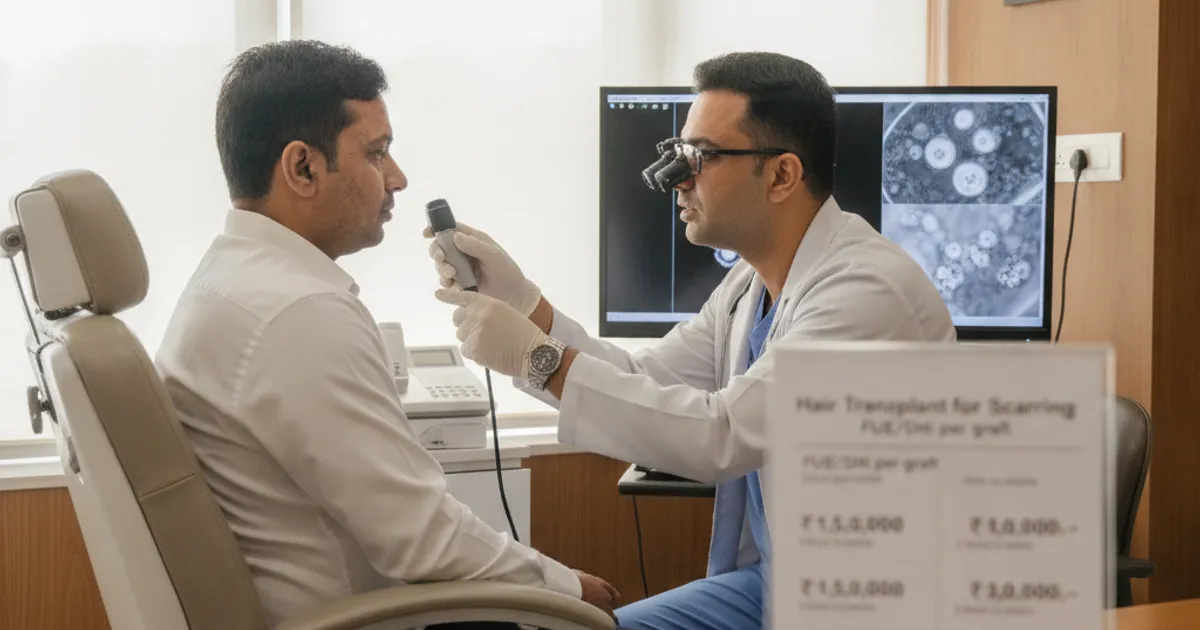
A hair transplant for burn scars is a surgical procedure that moves healthy hair follicles from one part of your body — usually the back or sides of your scalp — into areas of the scalp where hair has been lost due to burn damage. The goal is simple: restore hair growth in patches of scarring where follicles have been destroyed and won't grow back on their own. It's a specialised branch of hair restoration surgery, and it's more complex than a standard transplant because scar tissue behaves very differently from normal skin.
How Does It Work? The Surgical Technique
The core technique is similar to a regular hair transplant: follicles are harvested from a donor area (typically the back of the scalp, where hair is dense and resistant to balding), then implanted into the scarred recipient area. The difference lies in how the surgeon handles the scar tissue. Scarred skin has less blood flow, which means grafts need to be placed more carefully and often at lower density to survive. Surgeons may use smaller grafts, space them further apart, or stage the procedure over multiple sessions to give each batch of follicles the best chance of taking root.
- Follicular Unit Extraction (FUE): Individual follicles are punched out from the donor area and implanted one by one. Less invasive, no linear scar, and often preferred for scar cases because it allows precise placement.
- Follicular Unit Transplantation (FUT): A strip of scalp is removed from the donor area and dissected into grafts. Can yield more grafts in a single session but leaves a linear scar.
- Staged procedures: Because scar tissue may not support a full density transplant in one go, surgeons often plan two or three sessions spaced months apart.
- Pre-treatment of scar tissue: Some surgeons use techniques like subcision or laser therapy before transplanting to improve blood flow and soften the scar.
The Procedure Step by Step
Here's what a typical hair transplant for burn scars looks like from start to finish. Keep in mind that every case is different, and your surgeon may adjust the plan based on your scar's condition and your goals.
Recovery Timeline and Aftercare
Recovery from a burn scar hair transplant is similar to a regular transplant, but the scar tissue may heal more slowly and unpredictably. Here's a general timeline:
| Timeframe | What to Expect |
|---|---|
| First 24-48 hours | Mild swelling, redness, and tenderness in both donor and recipient areas. Sleep with your head elevated. |
| Days 3-7 | Scabs form on the recipient area. Don't pick at them. You can usually wash your hair gently after 48-72 hours. |
| Weeks 2-3 | Scabs fall off. Transplanted hairs may shed — this is normal and not a sign of failure. |
| Months 1-3 | Shock loss may occur in the donor area. The scalp may look patchy. New growth hasn't started yet. |
| Months 4-6 | New hair starts to emerge from the grafts. Growth is slow at first. |
| Months 9-12 | Most of the final result is visible. Hair continues to thicken and mature. |
| 12-18 months | Full results. Some surgeons recommend a second session if density is insufficient. |
- Avoid strenuous exercise for at least a week to prevent dislodging grafts.
- Don't expose the scalp to direct sunlight for several weeks.
- Use gentle, fragrance-free shampoos as recommended by your surgeon.
- Attend all follow-up appointments so your surgeon can monitor healing and graft survival.
- Be patient — burn scar transplants can take longer to show results than regular transplants.
Results: What to Expect and When
Results from a burn scar hair transplant are variable. Some people get excellent coverage; others get modest improvement. It depends on the scar's condition, the number of grafts, and how well your body accepts them. The key is to go in with realistic expectations. This isn't about getting a full, dense head of hair — it's about reducing the visibility of the scar and restoring some natural hair growth.
- Graft survival rate on scar tissue is generally lower than on healthy scalp — sometimes significantly so.
- Density is usually lower than what's achievable on non-scarred areas.
- Hair may grow at different angles or textures compared to surrounding hair.
- Multiple sessions are often needed to achieve satisfactory coverage.
- The final result can take 12-18 months to fully mature.
Who Is a Good Candidate?
Not everyone with a burn scar on their scalp is a candidate for hair transplant. The ideal candidate has a scar that's fully healed (usually at least 12 months old), has decent blood supply, and isn't too tight or contracted. Your overall health, donor hair availability, and expectations also matter.
- Scar is at least 12 months old and fully healed.
- Scar tissue is soft and pliable, not hard or contracted.
- Good blood supply to the scar area (assessed by a surgeon).
- Sufficient donor hair on the back and sides of the scalp.
- Realistic expectations about density and coverage.
- No active infections or skin conditions in the area.
- Non-smoker or willing to quit before and after surgery.
| Factor | Good Candidate | Poor Candidate |
|---|---|---|
| Scar age | 12+ months healed | Recent or still healing |
| Scar quality | Soft, flexible | Hard, contracted, poor blood flow |
| Donor hair | Dense and healthy | Thin or sparse |
| Health | Generally healthy | Uncontrolled diabetes, bleeding disorders |
| Expectations | Realistic | Expects full density |
Cost of Hair Transplant for Burn Scars
Costs for burn scar hair transplants vary widely depending on the clinic, surgeon, number of grafts, and number of sessions. Because scar cases are more complex, they often cost more per graft than standard transplants. Below are average price ranges based on typical case complexity. These are general estimates — your actual quote will depend on your specific situation.
- FUE is often more expensive per graft than FUT but is preferred for scar cases.
- Staged procedures mean you'll pay for multiple sessions, increasing total cost.
- Some clinics charge a flat rate; others charge per graft.
- Travel and accommodation costs may apply if you go to a specialist clinic.
- Insurance rarely covers cosmetic hair restoration, but may cover reconstructive aspects in some cases.
How It Compares to Alternatives
Hair transplant isn't the only option for burn scar hair loss. Depending on your situation, you might consider other approaches. Here's how they compare.
| Option | How It Works | Pros | Cons |
|---|---|---|---|
| Hair transplant | Move follicles into scar | Permanent, natural-looking | Expensive, multiple sessions, variable results |
| Scalp micropigmentation | Tattoo dots to mimic hair | Non-surgical, cheaper | Not real hair, fades over time |
| Hair pieces / wigs | Cover scar with prosthesis | Instant, non-invasive | Not permanent, maintenance required |
| Laser therapy | Stimulate blood flow | May improve scar quality | Doesn't grow hair on its own |
| Topical treatments | Minoxidil etc. | Easy to apply | Rarely effective on scar tissue |
- Scalp micropigmentation can be a good complement to a transplant for filling in thin areas.
- Hair pieces are a quick fix but don't address the underlying scar.
- Laser therapy is sometimes used before a transplant to improve scar quality.
- Topical minoxidil and finasteride are generally ineffective on scar tissue because follicles are destroyed.
Choosing a Clinic and Surgeon
This is not a procedure you want to bargain-hunt for. Burn scar transplants require a surgeon who has specific experience with scar tissue, not just general hair restoration. Look for someone who can show you before-and-after photos of similar cases and who is honest about what's achievable.
- Check the surgeon's experience with scar tissue specifically — ask how many burn scar cases they've done.
- Request before-and-after photos of burn scar patients (not just regular hair transplant patients).
- Ask about their approach to staging and graft survival rates on scar tissue.
- Read reviews from other patients, especially those with scar-related procedures.
- Make sure the clinic is properly licensed and the surgeon is board-certified.
- Don't be afraid to get a second opinion — this is a complex procedure.
Frequently Asked Questions
Can hair actually grow on burn scar tissue?
Yes, but it's not guaranteed. If the scar has adequate blood supply and isn't too damaged, transplanted follicles can survive and grow. However, survival rates are lower than on healthy scalp, and multiple sessions are often needed.
How long after a burn should I wait before getting a transplant?
Most surgeons recommend waiting at least 12 months after the burn has fully healed. The scar needs to be mature and stable before it can support grafts.
Is the procedure painful?
The procedure itself is done under local anesthesia, so you shouldn't feel pain during surgery. Afterwards, there may be soreness, swelling, and tenderness for a few days, which can be managed with medication.
Will I need more than one session?
Often, yes. Because scar tissue can't always support a high density of grafts in one go, surgeons frequently plan two or three sessions spaced several months apart to build up coverage gradually.
More Guides
- DHI Hair Transplant: Technique, Recovery, and Cost Factors
DHI hair transplant explained: how the Choi pen technique works, recovery timeline, results, who it suits, and what influences cost. Compare DHI vs FUE vs FUT.
- Hair Transplant for Curly Hair: Graft and Technique Tips
A plain-English guide to hair transplants for curly hair: how surgeons adapt graft harvesting and placement, recovery, results, costs, and who it suits.
- How Long Does a Hair Transplant Last? Long-Term Durability
How long does a hair transplant last? We explain the procedure, recovery, durability, costs by stage of hair loss, and how it compares to alternatives.
- Hair Transplant Revision: When a Second Procedure Makes Sense
Considering a hair transplant revision? Learn how a second procedure works, who it suits, recovery, results, and costs. Expert explainer from Clinic Reccy.