
Hair Transplant for Men With Psoriasis or Eczema
Can you get a hair transplant with scalp psoriasis or eczema? Learn causes, symptoms, treatments, and how to prepare safely. Expert guide.
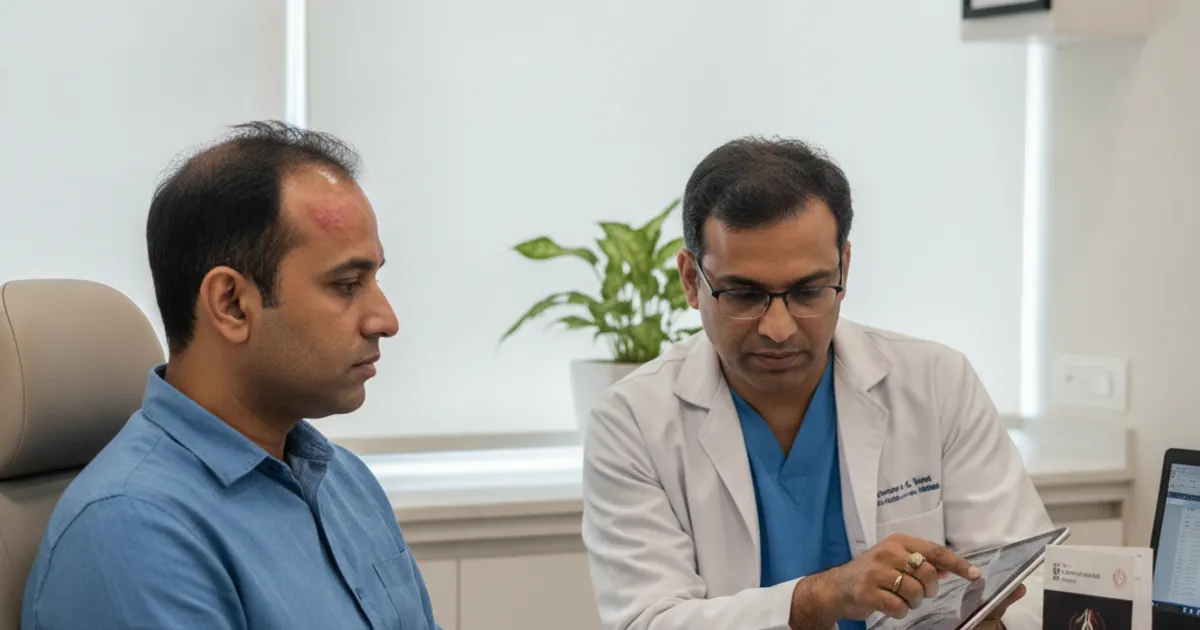
If you're dealing with hair loss and also have psoriasis or eczema on your scalp, you've probably wondered whether a hair transplant is even an option. It's a fair question. Both conditions affect the skin, and a transplant involves making numerous tiny incisions in the scalp. The short answer is yes, it can be done, but there are important caveats. This guide walks through what these conditions are, how they affect the scalp and hair, and what you need to know before considering surgery.
What Is Psoriasis and Eczema?
Psoriasis and eczema are both chronic inflammatory skin conditions, but they're not the same thing. Psoriasis is an autoimmune disorder where skin cells multiply too quickly, leading to thick, scaly patches. Eczema (atopic dermatitis) is more about a compromised skin barrier that leads to dryness, itching, and inflammation. Both can appear on the scalp, and both can flare up and calm down over time.
- Psoriasis: autoimmune, fast skin cell turnover, silvery scales, well-defined plaques.
- Eczema: skin barrier dysfunction, intense itch, redness, sometimes oozing or crusting.
- Both are chronic and can be triggered by stress, weather, and irritants.
- Both can affect the scalp specifically, sometimes causing temporary hair shedding.
How Psoriasis and Eczema Affect the Scalp and Hair
On the scalp, psoriasis often shows up as thick, silvery scales that can look like severe dandruff. Eczema tends to be itchier and more inflamed, sometimes with weeping or crusting. Neither condition directly destroys hair follicles in the way that, say, androgenetic alopecia does. But they can cause temporary shedding due to inflammation, scratching, or harsh treatments. And constant scratching can lead to traction or trauma that weakens hair over time.
Causes and Triggers of Scalp Psoriasis and Eczema
The root causes differ. Psoriasis is immune-mediated and has a strong genetic component. Eczema is linked to skin barrier defects and immune dysregulation, also with genetic ties. But triggers often overlap. Knowing yours can help you avoid flares before and after a transplant.
- Stress: one of the most common triggers for both conditions.
- Weather: cold, dry air often worsens eczema; psoriasis can flare in winter too.
- Infections: strep throat is a known psoriasis trigger in some people.
- Skin irritants: harsh shampoos, dyes, and some topical products.
- Medications: lithium, beta-blockers, and antimalarials can trigger psoriasis.
- Allergens: dust mites, pet dander, and certain fabrics can trigger eczema.
Symptoms and Diagnosis
Diagnosis is usually clinical, meaning a dermatologist looks at your scalp and takes a history. Sometimes a biopsy is needed to confirm psoriasis versus eczema, especially if treatments aren't working. Symptoms can overlap, so it's worth seeing a specialist rather than guessing.
| Feature | Scalp Psoriasis | Scalp Eczema |
|---|---|---|
| Appearance | Thick silvery scales, well-defined plaques | Red, dry, itchy patches, sometimes crusty |
| Itch level | Mild to moderate | Often intense |
| Common locations | Hairline, behind ears, back of head | Anywhere on scalp, often diffuse |
| Flaking | Silvery, adherent scales | White or yellowish flakes |
| Associated conditions | Psoriatic arthritis, nail changes | Asthma, hay fever, food allergies |
Treatment Options for Scalp Psoriasis and Eczema
Treatment aims to control inflammation and reduce flares. For both conditions, mild cases often respond to topical treatments. More severe cases may need systemic options. It's important to get your scalp as calm as possible before any hair transplant procedure.
- Topical corticosteroids: reduce inflammation and itching.
- Coal tar shampoos: help with scaling and flaking.
- Salicylic acid: softens and removes scales.
- Vitamin D analogues (e.g., calcipotriol): slow skin cell growth in psoriasis.
- Biologics: for moderate-to-severe psoriasis, targeted immune treatments.
- Phototherapy: UV light therapy for widespread psoriasis.
- Moisturizers and barrier creams: essential for eczema.
- Antihistamines: help control itch in eczema.
Hair Loss and These Conditions: Is a Transplant Suitable?
A hair transplant can be suitable for men with psoriasis or eczema, but timing and preparation matter. The procedure itself involves creating tiny incisions in the scalp, and if the skin is inflamed or actively flaring, healing can be compromised. Most surgeons will want your condition well-controlled before proceeding. Also, if your hair loss is primarily due to inflammation from these conditions rather than genetic factors, treating the skin may regrow hair without surgery.
- Your scalp should be clear or well-controlled for an extended period before surgery.
- A dermatologist should confirm the type and severity of your condition.
- If you have active eczema or psoriasis, surgery is usually postponed.
- Genetic hair loss (androgenetic alopecia) is the most common reason for transplant; if that's also present, a transplant may still be appropriate.
- Some surgeons may recommend a test session or smaller procedure first.
Preparing for a Hair Transplant with Psoriasis or Eczema
Preparation is mostly about getting your skin calm and stable. This isn't a sprint. Give yourself time to optimize your scalp health. Your surgeon and dermatologist should ideally communicate, especially if you're on systemic treatments.
- See a dermatologist to confirm diagnosis and optimize treatment.
- Avoid triggers (stress, harsh products) for weeks before surgery.
- Stop smoking if you smoke; it impairs healing and can worsen psoriasis.
- Discuss all medications with your surgeon, especially biologics and immunosuppressants.
- Follow a gentle scalp care routine in the weeks leading up to surgery.
- Arrange for a follow-up plan with your dermatologist for after the procedure.
Risks and Considerations
The main risks are related to operating on compromised skin. Inflammation can affect graft survival, and the trauma of surgery can trigger a flare (Koebner phenomenon, where skin lesions appear at sites of injury). That said, with proper timing and care, many men with well-controlled psoriasis or eczema undergo successful transplants.
| Risk | Explanation | Mitigation |
|---|---|---|
| Koebner phenomenon | New psoriasis lesions at surgery sites | Ensure condition is stable; pre-treat with dermatologist |
| Infection | Inflamed skin is more vulnerable | Optimize skin health; follow post-op care |
| Poor graft survival | Inflammation may impair healing | Wait until scalp is clear; choose experienced surgeon |
| Flare-up | Surgery stress can trigger eczema or psoriasis | Stress management; continue dermatologic care |
Frequently Asked Questions
Can I get a hair transplant if I have scalp psoriasis?
Yes, but only if your psoriasis is well-controlled. Surgeons typically require your scalp to be clear or stable for an extended period before surgery to reduce the risk of complications.
Will a hair transplant cure my hair loss if I have eczema?
Not necessarily. If your hair loss is due to eczema-related inflammation, treating the eczema may regrow hair. A transplant is more appropriate for genetic hair loss. A dermatologist can help determine the cause.
Is it safe to use minoxidil or finasteride with these conditions?
Minoxidil and finasteride are generally safe, but minoxidil can irritate sensitive skin. Talk to your dermatologist about formulations and whether they're right for you.
Can PRP therapy help with hair loss from psoriasis or eczema?
PRP (platelet-rich plasma) is sometimes used for hair loss, but evidence for its effectiveness in inflammatory scalp conditions is limited. Discuss with your doctor.
How long should I wait after a flare-up before surgery?
Most surgeons recommend waiting until your skin has been calm for an extended period. Your dermatologist can give you a clearer timeline based on your specific case.
How the Two Conditions Differ When It Comes to Surgery Risk
Although both conditions can affect the scalp, they don't behave the same way around a surgical wound, and it helps to understand the difference before you plan a procedure. The key distinction is how each condition responds to skin injury.
Psoriasis has a well-known tendency to appear at sites of physical trauma to the skin, a phenomenon clinicians call the Koebner response. Because a hair transplant involves hundreds or thousands of tiny puncture wounds, there is a theoretical concern that new psoriasis plaques could develop along the incision lines or in the donor area. This doesn't mean it will happen, but it is one reason surgeons prefer your skin to be stable and well-controlled beforehand, and why some may favor a smaller test session to see how your scalp responds.
Eczema behaves somewhat differently. The main concerns are impaired skin barrier function and the itch-scratch cycle. Broken or inflamed skin heals more slowly and carries a higher risk of superficial infection, and post-operative itching can tempt you to scratch near fresh grafts. If your eczema is driven by an allergic or irritant trigger, you'll also want to identify and avoid anything in the post-operative care routine that could set it off.
What to Expect During Recovery If You Have These Conditions
Recovery follows the same general timeline as any hair transplant, but your skin condition adds a few things to watch. In the first days after surgery, the scalp is expected to be tender, scabby, and itchy as it heals. For most patients this is manageable. For someone with eczema or psoriasis, that baseline itch can be more intense and harder to leave alone, which is why a clear plan for managing it matters.
- Expect the usual post-operative instructions about washing, sleeping position, and avoiding sun, but ask specifically how they should be adapted for sensitive or inflamed skin.
- Ask your surgeon which post-operative products are safe for your condition, since some clinics recommend ingredients that can sting or dry out a reactive scalp.
- Have a plan for itch that does not involve scratching, such as cool compresses or products your dermatologist approves.
- Watch for signs of a flare starting in the donor or recipient area and report them early rather than waiting for your scheduled follow-up.
- Keep your dermatology appointments during the healing period, since controlling inflammation early is easier than calming a full flare.
- Be patient with shedding of transplanted hairs in the weeks after surgery, which is normal and not a sign your skin condition is interfering.
Questions Patients Commonly Ask
Can a hair transplant make my psoriasis or eczema worse?
It's possible, which is why surgeons want your skin stable first. Psoriasis can appear at sites of skin injury in some people, and eczema-prone skin can react to the trauma and to post-operative products. A well-controlled scalp and a careful recovery routine reduce this risk, but it can't be eliminated entirely. Discuss your personal history of flares with both your surgeon and dermatologist.
Will treating my scalp condition bring my hair back on its own?
Sometimes. Hair lost to inflammation, scratching, or harsh treatments is often temporary and can regrow once the skin is calm. But if you also have genetic hair loss, that part won't reverse with skin treatment, and a transplant may still be appropriate for those areas.
Should I stop my psoriasis or eczema medication before surgery?
Don't change anything on your own. Some systemic treatments, including certain biologics and immunosuppressants, may need to be timed around surgery, while others can continue. This decision belongs to your prescribing dermatologist and your surgeon together, so make sure they communicate.
Is one condition more of a problem for surgery than the other?
They pose different concerns rather than one being clearly worse. Psoriasis raises questions about new plaques forming at wound sites, while eczema raises questions about barrier healing, infection risk, and itching. Your individual severity and triggers matter more than the label.
How long should my scalp be clear before I can schedule surgery?
There's no single number that fits everyone. Surgeons generally want your condition well-controlled for a sustained period, and the length depends on your history and severity. Ask your surgeon what they consider stable for you, and let your dermatologist confirm it.
Can I use my usual medicated shampoos after surgery?
Not necessarily right away. Some medicated shampoos can be harsh on healing skin and fresh grafts. Ask your surgeon when you can resume your regular products and whether any should be swapped for gentler options during recovery.
More Guides
- Hair Transplant and Rosacea: Is It Safe?
Can you have a hair transplant if you have rosacea? Learn how scalp rosacea affects surgery, risks, preparation, and whether you're a suitable candidate.
- Radiation and Hair Loss: Local vs Whole-Body Effects
Does radiation cause hair loss? Learn how local and whole-body radiation affect hair, symptoms, treatment, and hair transplant suitability.
- Teenage Hair Loss: Causes, Patterns & When to Act
Hair loss in teenagers: learn the causes, normal shedding vs. concerning loss, diagnosis, treatment options, and when a hair transplant may be suitable.
- Crash Dieting and Hair Shedding: Recovery Guide
Crash dieting can trigger telogen effluvium and hair shedding. Learn causes, diagnosis, treatment options, and whether a hair transplant is suitable.