
NeoGraft Hair Transplant: Procedure, Recovery, Cost
NeoGraft hair transplant explained: how the FUE system works, recovery timeline, results, candidacy, cost factors, and how it compares to other techniques.
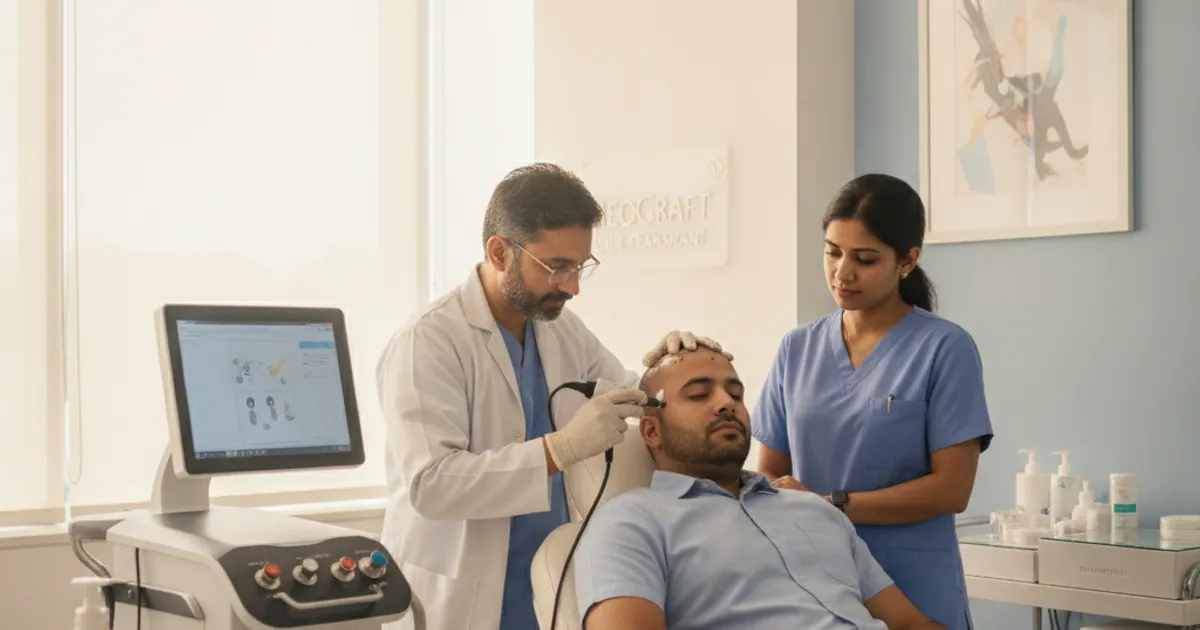
What Is NeoGraft Hair Transplant?
NeoGraft is a brand of automated Follicular Unit Extraction (FUE) equipment used in hair transplant surgery. Instead of a surgeon manually punching out individual hair follicles with a handheld tool, NeoGraft uses a pneumatic (air-powered) device to loosen and extract grafts. The system also includes a handheld implanter that helps place grafts back into the scalp. It's not a different type of transplant — it's a different set of tools for performing FUE. The core idea is to reduce the physical strain on the surgeon, speed up the extraction phase, and potentially improve graft handling. NeoGraft has been around for well over a decade and is one of several automated FUE systems on the market.
How NeoGraft Works: Step-by-Step Procedure
A NeoGraft session follows the same broad steps as any FUE transplant. The difference is in the extraction and implantation tools. Here's what a typical day looks like:
- Consultation and planning: The surgeon maps your donor area, assesses density, and designs the hairline. Local anesthesia is administered to numb the scalp.
- Donor area preparation: The back and sides of the scalp are cleaned and marked. Some clinics trim the donor hair short, though some offer a no-shave variant.
- Extraction with NeoGraft: The pneumatic handpiece uses controlled air pressure to punch and suction individual follicular units. The device collects grafts in a small chamber, which the surgical team then sorts and keeps hydrated.
- Recipient site creation: The surgeon makes tiny incisions in the balding areas where grafts will be placed. This step is still done manually and is critical for natural-looking density and angle.
- Implantation: Grafts are placed into the sites. NeoGraft includes an implanter tool, but many surgeons prefer manual forceps placement for better control. Either way, this is meticulous work.
- Cleanup and aftercare: The scalp is cleaned, and you're given post-op instructions. The whole session can take several hours depending on graft count.
NeoGraft Recovery Timeline: What to Expect Week by Week
Recovery from NeoGraft is similar to standard FUE. You won't have a linear scar like with strip surgery, but you will have tiny puncture wounds in the donor area that need to heal. Here's a realistic timeline:
- Days 1–3: Swelling, redness, and scabbing in both donor and recipient areas. Sleep propped up to reduce swelling. No strenuous activity.
- Days 4–7: Scabs begin to form and tighten. You can usually return to desk work after a few days. Gentle washing is allowed after a couple of days, following your clinic's instructions.
- Week 2: Most scabs have fallen off. Grafts are secure. You can resume light exercise, but avoid heavy sweating and direct sun exposure.
- Weeks 3–4: Shock loss may occur — some transplanted hairs shed. This is normal and temporary. Donor area may still look pink.
- Month 2–3: Dormant phase. The scalp looks mostly normal, but new growth hasn't started yet. This is the frustrating part for many patients.
- Month 4–6: New hairs begin to sprout. Growth is thin at first, then thickens.
- Month 12: Final results are typically visible. Some patients see continued maturation up to 18 months.
| Timeframe | What's Happening | Typical Restrictions |
|---|---|---|
| Days 1–3 | Swelling, scabbing, tenderness | No exercise, no alcohol, sleep elevated |
| Days 4–7 | Scabs tighten, donor area heals | Light desk work okay, no sweating |
| Week 2 | Scabs gone, grafts secure | Light exercise, avoid sun |
| Weeks 3–4 | Shock loss possible | Normal activity, no harsh products |
| Months 2–3 | Dormant phase | No restrictions |
| Months 4–6 | New growth appears | None |
| Month 12+ | Final results | None |
NeoGraft Results: Growth Timeline and Longevity
NeoGraft results are permanent because the transplanted follicles are taken from the donor area, which is genetically resistant to male pattern baldness. Once those hairs grow, they should keep growing for decades. The catch is that the rest of your native hair can continue to thin, so your overall look may change over time. Many patients use medication to slow further loss. In terms of growth timeline, expect the first signs of new hair around month 4, noticeable improvement by month 6, and the final result around month 12. Density depends on how many grafts you had, your donor quality, and how well your body accepts the grafts.
- Permanent results: Transplanted hair is typically lifelong.
- Natural look: FUE leaves no linear scar, and NeoGraft's small punches help minimize donor scarring.
- Density limits: You can't create hair where there's no donor supply. If you're extensively bald, you may need multiple sessions or a more conservative hairline.
- Maintenance: Without medication, surrounding native hair may continue to thin, making the transplant look less full over time.
Who Is a Good Candidate for NeoGraft?
NeoGraft works best for people with realistic expectations and sufficient donor hair. It's not a magic fix for everyone. Here's a quick breakdown:
- Good candidates: Men with early to moderate hair loss, stable donor area, and good scalp elasticity. Women with diffuse thinning or traction alopecia can also benefit if donor hair is adequate.
- Less ideal candidates: Those with advanced baldness may not have enough donor hair for full coverage. People with active scalp infections, uncontrolled diabetes, or bleeding disorders should consult a doctor first.
- Age considerations: Younger patients are often advised to wait because their hair loss pattern isn't stable yet. Transplanting too early can lead to odd-looking results as native hair continues to recede.
NeoGraft Cost: What Affects the Price?
NeoGraft pricing varies widely depending on where you go, how many grafts you need, and what's included in the package. Most clinics charge per graft, with a minimum session fee. The stage of your hair loss is the biggest driver — early-stage cases need fewer grafts, advanced cases need more. Below are average case prices by stage, based on typical clinic data. These are medians, not quotes, and actual prices depend on your specific situation.
- Graft count: More grafts = higher cost. This is the primary factor.
- Surgeon experience: Top-tier surgeons charge more. Sometimes worth it, sometimes not.
- Location: Major cities and high-demand markets cost more. Traveling can save money but adds logistics.
- Clinic reputation and package inclusions: Some clinics bundle PRP, medications, or follow-up visits. Others charge extra.
- Technique add-ons: NeoGraft is often priced similarly to manual FUE. Some clinics charge a premium for automated devices.
NeoGraft vs. Other Hair Transplant Techniques
NeoGraft is one option among several. Here's how it stacks up against the main alternatives:
| Technique | How It Works | Scarring | Recovery | Cost Range (USD) |
|---|---|---|---|---|
| NeoGraft (automated FUE) | Pneumatic punch extracts grafts; optional implanter | Tiny dot scars | Similar to FUE | $4,000–$15,000+ |
| Manual FUE | Surgeon uses handheld punch to extract grafts | Tiny dot scars | Similar to NeoGraft | $3,500–$14,000 |
| FUT (strip surgery) | Strip of scalp removed, follicles dissected | Linear scar | Longer, more discomfort | $3,000–$10,000 |
| ARTAS (robotic FUE) | Robotic arm extracts grafts | Tiny dot scars | Similar to FUE | $5,000–$18,000 |
| DHI (Direct Hair Implantation) | Grafts extracted and implanted with Choi pen | Tiny dot scars | Similar to FUE | $4,500–$16,000 |
What's Included in a NeoGraft Package?
Package inclusions vary a lot. Some clinics offer all-inclusive pricing, while others nickel-and-dime you for every add-on. Here's what to look for:
- Pre-op consultation and blood work
- Surgery day fees (surgeon, facility, anesthesia)
- Graft processing and implantation
- Post-op medications (antibiotics, pain relief)
- Follow-up visits (usually included for a certain period)
- PRP therapy (sometimes included, often extra)
- Airport transfer or accommodation (common in medical tourism destinations)
- Warranty or touch-up policy (some clinics offer free touch-ups within a certain period)
How to Choose a NeoGraft Clinic
Choosing a clinic is the most important decision you'll make. The device doesn't matter if the surgeon is inexperienced. Here's a practical checklist:
- Check credentials: Is the surgeon a member of a recognized hair restoration society? Are they licensed in your country?
- Ask about experience: How many NeoGraft procedures have they performed? How many per month?
- See real results: Ask for before-and-after photos of patients with similar hair loss to yours. Not just the best cases.
- Read reviews: Look for patterns. One bad review is noise; ten similar complaints is a red flag.
- Understand the package: What's included? What costs extra? Is there a touch-up policy?
- Meet the team: Who actually performs the extraction and implantation? The surgeon or technicians?
- Trust your gut: If a clinic pressures you or promises unrealistic results, leave.
Frequently Asked Questions About NeoGraft
Is NeoGraft better than manual FUE?
Not necessarily. NeoGraft can speed up extraction and reduce surgeon fatigue, but the final result depends more on the surgeon's skill than the device. Some surgeons get excellent results with manual FUE and prefer the control it offers. The best choice is the technique your surgeon is most experienced with.
How much does NeoGraft cost?
Costs vary by graft count, clinic location, and inclusions. Early-stage hair loss might cost $4,000–$6,000, moderate $6,000–$9,000, and advanced $9,000–$15,000 or more. Always get a personalized quote based on your donor area and goals.
Does NeoGraft leave a scar?
NeoGraft uses small punches that leave tiny dot scars in the donor area. These are usually less noticeable than the linear scar from FUT strip surgery. With proper care, most people can wear short hair without obvious scarring.
How long do NeoGraft results last?
Transplanted hair is typically permanent because it's taken from the genetically resistant donor area. However, your native hair may continue to thin, so the overall look can change over time. Many patients use medication to maintain density.
More Guides
- Hair Transplant for Curly Hair: Graft and Technique Tips
A plain-English guide to hair transplants for curly hair: how surgeons adapt graft harvesting and placement, recovery, results, costs, and who it suits.
- How Long Does a Hair Transplant Last? Long-Term Durability
How long does a hair transplant last? We explain the procedure, recovery, durability, costs by stage of hair loss, and how it compares to alternatives.
- Hair Transplant Revision: When a Second Procedure Makes Sense
Considering a hair transplant revision? Learn how a second procedure works, who it suits, recovery, results, and costs. Expert explainer from Clinic Reccy.
- Hair Transplant for Norwood 6 and 7: What's Possible
A clear look at hair transplant options for Norwood 6 and 7 hair loss: graft limits, staging, recovery, costs, and realistic results.