
Sun Exposure After Hair Transplant: Recovery Guide
How long to avoid sun after a hair transplant, how to protect new grafts at every stage, and when it's safe to get back outside. A practical recovery guide.
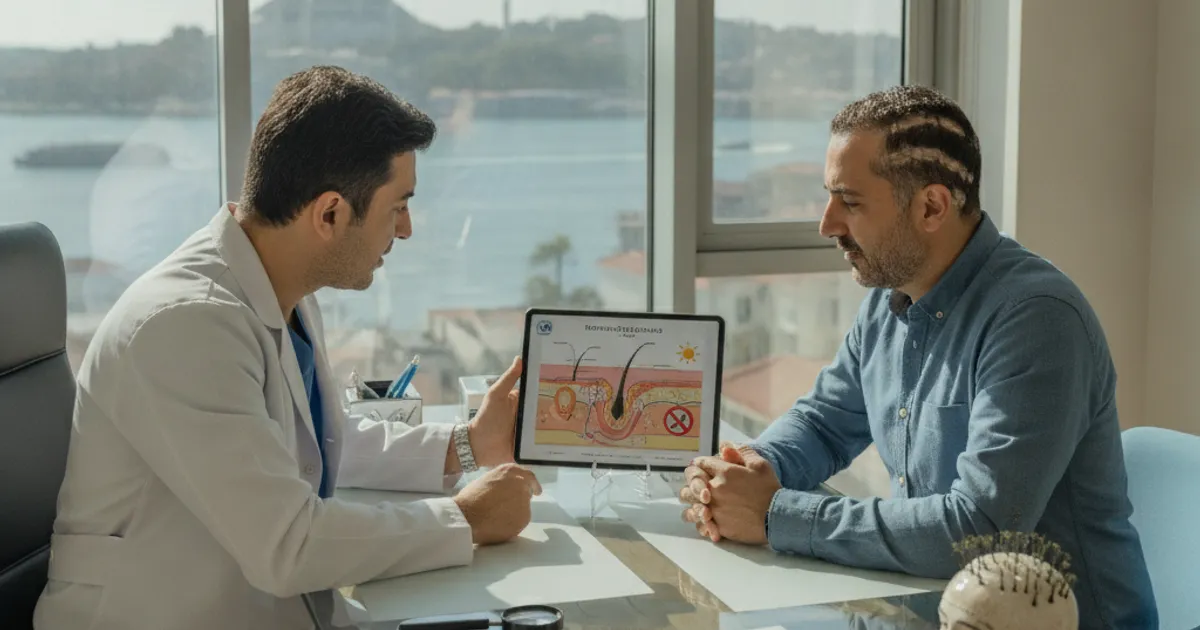
Sun Exposure After Hair Transplant: The Short Answer
If you've just had a hair transplant, keep your scalp out of direct sun for at least the first two weeks. Most clinics want you to avoid prolonged, unprotected sun exposure for the first three to six months while the grafts are still settling in. After that, you can go back to normal life, but you should treat your scalp like any other part of your body that's prone to burning: cover it, shade it, or use sunscreen. The exact timeline depends on how your scalp heals and what your surgeon recommends, so treat the numbers below as general guidance, not a fixed rule.
Why Sun Protection Matters for New Grafts
Newly transplanted follicles are fragile. For the first week or two, they're essentially sitting in a fresh wound, relying on a new blood supply to survive. UV radiation does two things that work against you during this phase: it inflames the skin, and it damages cells at the surface. On a healing scalp, that can mean more redness, more scabbing, and in some cases a higher risk of graft failure. Even after the grafts have taken hold, sun exposure can affect how the scar in the donor area matures and how evenly the new hair grows in.
- UV exposure increases inflammation in the recipient area, which can delay healing.
- Sunburn on a fresh transplant can cause blistering and damage fragile grafts.
- The donor strip or FUE sites are also healing wounds and can scar worse with sun damage.
- Long-term UV exposure ages the scalp and can make transplanted hair look thinner over time.
- Some clinics report that sunburned scalps heal with more redness and uneven pigmentation.
The Recovery Timeline: When You Can Safely Get Sun
Every clinic has slightly different rules, but the general shape of the timeline is consistent. The first two weeks are the strictest. From there, you can gradually reintroduce short periods of sun with protection, and by the six-month mark most people are back to their normal routine. Here's how it usually breaks down.
| Stage | Direct Sun | Protection Needed |
|---|---|---|
| Days 1–3 | Avoid completely | Shade, indoor rest |
| Days 4–14 | Avoid direct sun | Loose hat, shade |
| Weeks 3–8 | Short periods only | Hat or SPF 30+ |
| Months 2–6 | Moderate exposure | Hat or SPF 30+ |
| 6 months+ | Normal exposure | Routine sun protection |
How to Protect Your Scalp at Each Stage
The right protection changes as your scalp heals. In the first few days, you can't put anything on the grafts, so shade and a loose hat are your only tools. Once the scabs have fallen off and your clinic gives the go-ahead, sunscreen becomes an option. From there, it's about building habits that keep your scalp covered without irritating it.
- Days 1–14: stay in shade, wear a loose-fitting hat that doesn't touch the grafts, and avoid long walks outdoors.
- Weeks 3–8: introduce a gentle, fragrance-free SPF 30+ sunscreen once your clinic confirms the scalp has healed.
- Months 2–6: reapply sunscreen every two hours if you're outside, and wear a hat for longer outings.
- 6 months onward: keep using SPF 30+ on your scalp, especially if you're balding elsewhere or have fair skin.
- Always check with your surgeon before applying anything to the recipient area.
Choosing the Right Sunscreen for a Healing Scalp
Not all sunscreens are equal when your scalp is healing. You want something gentle, fragrance-free, and ideally mineral-based (zinc oxide or titanium dioxide) because those sit on top of the skin rather than soaking in. Chemical sunscreens can sting on a fresh transplant, and anything with alcohol or added fragrance is more likely to irritate. Once your clinic clears you to use sunscreen, patch-test a small area first.
- Choose SPF 30 or higher, broad-spectrum (UVA and UVB).
- Go mineral-based if possible: zinc oxide or titanium dioxide.
- Avoid fragrances, alcohol, and harsh preservatives.
- Look for formulas labelled gentle, sensitive, or baby-safe.
- Reapply every two hours, and after sweating or swimming.
- Don't apply to the recipient area until your clinic says it's safe.
What Happens If You Get Sunburn on New Grafts?
It happens. People forget a hat, or a cloudy day turns sunny. If you do get sunburn on your scalp in the first few months, don't panic, but do take it seriously. The main risks are increased inflammation, delayed healing, and in rare cases damage to grafts that haven't fully taken. Contact your clinic if the burn is more than mild redness, if you see blistering, or if you notice any unusual pain or discharge.
- Mild redness: keep the area cool, stay out of the sun, and let your clinic know.
- Blistering or peeling: contact your surgeon, don't pick at the skin.
- Increased pain, swelling, or discharge: seek medical advice promptly.
- Don't apply random creams or home remedies to the recipient area without checking first.
- Document the burn with a photo so your clinic can assess it at your next follow-up.
Planning Your Transplant Around Sun Exposure
If you're still choosing a date for your procedure, think about the season. Scheduling a transplant in late autumn or winter gives you months of low-UV weather to heal before summer arrives. If you live somewhere sunny year-round, or you have a beach holiday booked, plan for at least three months of careful protection after surgery. It's also worth asking your clinic how they handle aftercare advice for patients who travel or live in hot climates.
- Book in cooler months if you can, so the first three months fall outside peak UV season.
- Avoid scheduling a transplant right before a beach holiday or outdoor event.
- If you live in a high-UV region, plan for daily sunscreen and hats for the first six months.
- Ask your clinic about aftercare guidance for hot or humid climates.
- Build in buffer time before any trip that involves long hours outdoors.
Long-Term Sun Protection for Transplanted Hair
Once your transplant has fully healed, your new hair is just hair. It grows, sheds, and ages like the rest of your follicles. But the scalp underneath is still skin, and it's still vulnerable to UV damage. Long-term sun exposure can age the scalp, cause uneven pigmentation, and in some cases contribute to skin cancer. Transplanted or not, your scalp deserves the same protection you'd give your face.
- Wear SPF 30+ on your scalp daily if you're outside for more than a few minutes.
- Use a hat or cap for extended outdoor time, especially in summer.
- Reapply sunscreen every two hours, and after swimming or heavy sweating.
- Check your scalp regularly for new moles, spots, or changes, especially in the donor area.
- If you're fair-skinned or have a family history of skin cancer, be extra diligent.
When to Ask Your Clinic About Sun Exposure
Your surgeon knows your scalp better than anyone. If you're unsure whether you're ready for sun, or if you've had a burn and want it checked, call your clinic. They can tell you whether your healing is on track and whether you can start using sunscreen. It's also worth asking about sun protection at your follow-up appointments, especially if you're planning a holiday or spending more time outdoors.
- Before your first post-op outdoor outing, confirm with your clinic that it's safe.
- If you get sunburn, send a photo to your clinic and ask whether you need to come in.
- Ask about sunscreen brands or types they recommend for healing scalps.
- Check whether your clinic offers aftercare support if you're travelling.
- At your 3-month and 6-month follow-ups, ask about long-term sun habits.
Frequently Asked Questions
How long after a hair transplant can I go in the sun?
Avoid direct sun for the first two weeks. After that, short periods with a hat or SPF 30+ sunscreen are usually fine once your clinic confirms the scalp has healed. Most surgeons recommend careful protection for the first three to six months.
Can sunburn damage new hair grafts?
Yes, sunburn in the first few months can increase inflammation, delay healing, and in rare cases damage grafts that haven't fully taken. If you get burned, contact your clinic and keep the area out of the sun.
What sunscreen is safe to use after a hair transplant?
Once your clinic clears you, use a gentle, fragrance-free, mineral-based SPF 30+ sunscreen. Avoid alcohol, fragrances, and harsh chemicals. Patch-test a small area first.
Do I need to wear a hat forever after a transplant?
No, but your scalp is still skin and benefits from sun protection long-term. A hat and sunscreen are good habits for anyone, especially if you're prone to burning or live in a high-UV climate.
More Guides
- Hair Transplant Graft Count: How Many Do You Need?
How many grafts for a hair transplant? Learn how graft counts are estimated, typical ranges by Norwood stage, and what to confirm before surgery.
- How to Choose a Hair Transplant Surgeon: Credentials to Check
Learn how to choose a hair transplant surgeon by checking credentials, board certification, training, and real patient results. A practical guide.
- Costco Finasteride: Price, Membership & Prescription Steps
A practical guide to getting finasteride at Costco: membership rules, prescription steps, generic vs. brand costs, and aftercare planning.
- Smoking and Hair Transplant Healing: What to Know
Smoking slows hair transplant healing and threatens graft survival. Learn why to stop before surgery, how long to avoid nicotine after, and recovery tips.