
Swelling After Hair Transplant: What to Expect
Swelling after a hair transplant is normal. Learn the day-by-day timeline, aftercare tips to reduce swelling, and when to worry. Plan your recovery.
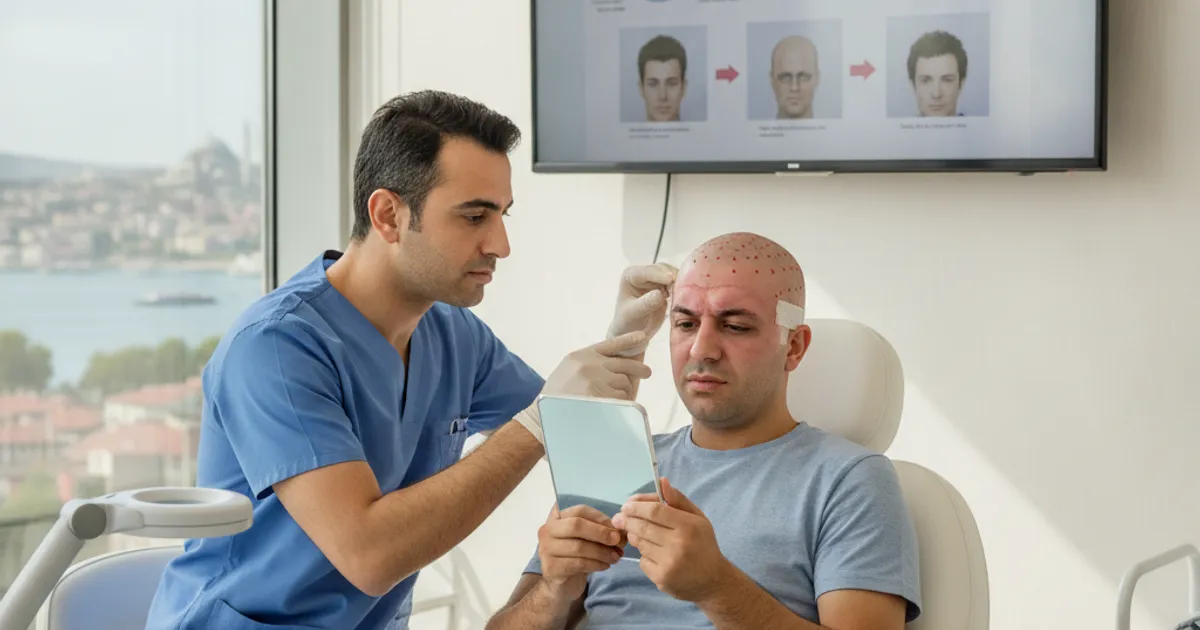
Swelling After Hair Transplant: What to Expect and How to Manage It
Swelling after a hair transplant is one of the most common side effects, and it surprises a lot of people. You expect some redness and scabbing on your scalp, but waking up with a puffy forehead or swollen eyes can be alarming if you're not prepared. The good news is that this swelling is a normal part of healing, it follows a predictable pattern, and there's plenty you can do to keep it under control. This guide walks you through why it happens, what the timeline looks like, and how to plan your recovery so you're not caught off guard.
Why Swelling Happens After a Hair Transplant
During a hair transplant, your surgeon makes thousands of tiny incisions in the scalp to place grafts. Your body responds with inflammation — a natural immune reaction that sends fluid and white blood cells to the area to start the healing process. Because the scalp is loose and connected to the forehead and eye area by gravity and tissue planes, that fluid tends to migrate downward. That's why swelling often shows up on your forehead, around your eyes, and sometimes down to your cheeks, even though the procedure was on your scalp.
- Inflammation from thousands of micro-incisions
- Fluid drainage under the skin, pulled down by gravity
- Increased blood flow to the treated area
- Individual healing response — some people swell more than others
- Technique and trauma level — gentler techniques often mean less swelling
The Swelling Timeline: Day by Day
Swelling doesn't appear immediately. It usually starts within 24 to 48 hours after the procedure, peaks around day 3 to 5, and then gradually subsides. Most people look and feel noticeably better by day 7 to 10. Here's a rough day-by-day breakdown to help you plan.
| Day | What to Expect |
|---|---|
| Day 0 (procedure day) | Minimal swelling; scalp may feel tight and numb |
| Day 1–2 | Swelling begins, often on the forehead; mild discomfort |
| Day 3–5 | Swelling peaks; eyes may be puffy or bruised |
| Day 6–7 | Swelling starts to go down; bruising fades |
| Day 8–10 | Most visible swelling gone; scalp still healing |
| Week 2–3 | Any residual puffiness resolves; scabs fall off |
How to Reduce Swelling: Practical Aftercare Tips
You can't stop swelling entirely, but you can absolutely minimize it and speed up the process. Your clinic will give you specific instructions, but these general tips apply to most patients.
- Sleep with your head elevated at a 45-degree angle for the first few nights — use extra pillows or a recliner.
- Apply cold compresses (not directly on the grafts) to the forehead and eyes for 15–20 minutes at a time during the first 48 hours.
- Avoid bending over or lifting heavy objects for the first week — increases blood flow to the head.
- Stay hydrated and eat bland, low-sodium meals — salty food makes you retain fluid.
- Take any anti-inflammatory medication exactly as prescribed by your surgeon.
- Gently massage the forehead (not the scalp) if your clinic approves it, to help fluid drain.
- Keep your head elevated when sitting, too — avoid slouching on the couch.
What NOT to Do When You Have Swelling
Some common habits can make swelling worse or prolong it. Avoid these during the first week:
- Don't apply ice directly to the graft area — it can damage the new follicles.
- Don't sleep flat on your back or stomach — keep your head elevated.
- Don't drink alcohol — it thins your blood and increases swelling.
- Don't smoke or use nicotine — it constricts blood vessels and slows healing.
- Don't do strenuous exercise, including heavy lifting or running.
- Don't rub, scratch, or press on the swollen areas.
- Don't take blood-thinning medications (like aspirin or ibuprofen) unless your doctor says it's okay.
When to Worry: Signs of Complications
Swelling is normal, but certain signs mean you should call your clinic. Trust your gut — if something feels off, ask. Complications are rare, but early action matters.
Planning Your Recovery: Time Off and Social Considerations
Most people take 2–3 days off work after a hair transplant, but if you want to avoid questions about your puffy forehead, plan for a full week. Swelling is usually most noticeable on days 3–5, so if you have a client presentation or a wedding on day 4, you'll want to reschedule. Here's a simple way to think about your calendar:
- Days 1–2: Rest at home; you can work remotely if you feel up to it.
- Days 3–5: Peak swelling; avoid photos, meetings, or social events.
- Days 6–7: Swelling subsides; you may feel comfortable running errands.
- Week 2: Most people are back to normal routines; scabs may still be visible.
- Week 3–4: Any residual swelling gone; you can resume exercise (with approval).
Choosing a Clinic That Minimizes Swelling and Supports Recovery
The skill and technique of your surgeon play a big role in how much you swell. Clinics that use smaller incisions, gentler handling of tissue, and advanced techniques like FUE (follicular unit extraction) often report less post-op swelling and faster healing. When you're researching clinics, ask about their typical recovery timeline and what aftercare support they provide. A good clinic will give you clear written instructions, a direct contact for questions, and follow-up appointments. You can browse verified clinics and read reviews on Clinic Reccy to find a provider who prioritizes patient comfort. For a deeper dive into the full recovery process, see our guide on hair transplant recovery time.
Frequently Asked Questions About Swelling After Hair Transplant
How long does swelling last after a hair transplant?
Swelling typically starts within 24–48 hours, peaks around day 3–5, and resolves within 7–10 days. Some mild puffiness can linger for up to two weeks, but it's usually not noticeable to others after the first week.
Can I prevent swelling after a hair transplant?
You can't prevent it entirely, but you can reduce it significantly by sleeping with your head elevated, using cold compresses on the forehead (not the grafts), avoiding alcohol and salty foods, and following your surgeon's aftercare instructions.
Is it normal for my eyes to swell shut after a hair transplant?
It's not common for eyes to swell completely shut, but significant puffiness around the eyes can happen when fluid migrates down from the scalp. If your eyes are swollen shut or you have vision changes, contact your clinic right away.
When can I go back to work after a hair transplant?
Many people return to desk work after 2–3 days, but if you want to avoid visible swelling, plan for a week off. Physical jobs may require 7–10 days of rest, depending on your surgeon's advice.
More Guides
- Hair Transplant Graft Count: How Many Do You Need?
How many grafts for a hair transplant? Learn how graft counts are estimated, typical ranges by Norwood stage, and what to confirm before surgery.
- How to Choose a Hair Transplant Surgeon: Credentials to Check
Learn how to choose a hair transplant surgeon by checking credentials, board certification, training, and real patient results. A practical guide.
- Costco Finasteride: Price, Membership & Prescription Steps
A practical guide to getting finasteride at Costco: membership rules, prescription steps, generic vs. brand costs, and aftercare planning.
- Smoking and Hair Transplant Healing: What to Know
Smoking slows hair transplant healing and threatens graft survival. Learn why to stop before surgery, how long to avoid nicotine after, and recovery tips.