
1 Week After Hair Transplant: What to Expect
What happens 1 week after a hair transplant? Learn about scabs, redness, washing, and when new hair starts growing. A clear recovery guide.
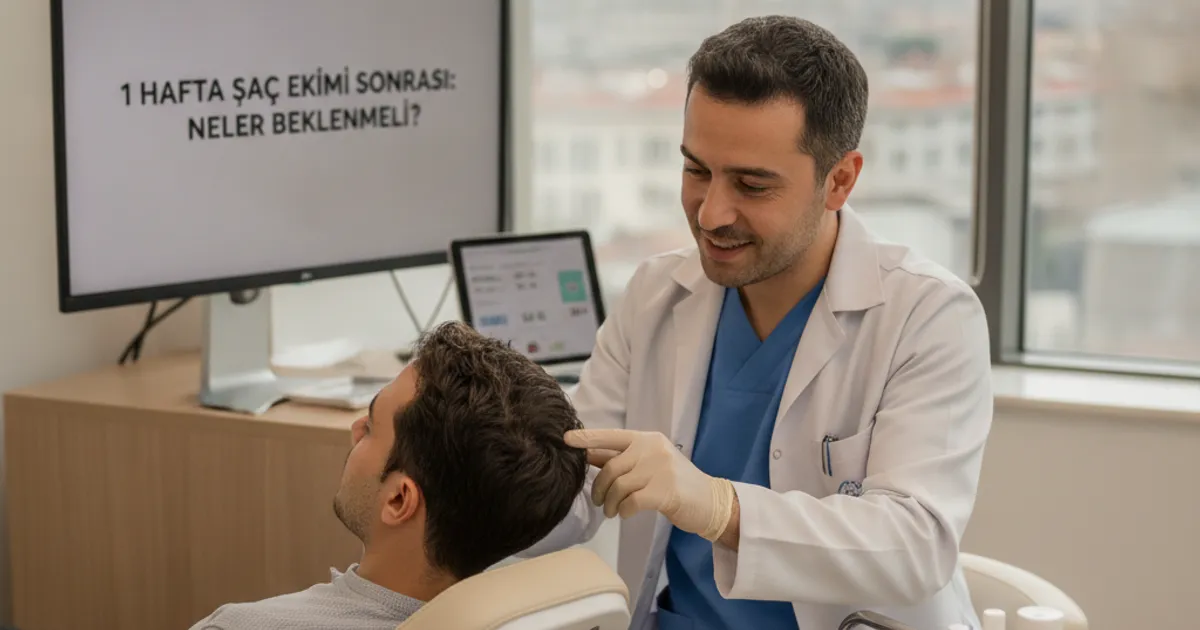
One week after a hair transplant, your scalp is usually past the most delicate stage. The tiny crusts around each graft are forming and starting to loosen, redness is fading, and most clinics give you the green light to wash your hair more normally. Graft anchoring is typically considered secure by day 7 to 10, though some clinics advise caution for a bit longer. The main job now is gentle care and patience.
What happens 1 week after a hair transplant?
At the 7-day mark, the acute healing phase is winding down. The small scabs that formed around each graft are drying out and starting to flake. Swelling on the forehead and around the eyes — common in the first 3 to 4 days — has usually settled, though some patients experience puffiness for up to 7 to 10 days. You may still see some pinkness in the recipient area, but it should look less angry than it did on day 2 or 3.
- Scabs are forming and starting to loosen — do not pick them.
- Redness is fading but still visible, especially in fair skin.
- Swelling has mostly gone down, but can linger for up to 10 days in some cases.
- The donor area at the back of the scalp may feel tight or itchy.
- Many clinics allow gentle washing from day 7, but some recommend continuing cup-and-pour until day 10–14.
- Some patients notice tiny hairs shedding — this is normal and not a sign of failure.
What does the scalp look like at 1 week?
Visually, the scalp at 1 week looks like a healing wound that is past the worst. The recipient area will have small crusts or scabs around each graft site. These are not dirty — they are a normal part of the healing process. The skin underneath may be pink or slightly red. The donor area at the back of the head often looks like a series of tiny red dots or a mild rash.
- Small, crusty scabs around each graft — usually white or yellowish.
- Pink or red skin in the recipient area.
- Tiny red dots or a mild rash in the donor area.
- No open wounds or active bleeding.
- Some mild itching, which is a sign of healing.
What can you do and not do 1 week after a hair transplant?
By day 7, you can start doing more, but you still need to protect the grafts. The table below shows the main do's and don'ts. Always follow your own clinic's instructions first — they know your specific case.
| Activity | Can you do it at 1 week? | Notes |
|---|---|---|
| Gentle washing | Yes | Use a mild shampoo and lukewarm water. No scrubbing. |
| Light exercise (walking) | Yes | Keep it gentle. No sweating heavily. |
| Intense gym workout | No | Wait at least 2 weeks. Sweat and strain can irritate grafts. |
| Swimming | No | Avoid pools, lakes, and the sea for at least 2 weeks. |
| Wearing a hat | Yes, if loose | Avoid tight hats that rub the grafts. |
| Sleeping flat | Yes | You can sleep normally if comfortable, but avoid face-down. |
| Drinking alcohol | No | Alcohol thins the blood and can slow healing. |
| Smoking | No | Smoking restricts blood flow — avoid for at least 2 weeks. |
| Dyeing or coloring hair | No | Wait at least 4 weeks. |
| Picking scabs | No | Let them fall off on their own. |
How should you wash your hair 1 week after a transplant?
At 1 week, many clinics switch you from the delicate cup-and-pour method to a more normal — but still very gentle — wash. However, some clinics recommend continuing the cup method until day 10–14. The goal is to clean the scalp without dislodging any grafts. Here is a step-by-step routine that works for most patients.
- Step 1: Wet your hair with lukewarm water. Never hot.
- Step 2: Apply a small amount of mild, fragrance-free shampoo to your hands and lather gently.
- Step 3: Pat the lather onto your scalp. Do not rub or scrub.
- Step 4: Rinse thoroughly with lukewarm water. Use a cup if the shower pressure is strong.
- Step 5: Pat dry with a clean, soft towel. Do not rub.
- Step 6: Let your hair air-dry or use a cool setting on a hairdryer.
Is it normal to see scabs, redness, or swelling at 1 week?
Yes — all three are normal at 1 week. Scabs are a sign that the grafts are healing. Redness is caused by increased blood flow to the area. Swelling should be mostly gone by day 7, but a little puffiness around the forehead can linger, and some patients experience swelling for up to 7–10 days. What is not normal: severe pain, pus, a bad smell, or swelling that gets worse after day 5. If you see any of those, contact your clinic.
- Scabs: normal. They usually fall off between day 7 and day 14.
- Redness: normal. It can last for a few weeks, especially in fair skin.
- Swelling: normal in the first few days. Should improve by day 7, but can last up to 10 days.
- Itching: normal. Do not scratch — use a gentle moisturizer if your clinic approves.
- Numbness: normal. It can take months for full sensation to return.
When will the transplanted hair start to grow?
Do not expect new growth at 1 week. The transplanted hairs will mostly shed between week 2 and week 8. This shedding of transplanted grafts is expected and is distinct from permanent shock loss, which refers to loss of native hair. The follicles are still alive under the skin. New hair usually starts to appear around month 3 to 4, with noticeable growth by month 6. Full results take 12 to 18 months.
| Time After Transplant | What to Expect |
|---|---|
| Week 1 | Scabs form and start to loosen. Redness and mild swelling. |
| Week 2–8 | Transplanted hairs shed. Scalp looks thinner than before. |
| Month 3–4 | New hair starts to grow. Fine and thin at first. |
| Month 6 | Noticeable growth. Hair thickens and darkens. |
| Month 12–18 | Full results. Hair is mature and stable. |
What should you ask your clinic at the 1-week mark?
Your 1-week follow-up is a good time to check in and get personalized advice. Here are the questions worth asking.
- Can I switch to my normal shampoo yet?
- When can I start exercising again?
- Are my scabs healing normally?
- When can I dye my hair?
- Should I use any creams or ointments on the donor area?
- When is my next follow-up appointment?
- What should I do if I notice sudden shedding?
How does Clinic Reccy help you plan your hair transplant recovery?
Clinic Reccy is a directory that helps you compare hair transplant clinics and understand what to expect at every stage — including the first week. You can browse clinic profiles, read about recovery protocols, and check what aftercare is included. If you are still choosing a clinic, start with our guide to hair transplant recovery timelines, or explore clinics in your area.
Frequently asked questions about 1 week after a hair transplant
Can I sleep normally 1 week after a hair transplant?
Yes, most people can sleep normally at 1 week, but avoid sleeping face-down. Use a soft pillow and try to keep your head slightly elevated for the first few nights if you still have swelling.
Is it normal for scabs to fall off at 1 week?
Yes. Scabs typically start to loosen and fall off between day 7 and day 14. Do not pick them. Let them come off on their own during washing.
Can I wear a hat 1 week after a hair transplant?
You can wear a loose-fitting hat, but avoid tight hats that rub against the grafts. If in doubt, ask your clinic.
What if I see no new hair at 1 week?
That is completely normal. Transplanted hair usually sheds in the first few weeks and does not start growing again until month 3 or 4. Be patient.
More Guides
- Hair Transplant and Blood Thinners: Safety and Timing
Can you have a hair transplant on blood thinners? Learn why they matter, which ones raise bleeding risk, how long to stop before surgery, and when to restart.
- Finasteride and PSA Testing: What You Need to Know
Finasteride lowers PSA levels, so your test results need careful interpretation. Learn how finasteride affects PSA, the adjustment factor, and what to tell your
- Can You Cure a Receding Hairline? What's Realistic
Can you cure a receding hairline? Learn what's realistic with medications, transplants, and lifestyle changes, plus expected results and costs.
- Minoxidil Hair Thinning Before Growth: Is It Normal?
Is minoxidil hair thinning before growth normal? Yes, it's a common sign the treatment is working. Learn why it happens, how long it lasts, and when to worry.