
Hair Transplant Consultation: What to Expect
A practical guide to hair transplant consultations: what happens, how to prepare, questions to ask, planning your procedure, and recovery aftercare.
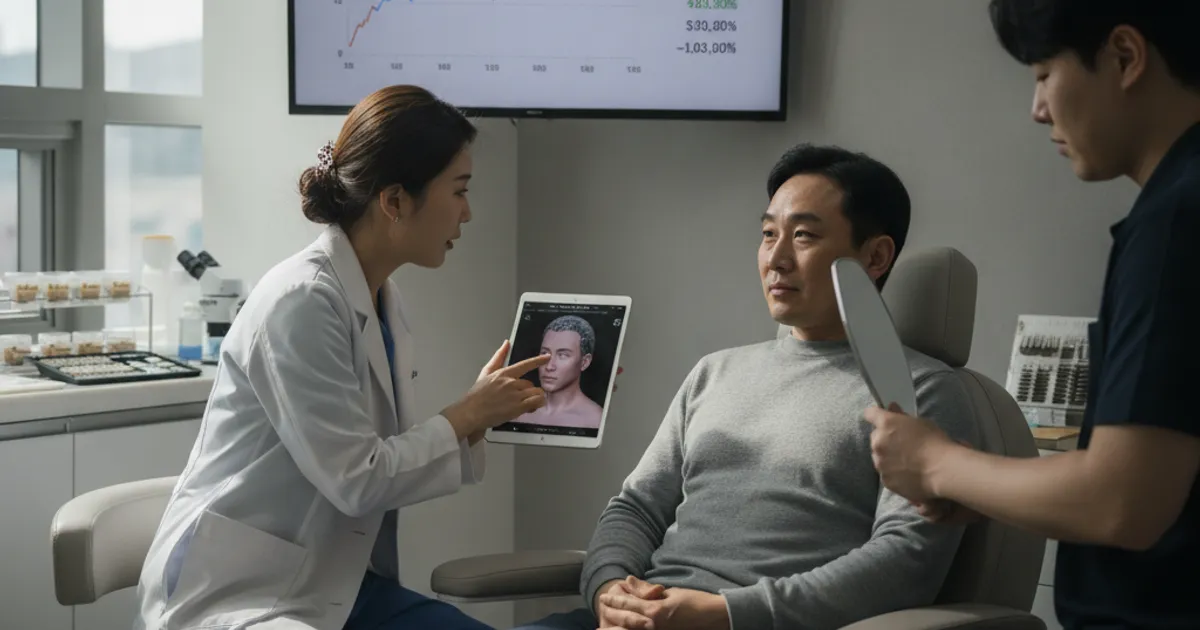
What to Expect at a Hair Transplant Consultation
A hair transplant consultation is a fact-finding appointment. It is not a sales pitch, and it is not a commitment to surgery. The clinic assesses your hair loss, your donor hair, your general health, and your goals. You get a realistic picture of what a transplant can and cannot do for you. Most consultations last 30 to 60 minutes and end with a written plan or a follow-up call. You should leave knowing whether you are a suitable candidate, roughly how many grafts you might need, and what the recovery involves.
- A review of your medical history, medications, and any previous hair treatments
- A scalp examination, often with a magnifying tool or digital camera
- An assessment of donor hair density and quality at the back and sides of the scalp
- A discussion of your goals, expectations, and the limits of what surgery can achieve
- A graft estimate and an explanation of the technique the clinic recommends
- A written quote or a plan sent after the appointment, not usually a hard sell on the day
Before You Go: How to Prepare for Your Consultation
Preparation makes the consultation more useful. You do not need to do much, but a little homework helps you ask better questions and compare clinics fairly. Treat it like any other medical appointment: bring information, be honest, and take notes.
- Bring a list of medications, supplements, and any treatments you have tried for hair loss
- Take photos of your hairline and crown from a few angles, plus any older photos that show your hair over time
- Write down your main goal in one sentence, such as restoring the temples or filling the crown
- Note your budget range and whether you are willing to travel
- Prepare a short list of questions so you do not forget them under pressure
- Avoid cutting or dyeing your hair right before the appointment so the clinic can see your natural pattern
The Consultation Itself: Step by Step
Every clinic runs its consultation a little differently, but the structure is usually similar. Here is the typical flow, whether you attend in person or online.
- Step 1: Welcome and paperwork. You fill out a medical history form and explain your hair loss concerns.
- Step 2: Scalp and donor assessment. The surgeon or consultant examines your scalp, sometimes with a magnifying tool or camera, to check donor density and quality.
- Step 3: Discussion of goals and options. You talk through what you want to achieve and the techniques available, including their trade-offs.
- Step 4: Graft estimate and plan. The clinic gives you a rough graft count and explains the recommended approach for your pattern.
- Step 5: Questions and next steps. You ask your questions, discuss costs and aftercare, and agree on whether to proceed or take time to decide.
Questions to Ask During Your Consultation
The best consultations feel like a two-way conversation. Ask direct questions and listen for specific answers, not vague reassurance. If a clinic cannot answer clearly, that tells you something.
- Who performs the surgery, and what is their experience with cases like mine?
- How many grafts do you estimate, and what density can I realistically expect?
- What technique do you recommend for my pattern, and what are the trade-offs?
- What are the risks and complication rates for this procedure?
- What does the price include, and what is not included?
- How many follow-up appointments are included, and who do I contact if something goes wrong?
- Can I see before-and-after photos of patients with similar hair loss and hair type?
- What happens if I am not happy with the result?
What Happens After the Consultation: Planning Your Procedure
After the consultation, you should have enough information to plan. Do not rush the decision. Compare the written quotes, the graft estimates, and the aftercare terms. If you are travelling, factor in flights, accommodation, and time off work. A good clinic will give you a clear timeline and pre-op instructions well in advance.
- Review the written quote and check exactly what is included, such as medication, PRP, or follow-up visits
- Confirm the date and arrange time off work, usually a few days to a week depending on the technique
- Follow pre-op instructions, which often include avoiding alcohol, certain medications, and smoking
- Arrange transport home after the procedure, as you should not drive yourself
- Set up a recovery space at home with loose pillows and easy meals
- Ask the clinic for a written aftercare plan and an emergency contact number
Recovery and Aftercare: What to Plan For
Recovery is usually straightforward but requires patience. The first few days involve tenderness, swelling, and scabbing. The transplanted hair often sheds in the first month, which is normal, and new growth starts to appear after a few months. Plan for the downtime and the emotional ups and downs of the growth cycle.
- Expect redness and small scabs for the first week to ten days
- Sleep with your head elevated for the first few nights to reduce swelling
- Avoid strenuous exercise and swimming for at least two weeks, or as advised
- Do not scratch or pick at scabs; follow the clinic's washing instructions
- Understand that shedding is normal and not a sign of failure
- Attend follow-up appointments and take photos to track progress objectively
Red Flags to Watch For
Most clinics are reputable, but some use high-pressure tactics or make promises that surgery cannot keep. Trust your instincts and walk away if something feels off.
- Guaranteed results or a promise of a specific density without examining your donor hair
- Pressure to book and pay a deposit on the day of the consultation
- Vague answers about who performs the surgery or the clinic's complication rates
- Prices that seem far below the local average without a clear explanation
- No written aftercare plan or no clear contact for post-op problems
- Before-and-after photos that look inconsistent or heavily edited
Frequently Asked Questions
Do I need to commit to surgery at the consultation?
No. A consultation is for information and assessment. A reputable clinic will give you a written plan and let you take time to decide. You should never feel pressured to book on the spot.
Can I have a consultation online?
Yes, many clinics offer video consultations. They can assess your pattern from photos and discuss options, but they may still want an in-person examination before confirming a graft estimate.
How long does a consultation take?
Most take 30 to 60 minutes. In-person visits may take longer if the clinic takes photos or performs a trichoscopy. Online consultations are often shorter.
What should I bring to the consultation?
Bring a list of medications and supplements, photos of your hair over time, your goals, and a list of questions. If you have had previous hair treatments, bring those details too.
In-Person vs. Online Consultations: What's the Difference?
Many clinics now offer both in-person and online consultations. Each has strengths and limitations, and your choice may depend on convenience, travel distance, and how confident you feel about remote assessment.
- In-person: Allows the surgeon to physically examine your scalp, feel donor hair quality, and use magnification tools. You can also see the clinic's facilities and meet staff. This is generally more thorough for surgical planning.
- Online: Convenient and often faster, but relies on photos and video. The surgeon cannot palpate your scalp or assess donor density as precisely. You may need to send high-quality photos in advance and have a follow-up in person before booking surgery.
- Hybrid: Some clinics offer an initial online chat followed by an in-person assessment. This can save time while still ensuring a proper physical exam.
- Cost: Online consultations are sometimes free, while in-person may carry a fee (often redeemable against surgery). Ask about any charges upfront.
- Suitability: Online may be fine for general advice, but complex cases (e.g., previous transplants, scarring, or unusual hair loss patterns) usually benefit from an in-person review.
If you opt for online, ensure the clinic uses a secure platform and asks for standardized photos (front, top, back, sides) in good lighting. A reputable clinic will be transparent about the limitations of remote assessment and may recommend an in-person visit before committing to surgery.
Understanding Graft Counts and What They Mean for You
Graft estimates are a central part of the consultation, but they are not a precise science. A graft is a small unit of skin containing one to four hair follicles. The number of grafts you need depends on the area to cover, your desired density, and your donor supply. Clinics use different methods to estimate, so numbers can vary between providers.
Be wary of anyone who promises a specific graft count without examining your donor area. A realistic estimate considers both the recipient area and the donor area's capacity. Overharvesting can leave the back of the scalp thin, so a good surgeon will balance coverage with long-term donor health.
- Graft estimates are approximate; final counts may be adjusted during surgery based on actual donor quality and follicular unit dissection.
- Higher graft counts are not always better. Density depends on hair caliber, color contrast, and curl, not just numbers.
- Ask how the clinic calculates the estimate and whether they account for future hair loss. A conservative hairline now may look better as you age.
- If you have previous transplants, the estimate must consider scar tissue and reduced donor supply.
- Request a range rather than a single number, and ask what factors could change it.
Frequently Asked Questions About Hair Transplant Consultations
How long does a consultation take?
Most last 30 to 60 minutes, but it can vary. Online consultations may be shorter, while complex cases or those involving multiple questions may take longer. Ask the clinic when booking so you can plan accordingly.
Is the consultation free?
Policies vary. Some clinics offer free consultations, while others charge a fee that may be deducted from the surgery cost if you proceed. Always confirm any charges before booking.
Can I bring someone with me?
Yes, many clinics welcome a friend or family member. Having a second set of ears can help you remember details and discuss the options afterward. If attending online, you can usually have someone join the call.
What should I do if I'm not ready to book surgery?
It's perfectly fine to take time to decide. A reputable clinic will not pressure you. Ask for a written summary and take it home to review. You can also schedule a follow-up call to ask further questions.
Will the consultation include a physical examination?
In-person consultations typically include a scalp and donor assessment. Online consultations may rely on photos and video, but a physical exam is usually required before surgery. Clarify what will happen at each stage.
How do I choose between clinics?
Compare written quotes, graft estimates, aftercare terms, and the surgeon's experience. Look for transparency and willingness to answer questions. Avoid clinics that use high-pressure sales tactics or make unrealistic promises.
More Guides
- How Long After Finasteride Before a Hair Transplant?
Planning a hair transplant while on finasteride? Learn the typical waiting period, why timing matters, and how to coordinate with your surgeon for best results.
- Early Symptoms of Hair Loss: What to Watch For First
Learn the early symptoms of hair loss, how to track them, and when to see a specialist. Plan ahead with treatment options and costs.
- Alopecia Treatment: A Comprehensive Guide
A practical guide to alopecia treatment: types, diagnosis, medications, surgery, recovery timeline, and aftercare. Plan your hair restoration with confidence.
- Hair Loss Causes: What You Can and Can't Control
Understand hair loss causes, what's controllable, and how to plan a transplant. Practical guide to factors, aftercare, and when to see a specialist.