
Lion Implanter Pen Hair Transplant: Procedure, Recovery, Results
What the Lion Implanter Pen is, how surgeons use it, recovery, results, who it suits, and how it compares to other hair transplant techniques.
What Is a Lion Implanter Pen?
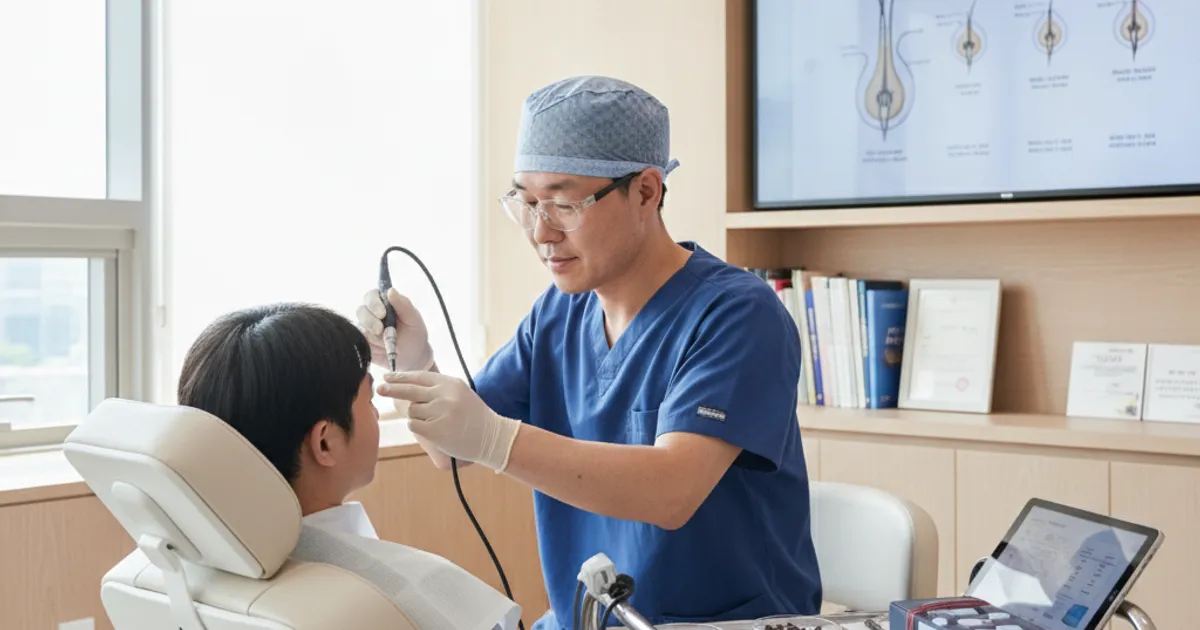
The Lion Implanter Pen is a surgical instrument used during hair transplant procedures to place individual hair follicles into the scalp. It is a refinement of the implanter pen concept, a tool category that has become increasingly popular among surgeons who perform follicular unit extraction (FUE) and direct hair implantation (DHI) style procedures. Rather than making a recipient site with one instrument and then pushing the graft in with forceps, the Lion Implanter Pen lets the surgeon load a graft into a hollow needle and deposit it directly into the scalp in a single motion.
The pen is typically made of stainless steel with a reusable or partially reusable body and a fine, interchangeable needle tip. Grafts are loaded one at a time, either manually or with a loading aid, and the surgeon controls the depth and angle of each insertion. Because the graft is never handled with forceps after loading, there is less physical trauma to the follicle, which is one of the main reasons clinics promote the tool.
- Holds a single follicular unit graft in a hollow needle before implantation
- Allows the surgeon to create the site and place the graft in one step
- Reduces the need for forceps handling of the graft
- Gives the surgeon control over insertion depth, angle and direction
- Used in FUE and DHI-style procedures, not in strip (FUT) harvesting
How the Lion Implanter Pen Is Used During Hair Transplant Surgery
The Lion Implanter Pen comes into play during the implantation stage, after the grafts have been harvested and sorted. The overall procedure usually follows a predictable sequence, and the pen is only one part of it. Here is how a typical session using the pen unfolds.
First, the donor area at the back and sides of the scalp is trimmed and numbed with local anaesthetic. The surgeon then extracts individual follicular units using a small punch tool. These grafts are kept in a holding solution to keep them hydrated. Once enough grafts have been harvested, the surgeon moves to the recipient area. The hairline is marked out, and the recipient area is numbed. Then the implantation begins: the surgeon loads each graft into the Lion Implanter Pen and places it into the scalp at the predetermined angle and depth. The pen allows the surgeon to create the site and deposit the graft in one motion, which can reduce the time the graft is outside the body and minimise handling.
Recovery After Lion Implanter Pen Hair Transplant
Recovery after a Lion Implanter Pen procedure is broadly similar to recovery after other FUE techniques. The pen itself does not change the biology of healing, but because it creates small, precise recipient channels, some clinics report less crusting and a cleaner look in the first few days. That said, individual healing varies, and the aftercare protocol matters as much as the tool.
- Mild swelling around the forehead and eyes can occur in the first few days
- Small scabs or crusts form around each graft and typically fall away within a week or two
- Redness in the recipient area can persist for a while
- The donor area may feel tight or sore for a few days
- Most people can return to desk work within a few days, though strenuous exercise should wait longer
- Sleeping propped up for the first few nights may help reduce swelling
Results and Timeline: What to Expect
Results from a Lion Implanter Pen hair transplant depend on the same factors as any other FUE procedure: graft survival, surgeon skill, hair characteristics, and how well you follow aftercare. The pen is designed to support graft survival by minimising handling, but it cannot compensate for poor planning or an inexperienced operator.
- Graft survival rates are generally reported as high with implanter pen techniques, though exact figures vary by clinic and patient
- Hairline design and density planning have a bigger impact on how natural the result looks than the pen itself
- Thicker, wavier hair tends to give better coverage per graft than fine, straight hair
- Patients with good donor density usually achieve more coverage than those with limited donor supply
- A single session may be enough for smaller areas, while larger areas often need two sessions spaced months apart
Who Is a Good Candidate for Lion Implanter Pen?
The Lion Implanter Pen is suitable for most people who are already good candidates for FUE. It is not a treatment for active hair loss that has not stabilised, and it is not a substitute for medical therapy where that is appropriate. A consultation is the only reliable way to know whether it suits your situation.
- People with stable hair loss who have not seen significant change in the past year
- Those with sufficient donor hair density at the back and sides of the scalp
- Patients wanting to restore a receding hairline, thicken the crown, or fill in scarring
- People who prefer a minimally invasive technique without a linear strip scar
- Those willing to commit to aftercare and a 12-month wait for full results
| Candidate profile | Suitability | Notes |
|---|---|---|
| Early hairline recession, stable loss | Good | Often needs a smaller session; pen allows precise hairline work |
| Moderate thinning across the top | Good | May need 1–2 sessions depending on donor supply |
| Advanced loss with limited donor hair | Case-dependent | Realistic goals must be set; density may be limited |
| Active, rapidly progressing loss | Poor | Stabilise first; transplant may not keep pace with ongoing loss |
| Scarring from injury or previous surgery | Case-dependent | Pen can place grafts into scar tissue, but survival varies |
| Very fine, straight hair | Case-dependent | Coverage per graft is lower; expectations must be managed |
Cost of Lion Implanter Pen Hair Transplant
Pricing for a Lion Implanter Pen hair transplant is usually quoted per graft or as a flat fee per session. The pen itself does not add a separate line item in most clinics; it is simply the tool used within the procedure. What drives cost is the number of grafts, the surgeon's experience, the clinic's location, and what is included in the package. Because there is no central pricing database for this specific tool, we cannot provide averaged case prices. Instead, we recommend checking with clinics directly for a written quote after consultation.
Lion Implanter Pen vs Other Hair Transplant Techniques
The Lion Implanter Pen is one option among several. The main alternatives are traditional FUE with forceps placement, DHI using a Choi implanter pen, and FUT (strip surgery). Each has trade-offs in terms of scarring, session length, graft handling, and cost.
| Technique | How grafts are placed | Scarring | Typical session length | Notes |
|---|---|---|---|---|
| Lion Implanter Pen | Loaded into pen, deposited directly | Small dot scars | Longer, graft-by-graft | Less forceps handling; precise angle control |
| Traditional FUE | Sites pre-made, grafts placed with forceps | Small dot scars | Moderate | Widely available; depends heavily on surgeon skill |
| DHI (Choi pen) | Loaded into implanter pen, deposited directly | Small dot scars | Longer, graft-by-graft | Similar concept to Lion pen; brand and design differ |
| FUT (strip) | Sites pre-made, grafts placed with forceps | Linear strip scar | Moderate | Can yield more grafts in one session; strip scar is permanent |
- If avoiding a linear scar matters most, FUE-based options including the Lion Implanter Pen are usually preferred over FUT
- If you need a very large number of grafts in one session, FUT may still be recommended by some surgeons
- If precise hairline work is the priority, implanter pen techniques give the surgeon fine control over angle and direction
- If cost is the main constraint, traditional FUE is often priced lower than DHI-style pen procedures
What to Look for in a Clinic Offering Lion Implanter Pen
The pen is only as good as the hands using it. When you are comparing clinics, focus on who performs the procedure, how many they do, and what aftercare is included. Ask direct questions and expect direct answers.
- Who performs the extraction and implantation — the surgeon, or technicians?
- How many Lion Implanter Pen procedures the clinic performs per month
- Whether they can show before-and-after photos of patients with similar hair loss to yours
- What is included in the quoted price: consultations, medication, follow-up visits, PRP
- Whether they offer a clear written quote after consultation, not just a phone estimate
- What their policy is if the result does not meet expectations
Related Guides
If you are still weighing up techniques, the guides above break down the differences between FUE, FUT and DHI, and explain how pricing is typically structured. When you are ready to compare clinics, browse the Clinic Reccy directory to see providers in your area and what they offer.
Frequently Asked Questions
Is the Lion Implanter Pen better than a Choi pen?
Both are implanter pens that place grafts directly into the scalp. The differences come down to design details, needle size options, and how the surgeon prefers to work. There is no independent evidence showing one brand consistently produces better results than another. What matters more is the surgeon's experience with the tool they use.
Does the Lion Implanter Pen leave scars?
Any hair transplant that involves extracting individual grafts will leave small dot scars in the donor area. With the Lion Implanter Pen, the recipient sites are also small punctures rather than incisions, so scarring in the recipient area is typically minimal. Scars usually fade over time but do not disappear completely.
How long does a Lion Implanter Pen procedure take?
Session length depends on the number of grafts. Because grafts are placed one at a time, pen-based procedures often take longer than techniques where all recipient sites are pre-made. A typical session can run from several hours to a full day. Ask your clinic for an estimate based on your graft count.
Can I combine the Lion Implanter Pen with other treatments?
Yes. Many clinics combine hair transplant surgery with medical treatments such as finasteride or minoxidil, and some offer PRP as an add-on. These are separate from the surgical procedure and should be discussed with your surgeon based on your individual situation.
More Guides
- Hair Transplant for Curly Hair: Graft and Technique Tips
A plain-English guide to hair transplants for curly hair: how surgeons adapt graft harvesting and placement, recovery, results, costs, and who it suits.
- How Long Does a Hair Transplant Last? Long-Term Durability
How long does a hair transplant last? We explain the procedure, recovery, durability, costs by stage of hair loss, and how it compares to alternatives.
- Hair Transplant Revision: When a Second Procedure Makes Sense
Considering a hair transplant revision? Learn how a second procedure works, who it suits, recovery, results, and costs. Expert explainer from Clinic Reccy.
- Hair Transplant for Norwood 6 and 7: What's Possible
A clear look at hair transplant options for Norwood 6 and 7 hair loss: graft limits, staging, recovery, costs, and realistic results.