
Hair Transplant: Review, Cost, and Alternatives
Considering a hair transplant? Learn how it works, recovery timeline, cost factors, and how to choose a provider. Read this before you book.
What Is a Hair Transplant?
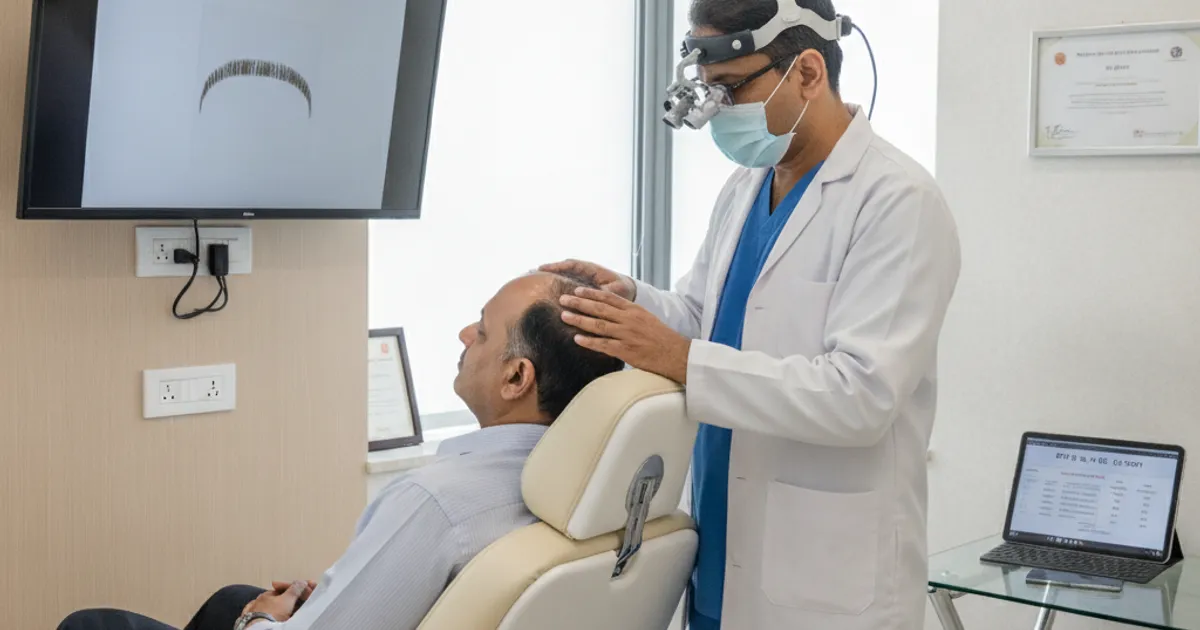
A hair transplant is a surgical procedure that moves hair follicles from a donor area (usually the back or sides of the scalp) to thinning or bald areas. It is used to treat pattern hair loss in men and women. The two main techniques are Follicular Unit Extraction (FUE) and Follicular Unit Transplantation (FUT). FUE removes individual follicular units with a small punch tool, leaving tiny circular scars. FUT removes a strip of skin from the donor area, which is then dissected into grafts under a microscope, leaving a linear scar. The choice between FUE and FUT depends on your hair loss pattern, donor hair quality, and the surgeon's recommendation. Hair transplants are not a cure for hair loss; they redistribute existing hair to create fuller coverage.
How a Hair Transplant Is Performed
The process typically starts with a consultation where a physician evaluates your donor area, hair loss pattern, and goals. If you proceed, the surgical day involves extracting hair follicles from the back or sides of the scalp and implanting them into thinning or bald areas. The two main approaches are FUE and FUT. FUE removes individual follicular units with a small punch tool, leaving tiny circular scars. FUT removes a strip of skin from the donor area, which is then dissected into grafts under a microscope, leaving a linear scar. Some clinics also offer robotic-assisted FUE, though availability varies by provider.
- Consultation: assessment of donor density, hair loss stage, and medical history.
- Anesthesia: local anesthesia is used to numb the donor and recipient areas.
- Extraction: follicles are removed either individually (FUE) or via a strip (FUT).
- Graft preparation: follicular units are sorted and kept in a holding solution.
- Implantation: grafts are placed into tiny incisions in the recipient area.
- Post-op instructions: wound care, medication, and activity restrictions are provided.
Recovery Timeline After a Hair Transplant
Recovery after a hair transplant follows a general pattern. The first few days involve some swelling, redness, and tenderness in both the donor and recipient areas. Most people can return to desk work within a few days, but strenuous activity should wait at least a week or two. The transplanted hairs often shed in the first month, which is normal and not a sign of failure. New growth starts to appear around month three or four, with fuller results visible between months eight and twelve.
- Days 1–3: swelling, redness, and mild discomfort; sleep with head elevated.
- Days 4–7: scabs form and begin to fall off; gentle washing is usually allowed.
- Weeks 2–4: most transplanted hairs shed; donor area heals further.
- Months 3–4: new hair starts to grow; texture may be fine at first.
- Months 6–9: noticeable improvement in density and coverage.
- Months 12–18: final results mature; hair thickens and blends naturally.
| Timeframe | What to Expect |
|---|---|
| First 3 days | Swelling, redness, tenderness; avoid touching grafts. |
| First week | Scabs form; return to light daily activities. |
| 2–4 weeks | Transplanted hairs shed; donor area heals. |
| 3–4 months | New growth begins; hair may look thin. |
| 6–9 months | Visible density improvement. |
| 12–18 months | Final matured results. |
Results: What to Expect and When
Hair transplant results are not instant. The transplanted follicles need time to establish a blood supply and enter a growth phase. In the first few months, you may look worse before you look better because of shedding. By the six-month mark, most people see a clear difference, but the final result takes a year or more. The quality of the result depends on several factors: the number of grafts, the surgeon's skill, your donor hair characteristics, and how well you follow aftercare instructions. Any provider has a range of outcomes. Some patients are very satisfied; others may need a second procedure to reach their goals.
- Results are gradual: shedding first, then growth, then maturation.
- Final density depends on graft count and donor hair quality.
- A second session is sometimes needed for larger bald areas.
- Hair transplants do not stop future hair loss; medication may be recommended.
- Individual results vary, and no clinic can guarantee a specific outcome.
Who Is a Good Candidate for a Hair Transplant?
Not everyone is a good candidate for a hair transplant. The best candidates have stable hair loss, a healthy donor area, and realistic expectations. If you are still losing hair rapidly, a transplant may not be the best first step because the transplanted hair will remain while the surrounding native hair continues to thin. Age, overall health, and scalp conditions also matter. Clinics will assess these factors during consultation. In general, candidates with early to moderate hair loss and thick donor hair tend to get the most predictable results.
- You have a stable pattern of hair loss, not rapid ongoing shedding.
- Your donor area (back and sides) has enough dense hair.
- You are in good general health with no uncontrolled scalp conditions.
- You understand that results take months and may require a second session.
- You are willing to use medication if recommended to protect native hair.
Hair Transplant Cost: What Influences Price
The cost of a hair transplant is not a single fixed number. It depends on the number of grafts, the technique used (FUE vs FUT), the clinic location, and whether you need one or multiple sessions. Many clinics price per graft, and the per-graft rate can vary by region and surgeon. Because pricing is customized, the best way to get an accurate figure is a direct consultation. That said, you can estimate based on the stage of hair loss. Below are averaged case pricing figures for early, moderate, and advanced hair loss. These are general medians, not quotes from any specific clinic.
| Stage of Hair Loss | Typical Graft Range | Relative Cost Level |
|---|---|---|
| Early | Fewer grafts (e.g., 500–1,500) | Lowest |
| Moderate | Moderate grafts (e.g., 1,500–3,000) | Mid-range |
| Advanced | High grafts (e.g., 3,000+) | Highest |
How Hair Transplant Providers Compare
There are many types of providers. Options include large clinic networks, independent surgeon-owned clinics, hospital-based practices, and medical tourism destinations. Each has trade-offs. Large networks offer standardized processes and brand recognition. Independent clinics may offer more personalized care, a specific surgeon's expertise, or lower prices. Medical tourism can reduce cost but adds travel, language, and follow-up challenges. The right choice depends on your budget, location, and how much weight you put on convenience versus specialization.
| Provider Type | Pros | Cons |
|---|---|---|
| Large clinic network | Wide locations, established brand, standardized protocols | Pricing may be higher; surgeon involvement varies by clinic |
| Independent surgeon clinic | Direct surgeon involvement, personalized plan, potentially lower cost | Quality varies; less brand recognition |
| Medical tourism | Lower upfront cost, travel experience | Travel and follow-up logistics, language barriers, less legal recourse |
| Hospital-based | Medical oversight, suitable for complex cases | Often more expensive, less specialized in cosmetic hair restoration |
- Large clinic network: good for those who want a known brand and multiple locations.
- Independent clinics: good for those who want a specific surgeon and personalized care.
- Medical tourism: good for budget-focused patients willing to travel.
- Hospital-based: good for patients with medical complexities.
What’s Included in a Hair Transplant Procedure and Aftercare
What is included in a hair transplant procedure can vary by clinic and package. Typically, the surgical fee covers the procedure itself, local anesthesia, graft preparation, and a post-op care kit. Some locations may include follow-up visits, while others charge separately. It is important to ask for a written breakdown before you commit. Aftercare usually involves washing instructions, medication (such as antibiotics or pain relievers), and advice on avoiding sun exposure and strenuous activity. Some clinics offer PRP (platelet-rich plasma) as an add-on, but it is not always included.
- Surgical procedure and local anesthesia.
- Graft extraction, preparation, and implantation.
- Post-op care kit and written aftercare instructions.
- Follow-up visits (may be included or extra).
- Medications (may be prescribed or recommended).
- PRP or laser therapy (often optional add-ons).
Choosing a Hair Transplant Provider
If you are considering a hair transplant, do your homework. Ask who will perform the extraction and implantation, how many procedures the surgeon does per week, and what happens if you are unhappy with the result. Get quotes from at least two other providers for comparison. Check for board certification, read verified reviews, and look at before-and-after photos of patients with similar hair loss to yours. The clinic name matters less than the individual surgeon's skill and your comfort with the plan. A good consultation should feel educational, not pushy.
- Confirm who performs each step of the procedure.
- Ask about the surgeon's experience and board certifications.
- Request a written quote with a graft estimate and what is included.
- Look for real patient photos with similar hair loss patterns.
- Check the clinic's policy on revisions or touch-ups.
- Compare at least two or three providers before deciding.
Frequently Asked Questions About Hair Transplants
Is a hair transplant a good choice?
A hair transplant can be a good choice for people with stable hair loss and a healthy donor area. Whether it is the best option for you depends on the specific surgeon, your hair loss pattern, and your budget. It is worth comparing with independent clinics and reading verified patient reviews before deciding.
How much does a hair transplant cost?
Cost depends on the number of grafts, the technique, and the clinic location. As a general guide, early hair loss costs less than moderate, and advanced hair loss costs the most because it requires more grafts and sometimes multiple sessions. Always get a written quote.
Is FUE or FUT better?
Both FUE and FUT have advantages. FUE leaves tiny circular scars and allows for a shorter recovery, while FUT can yield more grafts in a single session and may be better for larger bald areas. The recommended technique depends on your donor hair, scalp elasticity, and the surgeon's assessment. Ask during consultation which method is best for your case and why.
How long do hair transplant results last?
Transplanted hair is typically permanent because it is taken from a donor area that is resistant to hair loss. However, your natural hair can continue to thin over time, so the overall look may change. Many patients use medication to help maintain results.
More Guides
- Hair Transplant for Men With Sensitive Skin: What to Know
Hair transplant for men with sensitive skin: techniques, recovery, results, cost factors, and how to choose a clinic that handles eczema or psoriasis.
- What Happens 10 Days After a Hair Transplant?
A clear, honest look at what happens 10 days after a hair transplant: healing, scabs, shedding, results, costs, and who it suits.
- ARTAS Hair Transplant: How It Works and Who It's For
A clear guide to ARTAS hair transplant: how the robotic system works, recovery, results, cost factors, who it suits, and how it compares to other techniques.
- Facial Hair Transplant: Procedure, Recovery & Results
A clear guide to facial hair transplant: how it works, recovery timeline, results, who suits it, cost, and how it compares to alternatives.