
Facial Hair Transplant: Procedure, Recovery & Results
A clear guide to facial hair transplant: how it works, recovery timeline, results, who suits it, cost, and how it compares to alternatives.
What Is a Facial Hair Transplant?
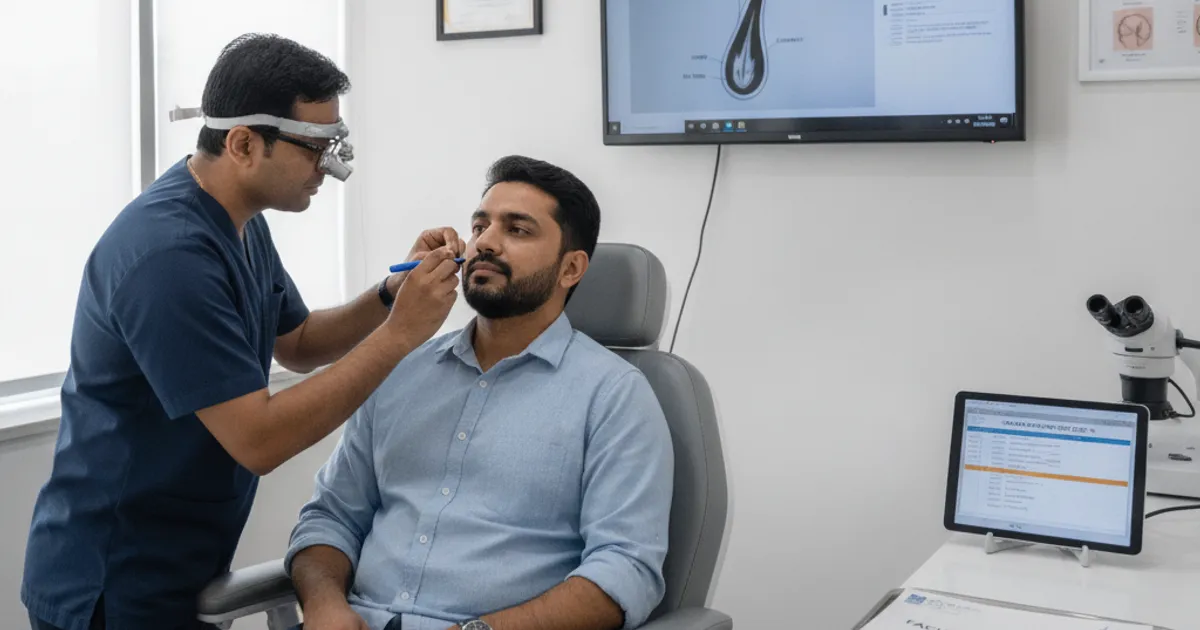
A facial hair transplant is a surgical procedure that moves hair follicles from a donor area — usually the back or sides of the scalp — to areas of the face where beard, moustache, sideburn, or cheek hair is thin, patchy, or missing. It works on the same principle as a scalp hair transplant, just applied to the face. The goal is to create a natural-looking beard line or fill in gaps so facial hair grows in evenly. It is sometimes called a beard transplant or moustache transplant, depending on the area being treated.
How a Facial Hair Transplant Is Performed
The procedure is typically done under local anaesthesia, so you are awake but the donor and recipient areas are numb. The duration varies depending on how many grafts are needed. Surgeons use two main techniques: follicular unit extraction (FUE), where individual follicles are punched out and moved, or follicular unit transplantation (FUT), where a strip of scalp is removed and dissected into grafts. FUE is often preferred for facial work because it leaves less scarring and allows precise placement.
- Donor hair is trimmed and numbed, then individual follicles are extracted (FUE) or a strip is taken (FUT).
- The surgeon designs the beard line or moustache shape based on your facial structure and goals.
- Tiny incisions are made in the recipient area, and grafts are placed at specific angles to mimic natural hair growth.
- The treated area is cleaned and dressed; you usually go home the same day.
Recovery Timeline: What to Expect Week by Week
Recovery from a facial hair transplant is usually straightforward, but the first few weeks require some care. You may have redness, small scabs, and mild swelling. The transplanted hairs often fall out within the first month — this is normal and temporary. New growth typically starts around three to four months, with fuller results by six to nine months. Below is a general week-by-week guide.
| Timeframe | What to Expect |
|---|---|
| Days 1–3 | Redness, swelling, small scabs; avoid touching or washing the area vigorously. |
| Week 1 | Scabs begin to flake off; most clinics allow gentle washing after a few days. |
| Weeks 2–4 | Transplanted hairs may shed; this is normal and not a sign of failure. |
| Months 3–4 | New hair growth becomes visible; some itching may occur as follicles heal. |
| Months 6–9 | Density improves noticeably; beard or moustache shape becomes clear. |
| 12 months | Final results are usually apparent; hair continues to thicken and mature. |
Results: Growth, Density, and Longevity
Facial hair transplant results are generally permanent because the transplanted follicles are resistant to the hormone that causes beard hair loss. However, the hair itself will grow like scalp hair — faster and longer than typical beard hair — so you will need to trim it regularly to maintain a natural look. Density depends on the number of grafts and your donor supply. Most people see a significant improvement in coverage, but it may not match the density of a natural, fully grown beard.
- Growth: New hair typically appears around three to four months and matures by 12 months.
- Density: Results vary; surgeons can usually create a dense but natural-looking beard line.
- Longevity: Transplanted hair is permanent, but it grows like scalp hair and needs trimming.
- Natural look: Angle and placement of grafts are key to avoiding a pluggy or unnatural appearance.
Who Is a Good Candidate for Facial Hair Transplant?
Good candidates are generally healthy adults who have patchy or thin facial hair that bothers them, or who want to fill in scars from injury or acne. You need a sufficient donor area on the scalp — usually the back of the head — to supply grafts. People with certain medical conditions, active skin infections, or unrealistic expectations may not be suitable. A consultation with a qualified surgeon is the best way to determine candidacy.
- You have patchy beard or moustache growth that has been stable for at least a year.
- You have enough donor hair on the scalp for extraction.
- You are in good general health and do not have active skin infections on the face.
- You understand that results are permanent but may require regular trimming.
- You have realistic expectations about density and healing time.
Cost of a Facial Hair Transplant
The cost of a facial hair transplant varies widely depending on the clinic's location, the surgeon's experience, and the number of grafts needed. Because there is no standard pricing, it is best to get quotes from several clinics. As a general guide, costs are often grouped by the extent of the case — early, moderate, or advanced hair loss or patchiness. The figures below are averaged case pricing medians from our database and are meant to give you a ballpark, not a fixed quote.
- Location: clinics in major cities or popular medical tourism destinations may charge differently.
- Surgeon experience: more experienced surgeons often charge higher fees.
- Number of grafts: larger areas require more grafts and cost more.
- Technique: FUE and FUT can have different price structures.
- Additional services: PRP therapy or post-op medications may add to the total.
Facial Hair Transplant vs. Alternatives
A facial hair transplant is the only permanent way to fill in patchy facial hair. Other options include topical treatments like minoxidil, which may help some people but require ongoing use and do not work for everyone. Makeup or temporary tattoos can camouflage gaps but are not permanent. For those who want a lasting solution, surgery is the main route. The table below compares the main alternatives.
| Option | Permanence | How It Works | Considerations |
|---|---|---|---|
| Facial hair transplant | Permanent | Surgical relocation of hair follicles | Requires surgery, recovery time, and trimming |
| Minoxidil (topical) | Temporary | Stimulates hair growth with daily application | Results vary; must continue use to maintain |
| Beard makeup | Temporary | Cosmetic product to fill gaps | Washes off; not a real solution |
| Micropigmentation | Semi-permanent | Tattoo-like pigment to mimic stubble | Fades over time; does not grow hair |
Choosing a Clinic and Surgeon
Choosing the right clinic is critical for natural-looking results and safe recovery. Look for a surgeon who specialises in facial hair restoration and has a portfolio of before-and-after photos. Check that the clinic is properly licensed and uses modern techniques. Reading patient reviews and asking about the surgeon's experience with beard transplants can help you make an informed decision. Clinic Reccy lists verified clinics and surgeons to help you compare options.
- Verify the surgeon's credentials and experience with facial hair transplants.
- Ask to see before-and-after photos of previous beard or moustache transplants.
- Check that the clinic follows proper sterilisation and safety protocols.
- Discuss the expected number of grafts and the total cost upfront.
- Read independent reviews and ask about the clinic's aftercare support.
Frequently Asked Questions
Is a facial hair transplant painful?
The procedure is done under local anaesthesia, so you should not feel pain during surgery. Afterward, you may experience mild soreness, swelling, and scabbing, which can usually be managed with over-the-counter pain relief.
How long does it take to see results?
Transplanted hairs often shed in the first month, and new growth typically starts around three to four months. Most people see noticeable results by six to nine months, with final density at around 12 months.
Will the transplanted hair grow like a normal beard?
The transplanted hair comes from the scalp, so it grows faster and longer than typical beard hair. You will need to trim it regularly to maintain a natural beard length and shape.
Can I shave after the procedure?
You should avoid shaving the treated area for at least two weeks to allow the grafts to heal. After that, you can usually shave carefully, but check with your surgeon first.
More Guides
- What Happens 10 Days After a Hair Transplant?
A clear, honest look at what happens 10 days after a hair transplant: healing, scabs, shedding, results, costs, and who it suits.
- ARTAS Hair Transplant: How It Works and Who It's For
A clear guide to ARTAS hair transplant: how the robotic system works, recovery, results, cost factors, who it suits, and how it compares to other techniques.
- Hair Transplant and Sleep Apnea: CPAP and Recovery
How sleep apnea and CPAP therapy affect hair transplant surgery, recovery, risks, costs, and candidacy. A clear guide for patients with OSA.
- Does a Hair Transplant Hurt? Pain, Numbing & Recovery
Does a hair transplant hurt? Learn what you actually feel, how numbing works, recovery pain timeline, and how it compares to other hair loss treatments.