
Hair Transplant for Men With Sensitive Skin: What to Know
Hair transplant for men with sensitive skin: techniques, recovery, results, cost factors, and how to choose a clinic that handles eczema or psoriasis.
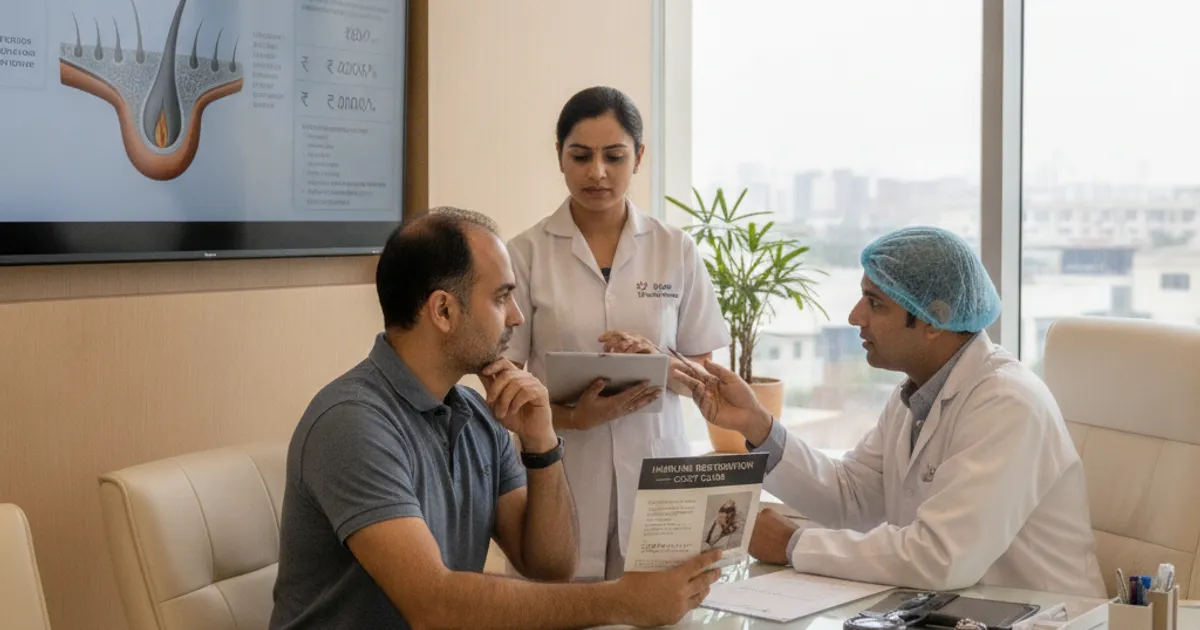
What Is Hair Transplant Surgery for Men With Sensitive Skin?
A hair transplant for men with sensitive skin is the same basic procedure as any other follicular unit transplant — donor hair is removed from the back and sides of the scalp and grafted into thinning or bald areas. The difference is in the planning and execution. Sensitive skin conditions like eczema, psoriasis, seborrheic dermatitis, or rosacea change how the scalp reacts to incisions, anesthesia, and post-op products. A surgeon who understands this will adjust the technique, the aftercare routine, and sometimes the timing of surgery to avoid triggering a flare-up. It is not a separate surgery; it is a more careful version of the standard one.
How the Procedure Is Performed: Techniques and Sensitive-Skin Adaptations
Most modern transplants use either FUE (follicular unit extraction) or FUT (follicular unit transplantation, also called strip surgery). For men with sensitive skin, FUE is often preferred because it avoids a long linear scar that can become irritated or hypertrophic on reactive skin. The surgeon still makes many tiny punch incisions — typically thousands, though the exact number depends on graft count — so the key adaptations are about minimizing trauma and inflammation rather than avoiding incisions altogether.
- Smaller punch sizes to reduce wound surface area and speed healing on reactive skin.
- Longer intervals between graft extraction and implantation to limit time under anesthesia and reduce scalp stress.
- Hypoallergenic or preservative-free anesthesia and saline solutions when a patient has known sensitivities.
- Cooling and anti-inflammatory protocols immediately after surgery to calm the scalp.
- A pre-surgery skin review, sometimes with a dermatologist, to confirm the condition is stable.
- Patch testing of aftercare products such as shampoos, ointments, and PRP solutions before the day of surgery.
| Technique | How It Works | Sensitive-Skin Consideration |
|---|---|---|
| FUE | Individual follicular units are extracted with a micro-punch and implanted one by one. | No linear scar; smaller wounds; often better for reactive scalps. |
| FUT | A strip of donor scalp is removed and dissected into grafts. | Faster donor harvesting but leaves a linear scar that may heal poorly on sensitive skin. |
| DHI (Direct Hair Implantation) | Grafts are implanted directly with a specialized tool without prior recipient-site creation. | Fewer handling steps and potentially less trauma, but technique varies by clinic. |
Recovery Timeline and Aftercare for Sensitive Skin
Recovery follows the same general arc as a standard transplant, but sensitive skin tends to react more visibly in the first two weeks. Redness, itching, and flaking are common and usually settle, but they can be more pronounced if you have eczema or seborrheic dermatitis. The clinic should give you a simplified aftercare routine with fewer products, not more, and a clear point of contact if the scalp flares. The timeline below reflects typical ranges reported by surgeons; your own recovery may be faster or slower depending on your skin condition and the technique used.
- First few days: sleep elevated, avoid touching grafts, use only the clinic-supplied saline spray or ointment.
- About 4–10 days: gentle washing with a fragrance-free, hypoallergenic shampoo; no scrubbing.
- Weeks 2–4: crusts fall away; redness may persist longer than average on sensitive skin.
- Months 1–3: shock loss is normal; avoid harsh styling products and tight hats.
- Months 4–6: new growth begins; keep the scalp moisturized with products cleared by your surgeon.
- Months 9–12: final density becomes visible; assess results with your clinic.
Results: What to Expect and How Sensitive Skin Affects Outcomes
Graft survival and final density depend mostly on surgeon skill, donor quality, and graft handling — not on whether your skin is sensitive. The main ways sensitive skin can affect results are indirect: a flare-up during early healing can disturb grafts, and scratching or picking at crusts can damage follicles. If the condition is well controlled and aftercare is followed, results are generally comparable to those in patients without sensitive skin.
- Graft survival rates are typically similar when the scalp is stable at surgery.
- Redness and irritation may last longer, which can make early results look uneven.
- Scarring risk is slightly higher with FUT on reactive skin; FUE is often preferred.
- Long-term density depends on keeping the underlying skin condition managed, not just on the surgery.
Who Is a Good Candidate? Suitability for Men With Sensitive Skin Conditions
The best candidates are men whose skin condition is stable, who have realistic expectations, and who have enough healthy donor hair. A clinic should ask about your skin history in detail — not just whether you have eczema, but how often it flares, what triggers it, and what treatments you use. If your condition is active or poorly controlled, the right move is usually to get it under control first, sometimes with a dermatologist's input, and revisit surgery later.
- Condition is stable and not flaring at the time of consultation and surgery.
- You have a clear history of what triggers flare-ups and how you manage them.
- You are willing to follow a simplified, fragrance-free aftercare routine.
- You have realistic expectations about redness and healing time.
- You are not currently using strong topical steroids or other treatments that could interfere with healing without your surgeon's knowledge.
| Skin Condition | Generally Suitable? | Key Consideration |
|---|---|---|
| Eczema (atopic dermatitis) | Often, if stable | Avoid surgery during flares; simplify aftercare products. |
| Seborrheic dermatitis | Often, if controlled | Manage dandruff and inflammation before surgery. |
| Psoriasis | Sometimes | Scalp psoriasis can be triggered by trauma (Koebner phenomenon); surgeon and dermatologist should coordinate. |
| Rosacea | Usually | Redness may be more noticeable during healing. |
| Active skin infection | No | Treat the infection first; surgery should be postponed. |
Cost: What Influences Pricing for Sensitive-Skin Hair Transplants
Pricing for a hair transplant is driven mainly by graft count, technique, surgeon experience, and location — not by sensitive skin itself. Some clinics may charge slightly more for additional pre-op consultations or dermatology input, but there is no standard sensitive-skin surcharge. The biggest cost variable is how much hair loss you have, because that determines how many grafts are needed. Because pricing varies widely by clinic and country, the most reliable approach is to request written quotes based on your stage of hair loss rather than relying on generic averages.
- Graft count: more grafts means higher cost, regardless of skin type.
- Technique: FUE and DHI are often priced higher than FUT.
- Surgeon experience and clinic reputation.
- Location and local cost of living.
- Additional services such as PRP, post-op medication, or accommodation packages.
How It Compares to Alternative Hair Restoration Options
A transplant is the only option that permanently relocates hair follicles, but it is not the only route. Medication, low-level laser therapy, and scalp micropigmentation are alternatives or complements. For men with sensitive skin, the trade-off is often about irritation risk: some topical treatments can sting or trigger dermatitis, while a transplant is a one-time procedure with a defined recovery.
| Option | How It Works | Sensitive-Skin Consideration |
|---|---|---|
| Hair transplant (FUE/FUT) | Surgical relocation of follicles. | One-time procedure; aftercare products must be chosen carefully. |
| Minoxidil (topical) | Stimulates follicles; applied daily. | Can irritate sensitive scalps; foam versions are often better tolerated. |
| Finasteride (oral) | Blocks DHT to slow hair loss. | Not a skin issue, but side effects should be discussed with a doctor. |
| Low-level laser therapy | Light energy to stimulate follicles. | Generally gentle; check for heat sensitivity. |
| Scalp micropigmentation | Tattooed dots to mimic stubble. | Ink reactions are possible on sensitive skin; patch test advised. |
- Medication is non-surgical but requires ongoing use and can irritate sensitive scalps.
- A transplant offers permanent results but involves surgery and a healing period.
- Combining treatments is common; discuss interactions with your surgeon.
- Sensitive skin may make some topical products harder to tolerate, so patch testing matters.
Choosing a Clinic: What to Ask and Look For
The clinic matters more than the technique name on the brochure. For sensitive skin, you want a surgeon who has handled your condition before and who is honest about timing. Ask direct questions about their experience with eczema, psoriasis, or rosacea, and how they adjust aftercare. A good clinic will not rush you into surgery if your skin is flaring.
- How many patients with sensitive skin conditions have you treated?
- What aftercare products do you recommend, and are they fragrance-free?
- Do you coordinate with dermatologists when needed?
- What is your policy if a flare-up happens shortly before surgery?
- Can you provide a written quote with graft count and included products?
Frequently Asked Questions
Can I get a hair transplant if I have eczema or psoriasis?
Often yes, but only if the condition is stable and not flaring at the time of surgery. Your surgeon may ask for a dermatologist's clearance and will likely simplify your aftercare routine to reduce irritation risk.
Is FUE better than FUT for sensitive skin?
FUE is often preferred because it avoids a linear scar that can heal poorly on reactive skin. That said, the right choice depends on your donor hair, your surgeon's assessment, and your skin history.
How long does redness last after a transplant on sensitive skin?
Redness typically settles within a few weeks, but sensitive skin can stay pink for longer. Your clinic should give you a realistic timeline based on your condition and the technique used.
Does sensitive skin affect the cost of a hair transplant?
Not directly. Cost is driven mainly by graft count, technique, surgeon experience, and location. Some clinics may include extra consultations or specific aftercare products, so ask for a written quote that lists what is included.
More Guides
- What Happens 10 Days After a Hair Transplant?
A clear, honest look at what happens 10 days after a hair transplant: healing, scabs, shedding, results, costs, and who it suits.
- ARTAS Hair Transplant: How It Works and Who It's For
A clear guide to ARTAS hair transplant: how the robotic system works, recovery, results, cost factors, who it suits, and how it compares to other techniques.
- Facial Hair Transplant: Procedure, Recovery & Results
A clear guide to facial hair transplant: how it works, recovery timeline, results, who suits it, cost, and how it compares to alternatives.
- Hair Transplant and Sleep Apnea: CPAP and Recovery
How sleep apnea and CPAP therapy affect hair transplant surgery, recovery, risks, costs, and candidacy. A clear guide for patients with OSA.