
What Happens 10 Days After a Hair Transplant?
A clear, honest look at what happens 10 days after a hair transplant: healing, scabs, shedding, results, costs, and who it suits.
What Happens 10 Days After a Hair Transplant?
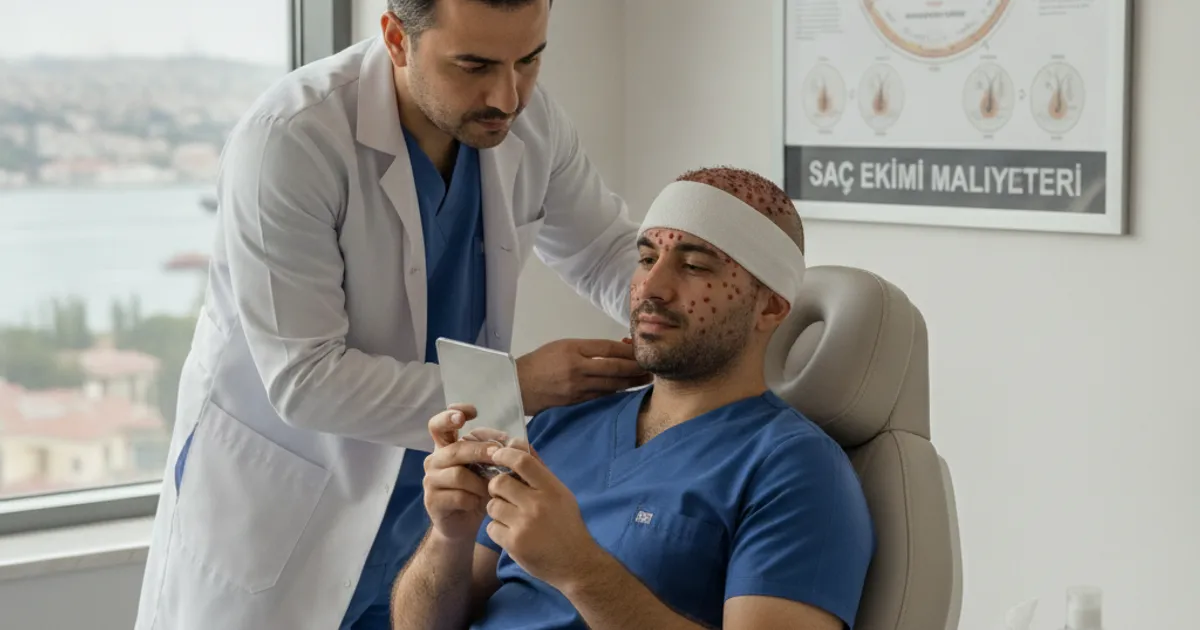
Ten days after a hair transplant is a strange in-between moment. The worst of the healing is behind you, but the final result is still months away. Most of the crusty scabs around the grafts have softened or fallen off, the redness has faded to a dull pink, and you can usually go back to work and normal life without feeling like everyone is staring at your scalp. But the hair you see in the mirror right now is not the hair you will end up with. Some of it may already be shedding, and that is completely normal. This explainer walks through what the 10-day mark actually means, how the first ten days unfold day by day, what recovery and early results look like, who is a good candidate, what it costs, and how the procedure compares to alternatives.
The 10-Day Mark: What It Is and Why It Matters
A hair transplant moves hair follicles from a donor area (usually the back and sides of the scalp) into thinning or bald areas. The follicles are tiny grafts, and in the first week or so they are fragile. By day 10, the grafts have typically settled into their new positions and the small wounds have closed over. That is why day 10 is often treated as the end of the acute recovery phase. It is also when many clinics schedule a follow-up check to make sure healing is on track and to remove any remaining sutures or staples if a strip method was used. The 10-day mark matters because it separates the early wound-care phase from the longer waiting phase, where you mostly leave the scalp alone and let the hair cycle do its thing.
- Grafts are usually firmly anchored by around day 10, so gentle washing and normal sleep positions are generally fine.
- Most scabs and crusts have softened or flaked away, though a few may linger for a few more days.
- Redness and swelling have largely subsided, leaving a pinkish tone that fades over weeks.
- Shock loss (shedding of transplanted hair) often begins around this time and can continue for several weeks.
- Many people return to work and light exercise around day 10, depending on their surgeon's advice.
How the First 10 Days Unfold: A Day-by-Day Overview
Every clinic has its own aftercare protocol, and every patient heals a little differently. The table below is a general overview of what most people experience in the first ten days. Treat it as a rough map, not a strict schedule, and always follow the instructions from your own surgeon.
| Day | What Typically Happens | What You Usually Do |
|---|---|---|
| Day 1 | Grafts are fresh and fragile; mild swelling and tightness; small scabs begin to form. | Rest, sleep upright, avoid touching the grafts, follow clinic washing instructions. |
| Days 2–3 | Swelling may peak, sometimes around the forehead and eyes; scabs start to dry. | Gentle washing as directed, avoid strenuous activity, keep the scalp clean. |
| Days 4–5 | Swelling subsides; scabs begin to loosen; itching is common. | Continue gentle washing, resist scratching, stay out of direct sun. |
| Days 6–7 | Most scabs are softening; some may flake off naturally; redness fades. | Light activity may be allowed; keep following clinic aftercare. |
| Days 8–9 | Scabs mostly gone or nearly gone; scalp looks cleaner; shedding may start. | Normal gentle washing, avoid harsh products, no picking. |
| Day 10 | Grafts anchored; scalp largely healed; follow-up check often scheduled. | Return to most daily activities; discuss exercise and hair products with your surgeon. |
Recovery at 10 Days: What You Can Expect
By day 10, most people feel close to normal. The scalp is no longer an open wound, the swelling is gone, and the intense itching of the first week has usually eased. You can generally shower normally, though you may still be asked to pat the scalp dry rather than rub it. Sleep is easier because you no longer need to prop yourself up. The main remaining issues are cosmetic: redness, a slightly uneven texture where scabs sat, and the beginning of shedding. None of these are signs that something went wrong.
- Redness: usually a pinkish tone rather than angry red; fades over several weeks.
- Scabs: mostly gone, but a few stubborn crusts can remain for a few more days.
- Shedding: transplanted hairs may start to fall out as the follicle enters a resting phase.
- Sensation: the scalp may feel numb or tingly in patches; this improves gradually.
- Activity: light exercise is often allowed, but heavy lifting and contact sports usually wait a bit longer.
Results at 10 Days: What You Will and Won’t See
At 10 days, you will see the outline of the new hairline and the density pattern the surgeon created. You may also see short, stubby hairs that have not yet shed. What you will not see is the final result. The transplanted hair often goes into a shedding phase known as shock loss, which can make the scalp look thinner before it looks thicker. This is temporary. New growth typically starts to become visible around three to four months, with more meaningful density at six to nine months and final results often assessed around 12 to 18 months.
- You will see: the new hairline shape, early density pattern, and reduced scabbing.
- You may see: shedding of transplanted hairs, which is normal and expected.
- You will not see: final density, final hairline softness, or mature results.
- You should not expect: instant cosmetic improvement at day 10.
Who Suits a Hair Transplant? (And Who Should Wait)
A hair transplant works best for people with stable or slowly progressing hair loss and a good donor supply at the back and sides of the scalp. It is not a cure for active, rapidly progressing baldness, and it does not create new hair follicles. It redistributes existing ones. Younger patients are often advised to wait because their hair loss pattern may not be clear yet, and a hairline designed too early can look unnatural later. An honest consultation should include a scalp assessment, a discussion of medical treatments, and a realistic conversation about what surgery can and cannot achieve.
- Good candidates: stable hair loss, sufficient donor density, realistic expectations, good general health.
- Less suitable: active or rapidly progressing loss, very limited donor supply, uncontrolled medical conditions.
- Often advised to wait: very young patients whose loss pattern is still evolving.
- Always worth discussing: non-surgical options such as medication or PRP before committing to surgery.
Cost Considerations for Hair Transplant Procedures
Hair transplant pricing varies widely by clinic, technique, graft count, and location. Most clinics quote by the number of grafts or by a flat case fee based on the stage of hair loss. The ranges below are general estimates drawn from common industry pricing patterns, not quotes from any specific database. They are intended as a rough reference only. Your actual cost depends on your assessment and the clinic you choose.
| Cost Factor | What It Means |
|---|---|
| Graft count | More grafts generally means higher cost; advanced cases usually need more grafts. |
| Technique | FUE and FUT have different lab and surgeon time requirements, which can affect price. |
| Clinic location | Pricing varies by country and city due to overhead, demand, and currency. |
| Surgeon involvement | Procedures led entirely by the surgeon may cost more than technician-heavy workflows. |
| Aftercare and follow-up | Some clinics bundle post-op visits, medication, or PRP; others charge separately. |
How a Hair Transplant Compares to Alternatives
Surgery is only one option. Medication, low-level laser therapy, PRP, and cosmetic concealers all have a place, but they do different things. Medication can slow loss and sometimes improve density, but it does not restore a hairline. PRP may support hair health but evidence varies. Concealers are cosmetic and temporary. A transplant is the only option that physically moves hair follicles to a new area, which is why it is often chosen for receding hairlines and bald patches.
| Option | What It Does | Best For | Limitations |
|---|---|---|---|
| Hair transplant | Moves follicles from donor to thinning areas | Stable loss with good donor supply | Surgery, recovery time, cost, not a cure |
| Medication | Slows hair loss and may improve density | Early to moderate loss | Ongoing use, side effects possible, no hairline restoration |
| PRP | May support follicle health | Adjunct to other treatments | Variable evidence, multiple sessions |
| Laser therapy | May support hair health | Early loss or adjunct | Modest results, requires consistency |
| Concealers | Cosmetic coverage | Quick visual fix | Temporary, no biological effect |
- A transplant is the most permanent option for restoring hair in bald areas.
- Medication is often used alongside surgery to protect existing hair.
- Non-surgical options are generally lower risk but have limits on what they can restore.
- The best plan often combines approaches rather than relying on one.
Choosing a Clinic: What to Look For
The clinic matters as much as the procedure. Look for a surgeon who is transparent about technique, graft counts, and realistic outcomes. Ask who performs the extraction and implantation, how many procedures they do per week, and what aftercare is included. Check that the clinic provides clear written instructions for the first 10 days and beyond. A good clinic will not pressure you into surgery if you are not a suitable candidate.
- Surgeon credentials and experience with your specific hair loss pattern.
- Clear explanation of technique, graft count, and expected density.
- Written aftercare protocol, including day-by-day guidance for the first two weeks.
- Transparent pricing with no hidden fees for medication, PRP, or follow-up.
- Realistic before-and-after examples and a willingness to discuss risks.
Frequently Asked Questions
Is it normal for hair to fall out 10 days after a transplant?
Yes. Shedding of transplanted hairs, often called shock loss, is common and usually starts around the second week. It happens because the follicle enters a resting phase after surgery. The hair typically grows back over the following months.
Can I wash my hair normally 10 days after a hair transplant?
Most clinics allow gentle normal washing by day 10, but you should still avoid rubbing or scratching the scalp. Follow your surgeon's specific instructions, as protocols vary.
When will I see the final results of my hair transplant?
Early growth usually becomes visible around three to four months. More meaningful density appears at six to nine months, and final results are often assessed around 12 to 18 months.
How much does a hair transplant cost?
Costs vary by graft count, technique, clinic, and location. As a general estimate, early-stage cases often fall in the $3,000–$6,000 range, moderate cases in the $6,000–$10,000 range, and advanced cases can exceed $10,000–$20,000. These are broad industry estimates, not quotes. Always request a personalised quote after an assessment.
More Guides
- ARTAS Hair Transplant: How It Works and Who It's For
A clear guide to ARTAS hair transplant: how the robotic system works, recovery, results, cost factors, who it suits, and how it compares to other techniques.
- Facial Hair Transplant: Procedure, Recovery & Results
A clear guide to facial hair transplant: how it works, recovery timeline, results, who suits it, cost, and how it compares to alternatives.
- Hair Transplant and Sleep Apnea: CPAP and Recovery
How sleep apnea and CPAP therapy affect hair transplant surgery, recovery, risks, costs, and candidacy. A clear guide for patients with OSA.
- Does a Hair Transplant Hurt? Pain, Numbing & Recovery
Does a hair transplant hurt? Learn what you actually feel, how numbing works, recovery pain timeline, and how it compares to other hair loss treatments.