
Does a Hair Transplant Hurt? Pain, Numbing & Recovery
Does a hair transplant hurt? Learn what you actually feel, how numbing works, recovery pain timeline, and how it compares to other hair loss treatments.
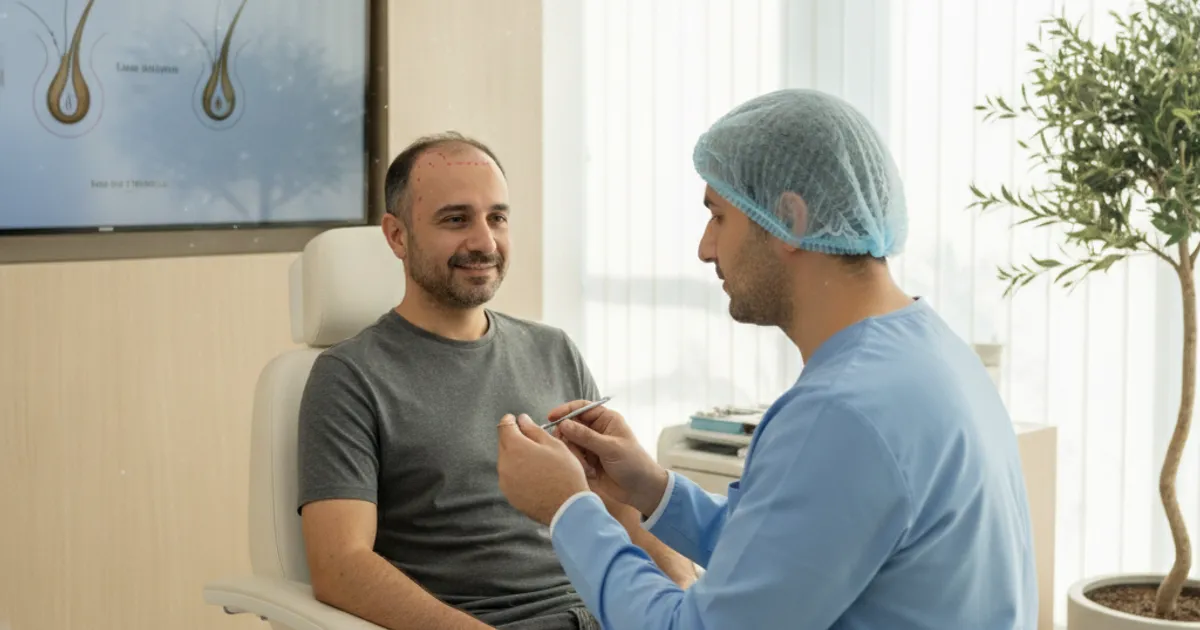
Does a Hair Transplant Hurt? The Short Answer
If you are considering a hair transplant, the first question on your mind is probably whether it hurts. The honest answer: the procedure itself is not painful for most people because the scalp is thoroughly numbed. The parts that catch people off guard are the initial injections used to deliver that numbing, and the days after surgery when soreness, swelling, and itching set in. Neither is usually severe, but it helps to know exactly what to expect so you can plan around it.
How Painful Is a Hair Transplant? What You Actually Feel
Pain is subjective, and clinics use different techniques, so experiences vary. Still, the general pattern is consistent. Here is what patients commonly report feeling at different points.
- The numbing injections: a series of quick stings or burning sensations as local anesthetic is delivered around the donor and recipient areas. This is usually the most uncomfortable part of the day.
- During surgery: pressure, pulling, and vibration as follicles are extracted and implanted. You should not feel sharp pain. If you do, tell the surgeon so more anesthetic can be added.
- Lying still for hours: stiffness and boredom are more common complaints than pain.
- Immediately after: the scalp feels tight, tender, and heavy. Some people compare it to a mild sunburn or a headache at the back of the head.
- The first night: soreness can make it hard to find a comfortable sleeping position, especially if you are advised to sleep upright.
Numbing Explained: Anesthesia and Sedation Options
A hair transplant is almost always performed under local anesthesia, sometimes combined with light oral sedation. The goal is to block pain signals in the scalp while keeping you awake and able to communicate with the surgical team. Here is how the main options compare.
- Local anesthetic injections: the standard approach. A numbing agent is injected around the donor area (usually the back and sides of the scalp) and the recipient area. It takes effect within minutes.
- Tumescent anesthesia: a diluted anesthetic mixed with saline is injected to swell and firm the scalp, which can reduce bleeding and make extraction easier. It may feel cold or tight.
- Oral sedation: some clinics offer a mild sedative such as diazepam to take the edge off anxiety. This is not general anesthesia and does not put you to sleep.
- Topical numbing cream: sometimes applied before injections to reduce the sting of the needle, though it is not a substitute for injected anesthetic.
- General anesthesia: rarely used for routine hair transplants and generally reserved for specific medical situations. Most procedures do not require it.
| Option | What It Does | Typical Sensation | When Used |
|---|---|---|---|
| Local anesthetic injections | Blocks pain in the scalp | Quick stings, then numbness | Standard for most procedures |
| Tumescent anesthesia | Swelling and firming the scalp | Cold, tight pressure | Often combined with local anesthetic |
| Oral sedation | Reduces anxiety | Drowsy, relaxed | Optional for nervous patients |
| Topical numbing cream | Dulls needle sensation | Cooling, mild numbness | Before injections, if offered |
| General anesthesia | Full unconsciousness | None during surgery | Rare, case-specific |
Step-by-Step: Pain and Comfort at Each Stage of the Procedure
A typical hair transplant session lasts several hours, and comfort levels change as the day goes on. Here is a realistic breakdown of what most patients experience.
Recovery Timeline: Pain, Swelling, and Itching After Surgery
The days after surgery are when most discomfort occurs, but it is usually manageable with over-the-counter pain relief and proper care. The timeline below reflects what patients commonly report.
| Timeframe | Common Sensations | What Helps |
|---|---|---|
| First 24–48 hours | Tightness, throbbing, soreness at donor and recipient sites | Prescribed or OTC pain relief, sleeping upright, cold compresses (if approved) |
| Days 3–5 | Swelling around forehead and eyes, itching begins | Gentle washing as instructed, avoiding scratching, keeping head elevated |
| Week 1 | Scabs form, itching peaks, some tenderness | Moisturizing as directed, loose hats, avoiding sun exposure |
| Weeks 2–4 | Shock loss may start, scalp feels less sore | Normal gentle hair care, avoiding harsh products |
| Months 2–6 | New growth begins, occasional scalp sensitivity | Patience, follow-up appointments |
| Months 6–12 | Full results develop, no ongoing pain | Routine care |
- Itching is often the most annoying part of recovery, not pain. It usually peaks around days 5–10 as scabs heal.
- Swelling is normal and often moves down the forehead. It typically resolves within a week.
- Numbness or reduced sensation in the donor area can last weeks or months and usually improves gradually.
- Sharp or worsening pain, spreading redness, or fever are not normal and should be reported to your clinic.
Pain Management: What to Expect and How to Cope
Most clinics provide a post-operative care plan that includes pain relief guidance. You do not need a heavy painkiller regimen for a routine hair transplant, but you do need to follow instructions carefully to avoid complications.
- Over-the-counter pain relievers such as acetaminophen are often recommended. Avoid aspirin or NSAIDs if your surgeon advises against them due to bleeding risk.
- Prescription pain medication is sometimes provided for the first day or two, but many patients do not need it.
- Sleep with your head elevated for the first few nights to reduce swelling and throbbing.
- Apply cold compresses only if your clinic approves, and never directly on the grafts.
- Avoid alcohol, smoking, and strenuous exercise for the period your clinic specifies, as these can slow healing and increase discomfort.
- Keep the scalp clean and moisturized according to your aftercare instructions to reduce itching and scabbing.
How a Hair Transplant Compares to Other Hair-Restoration Options
A hair transplant is the most invasive common option for hair restoration, but it is also the most permanent. Comparing it to medications, topical treatments, and non-surgical alternatives helps set realistic expectations about pain, commitment, and results.
| Option | Pain/Discomfort Level | Invasiveness | Permanence | Typical Commitment |
|---|---|---|---|---|
| Hair transplant (FUE/FUT) | Moderate for a few days; numbed during surgery | Surgical, outpatient | Permanent results from transplanted follicles | One procedure, sometimes a second session |
| Minoxidil (topical) | None | Non-invasive | Ongoing use required | Daily application |
| Finasteride (oral) | None | Non-invasive | Ongoing use required | Daily pill |
| Low-level laser therapy | None | Non-invasive | Ongoing use required | Regular sessions |
| PRP injections | Mild stinging during injections | Minimally invasive | Temporary, maintenance sessions needed | Series of sessions |
| Hair fibers/concealers | None | Cosmetic | Temporary | Daily use |
- Medications and topicals are painless but require indefinite use and may not restore hair in bald areas.
- PRP involves injections but is far less invasive than surgery and can complement a transplant.
- A transplant offers the most durable result but involves the most recovery discomfort.
- Many patients combine treatments, such as a transplant plus medication, to protect existing hair.
Who Is a Good Candidate? Suitability and Comfort Considerations
Suitability for a hair transplant depends on hair loss pattern, donor hair quality, and overall health. Comfort during and after surgery is also a factor, especially for people with anxiety or low pain tolerance.
- Good candidates usually have stable hair loss and a healthy donor area at the back and sides of the scalp.
- People with uncontrolled medical conditions, bleeding disorders, or active scalp infections may be advised to wait.
- If you are highly anxious about needles or surgery, discuss sedation options and ask about the clinic's approach to comfort.
- Realistic expectations matter: a transplant moves existing hair, it does not create new hair.
- Smokers and people with certain autoimmune conditions may have slower healing and should get medical clearance.
Cost of a Hair Transplant: What Affects Price (No Fabricated Figures)
Hair transplant pricing varies widely by clinic, location, technique, and the number of grafts needed. Because costs are highly individual, this guide does not quote specific prices. Instead, here are the factors that typically influence what you will pay.
- Number of grafts: larger sessions cost more because they require more time and staff.
- Technique: FUE and FUT have different pricing structures, and some clinics charge more for specialized methods.
- Surgeon involvement: procedures where the surgeon performs more of the work often cost more.
- Location: clinics in major cities and high-cost countries generally charge more than those in lower-cost regions.
- Additional services: PRP, medication packages, and follow-up care may be included or billed separately.
- Reputation and demand: established clinics with long waiting lists may charge a premium.
FAQ: Common Questions About Hair Transplant Pain
Does a hair transplant hurt during the procedure?
No, not for most people. The scalp is numbed with local anesthetic before any work begins, so you should feel pressure and tugging rather than sharp pain. The numbing injections themselves are the most uncomfortable part, but they are brief.
How long does pain last after a hair transplant?
Most soreness and tightness ease within three to five days. Itching can last a bit longer as scabs heal, often peaking around the end of the first week. By two weeks, most people feel close to normal, though scalp sensitivity can linger.
Can I drive myself home after a hair transplant?
If you receive oral sedation, you should not drive. Even with local anesthesia only, many clinics recommend having someone accompany you home because you may feel tired or uncomfortable. Ask your clinic for their specific policy.
Is a hair transplant more painful than other cosmetic procedures?
Most patients rate it as less painful than they expected. It is an outpatient procedure with local anesthesia, and recovery discomfort is generally mild compared to more invasive surgeries. The itching and swelling tend to be more bothersome than actual pain.
More Guides
- What Happens 10 Days After a Hair Transplant?
A clear, honest look at what happens 10 days after a hair transplant: healing, scabs, shedding, results, costs, and who it suits.
- ARTAS Hair Transplant: How It Works and Who It's For
A clear guide to ARTAS hair transplant: how the robotic system works, recovery, results, cost factors, who it suits, and how it compares to other techniques.
- Facial Hair Transplant: Procedure, Recovery & Results
A clear guide to facial hair transplant: how it works, recovery timeline, results, who suits it, cost, and how it compares to alternatives.
- Hair Transplant and Sleep Apnea: CPAP and Recovery
How sleep apnea and CPAP therapy affect hair transplant surgery, recovery, risks, costs, and candidacy. A clear guide for patients with OSA.