
Hair Transplant for Asian Hair: What to Expect
A practical guide to hair transplants for Asian hair: how the procedure works, recovery timeline, results, candidacy, and cost by stage of hair loss.
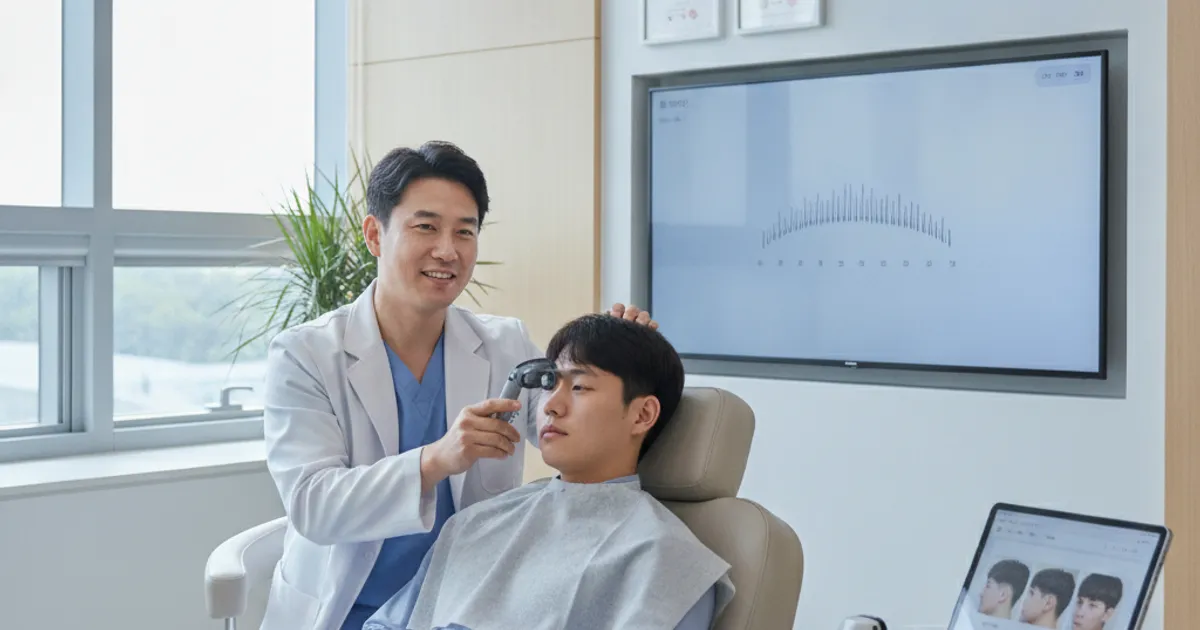
What Is a Hair Transplant for Asian Hair?
A hair transplant for Asian hair is the same basic surgical idea as any other hair transplant: healthy hair follicles are moved from a donor area (usually the back and sides of the scalp) into thinning or balding areas. What changes is the planning. Asian hair often tends to be thicker in diameter, straighter, and darker, and it may grow from a rounder scalp shape with different density patterns. However, Asian hair is not one single type, and these traits vary widely among individuals. Those differences, when present, affect how grafts are selected, how the hairline is designed, and how many grafts are needed to get a natural-looking result. This guide walks through what the procedure involves, how recovery typically goes, what results are realistic, who makes a good candidate, and how cost is usually structured.
How Asian Hair Differs: Key Characteristics
Asian hair is not one single type, but there are common traits that show up across many patients of East, Southeast, and South Asian descent. These traits matter because they influence both the surgical approach and the final look. Keep in mind that individual variation is significant, and not every person of Asian descent will have all or any of these characteristics.
- Thicker individual hair strands, which can create more visual coverage per graft but also make dense packing look unnatural if done carelessly.
- Straighter hair with less natural curl, so grafts tend to lie flatter against the scalp and require careful angle placement.
- Darker hair color against lighter skin, which increases contrast and makes an unnatural hairline more obvious.
- Rounder scalp shape in many cases, which changes how a hairline should be drawn to look balanced.
- Donor hair that is often strong and dense, which can be an advantage for larger sessions.
- Scarring risk varies by individual, not ethnicity. Some patients may experience more visible scarring, so technique and incision size are worth discussing with your surgeon.
How the Procedure Is Performed
Many Asian hair transplants today use follicular unit excision (FUE), though some clinics still offer follicular unit transplantation (FUT) or a combination. This is a general trend, not a universal rule, and the best technique depends on your individual case. The steps are broadly similar across techniques, but the details matter for Asian hair.
Recovery Timeline: What to Expect Week by Week
Recovery from a hair transplant is gradual. The first week is the most restrictive, and the first three months are the most uncertain because transplanted hair often sheds before it regrows. Here is a typical timeline for Asian hair transplants, though individual healing varies. These timeframes are general clinical ranges and may differ based on your surgeon's protocol and your own healing.
| Timeframe | What Usually Happens | What You Can Do |
|---|---|---|
| Days 1–3 | Swelling, tenderness, small scabs form. Donor area may feel tight. | Rest, sleep upright, avoid touching grafts. |
| Days 4–7 | Scabs begin to loosen. Itching is common. | Gentle washing as instructed. No strenuous exercise. |
| Week 2 | Most scabs are gone. Grafts are secure. | Return to light activity. Avoid direct sun. |
| Weeks 3–6 | Transplanted hair sheds. This is normal. | Resume normal routine. Do not panic about shedding. |
| Months 2–4 | New hair starts to grow, often thin and uneven. | Be patient. Avoid harsh styling. |
| Months 5–8 | Visible density improves. Hair thickens. | Normal styling is usually fine. |
| Months 9–12 | Final result becomes clear. | Evaluate density and hairline with your surgeon. |
Results: Density, Hairline Design, and Realistic Outcomes
Asian hair transplants can produce excellent results, but the look is different from what you see on patients with curly or wavy hair. Straight, thick hair reflects light differently and can look denser at the root but flatter overall. A good surgeon plans for that.
- Density: thicker hair strands mean fewer grafts can sometimes create the illusion of fuller coverage, but packing too tightly can look pluggy.
- Hairline: a slightly softer, less aggressive hairline usually looks more natural on Asian patients, especially with dark hair against lighter skin.
- Angle: grafts are placed at a lower angle to match straight hair growth, which helps the hair lie flat instead of sticking up.
- Donor area: FUE scars can be more visible on shorter haircuts, so some patients choose FUT or a combination.
- Longevity: transplanted hair is generally permanent, though individual results can vary. Native hair can continue to thin, so future sessions may be needed.
Who Is a Good Candidate?
Not everyone with thinning hair is a candidate for surgery. The best candidates tend to have stable hair loss, a healthy donor area, and realistic expectations. For Asian patients specifically, donor density is often a strength, but hairline design and scarring risk need extra attention.
- You have enough donor hair on the back and sides of the scalp.
- Your hair loss pattern has stabilized or is being managed with medication.
- You are in good general health and do not have active scalp infections.
- You understand that results typically take 9–12 months to fully develop, though this can vary.
- You are willing to follow post-op instructions carefully.
- You have realistic expectations about density and hairline shape.
Cost: What Affects the Price for Asian Hair Transplants
Hair transplant pricing is usually based on the number of grafts, the technique used, and the clinic's location and reputation. For Asian hair, the graft count can vary widely depending on how much area needs coverage and how thick your donor hair is. Below are average case prices by stage of hair loss. These are medians, not quotes, and actual prices depend on your specific case.
- Graft count: more grafts means higher cost, but not always a better result.
- Technique: FUE is often priced per graft, while FUT may be priced per session.
- Surgeon experience: clinics with more Asian hair experience may charge more.
- Location: prices vary significantly by country and city.
- Additional services: PRP, medications, and follow-up visits may be included or extra.
How It Compares to Other Options
A hair transplant is not the only option for thinning hair. Medications, laser therapy, and hair fibers can help, but they work differently. Here is a quick comparison.
| Option | How It Works | Best For | Limitations |
|---|---|---|---|
| FUE transplant | Moves individual follicles from donor to thinning areas. | Patients with stable loss and good donor hair. | Cost, recovery time, possible scarring. |
| FUT transplant | Removes a strip of donor scalp and dissects grafts. | Patients needing many grafts or worried about FUE scars. | Linear scar, longer recovery. |
| Medication (finasteride/minoxidil) | Slows loss and may regrow some hair. | Early-stage thinning or as a complement to surgery. | Not a cure, side effects possible. |
| PRP therapy | Injects platelet-rich plasma to stimulate follicles. | Mild thinning or post-transplant support. | Results vary, often needs repeat sessions. |
| Hair fibers/concealers | Cosmetic powders or sprays that thicken appearance. | Quick temporary coverage. | Washes out, no real regrowth. |
Choosing a Clinic: What to Look For
The clinic you choose matters more than the technique name. For Asian hair, experience with similar patients is a strong signal. Ask direct questions and look for evidence, not marketing.
- Ask how many Asian hair transplant cases the surgeon performs per month.
- Request before-and-after photos of patients with similar hair type and loss pattern.
- Confirm who performs the incisions and graft placement — the surgeon or technicians.
- Ask about scar management and how they handle donor area healing.
- Check whether follow-up visits are included and how long they last.
- Read independent reviews, not just testimonials on the clinic's own site.
Frequently Asked Questions
Is a hair transplant for Asian hair different from other hair transplants?
The surgical steps are the same, but the planning is different. Asian hair is often thicker, straighter, and darker, which affects graft angle, hairline design, and how dense the result looks. A surgeon with experience in Asian hair will adjust these details.
How long does it take to see results?
Transplanted hair usually sheds within the first month, then starts regrowing around month three. Most people see noticeable density by month six, and the final result is typically clear at 9–12 months. These are general ranges and individual results may vary.
Will the scars be visible?
With FUE, tiny dot scars can be visible if you wear your hair very short. FUT leaves a linear scar that can be hidden with longer hair. Scar visibility depends on your healing, technique, and how short you cut your hair.
Can I combine a transplant with medication?
Yes. Many surgeons recommend medication like finasteride or minoxidil before and after surgery to slow native hair loss and protect your result. Discuss this with your doctor.
More Guides
- Hair Transplant for Men With Sensitive Skin: What to Know
Hair transplant for men with sensitive skin: techniques, recovery, results, cost factors, and how to choose a clinic that handles eczema or psoriasis.
- What Happens 10 Days After a Hair Transplant?
A clear, honest look at what happens 10 days after a hair transplant: healing, scabs, shedding, results, costs, and who it suits.
- ARTAS Hair Transplant: How It Works and Who It's For
A clear guide to ARTAS hair transplant: how the robotic system works, recovery, results, cost factors, who it suits, and how it compares to other techniques.
- Facial Hair Transplant: Procedure, Recovery & Results
A clear guide to facial hair transplant: how it works, recovery timeline, results, who suits it, cost, and how it compares to alternatives.