
Hair Transplant for Athletes: Recovery & Return to Sport
A practical guide to hair transplant surgery for athletes: how it works, recovery timeline, when you can train and compete again, costs, and results.
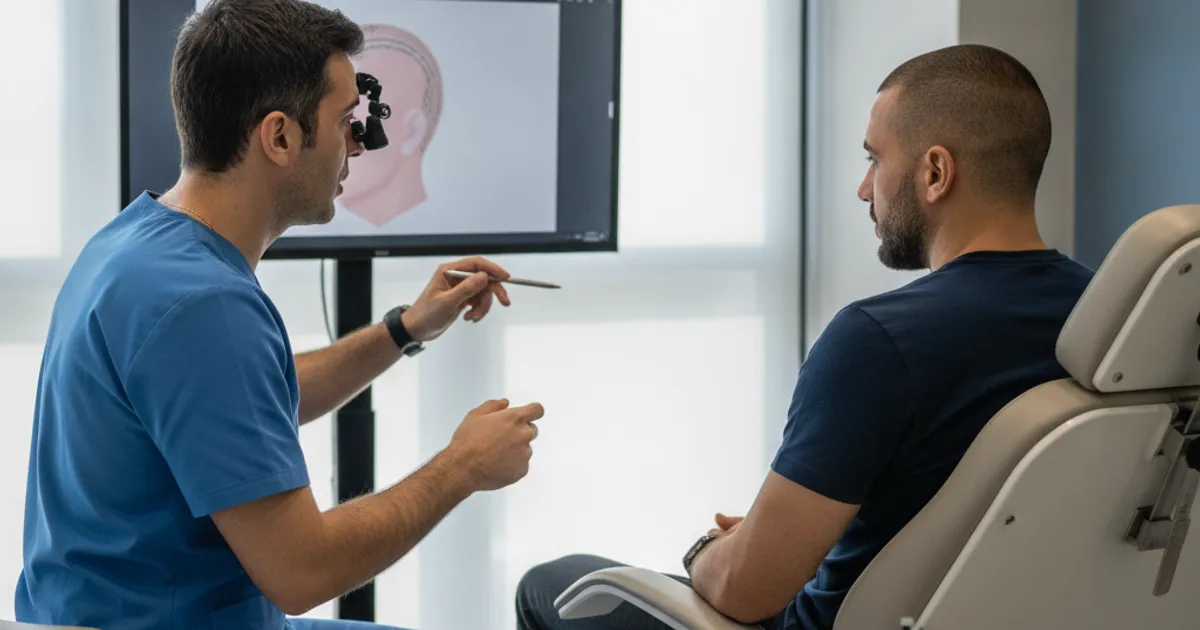
What Is a Hair Transplant and Why Athletes Consider It
A hair transplant is a surgical procedure that moves hair follicles from a donor area (usually the back and sides of the scalp, where hair is genetically resistant to balding) into thinning or bald areas. The two main techniques are follicular unit excision (FUE), where individual grafts are extracted with a small punch tool, and follicular unit transplantation (FUT), where a strip of scalp is removed and dissected into grafts. FUE is generally the more popular option for athletes because it leaves tiny dot scars rather than a linear strip scar, which matters if you wear short hair, a swim cap, or a helmet.
Athletes tend to consider hair transplants for a few practical reasons:
- Appearance on camera and in sponsorship or media work, where hair loss can feel more visible than it does in daily life.
- Helmets, caps, and goggles sit differently when you're self-conscious about a receding hairline.
- Sweat, chlorine, and frequent washing can make concealers and fibres impractical during training.
- Many athletes are in their 20s and 30s, when hair loss is often most psychologically noticeable.
- A single procedure, once healed, needs no daily maintenance — unlike topical or oral treatments.
How Hair Transplant Surgery Is Performed
The procedure is usually done under local anaesthetic as a day case. You're awake, but the scalp is numbed. Here's the typical sequence for an FUE transplant:
Recovery Timeline for Athletes: Week by Week
Recovery is the part athletes care about most, because it directly affects training. The scalp needs time for the grafts to anchor and for the donor area to close. Everyone heals at a slightly different rate, but the general pattern looks like this:
| Timeframe | What's Happening | Training Guidance |
|---|---|---|
| Days 1–3 | Swelling, tenderness, scabbing begins. Grafts are fragile. | Rest. No exercise, no bending over, no sweating. |
| Days 4–7 | Scabs start to form and dry. Donor area is sore but manageable. | Light walking only. Avoid anything that raises heart rate significantly. |
| Week 2 | Scabs typically flake away. Grafts are more secure. | Light cardio may be possible with surgeon approval. No contact, no heavy lifting. |
| Weeks 3–4 | Shock loss often begins — transplanted hairs shed. This is normal. | Most low-impact training can resume. Still avoid direct trauma to the scalp. |
| Weeks 5–8 | Donor area healed. New growth starts to appear as fine hairs. | Gradual return to full training, including weights and sport-specific work. |
| Months 3–6 | Visible new growth thickens. Hair is still maturing. | Full training and competition usually fine, with helmet padding if relevant. |
| Months 9–12 | Final result becomes apparent as hair matures. | No restrictions. |
- Avoid swimming pools, saunas, and steam rooms for at least the first two weeks — chlorine and heat can irritate healing skin.
- Don't wear tight helmets or headgear directly on the donor area until your surgeon clears you.
- Sweat is not automatically harmful after the first week or so, but heavy sweating in the first 10 days can loosen scabs and increase infection risk.
- Sun exposure on the scalp should be avoided or covered for the first few months, as new grafts are sensitive to UV.
When Can Athletes Return to Sport?
There's no single answer, because it depends on the sport, the graft count, and how you heal. But most surgeons give similar guidance: light activity after about a week, moderate training after two to three weeks, and full contact or high-impact sport after four to six weeks. The table below gives a rough idea by sport type.
| Sport Type | Typical Earliest Return | Notes |
|---|---|---|
| Walking, yoga, light mobility | 3–7 days | Low sweat, no head impact. |
| Running, cycling, swimming | 2–3 weeks | Swimming only after full healing; avoid chlorine early. |
| Gym training, weightlifting | 3–4 weeks | Start light; avoid straining that raises scalp pressure. |
| Football, rugby, basketball | 4–6 weeks | Contact risk to grafts; helmet or headgear padding advised. |
| Boxing, MMA, wrestling | 6–8 weeks or longer | High risk of direct trauma; surgeon clearance essential. |
| Motorsport, cycling with helmet | 4–6 weeks | Helmet fit and padding matter; sweat management too. |
Results: What Athletes Can Expect and When
Hair transplant results are gradual, not instant. The transplanted hairs usually shed in the first month (shock loss), then regrow over the following months. Most people see meaningful cosmetic improvement between six and nine months, with the final result at around 12 to 18 months. Density depends on how many grafts were placed and how good your donor supply was.
- Months 1–3: shedding phase, then early fine growth begins.
- Months 4–6: visible new hairs, still thin and wiry.
- Months 6–9: significant thickening; hairline shape becomes clear.
- Months 12–18: final maturation — hairs thicken and blend with existing hair.
- Long-term: transplanted hair is generally permanent, but native hair can continue to thin, so some people need a second procedure or medication later.
Who Is a Good Candidate? Suitability for Athletes
Athletes are generally good candidates if they're healthy, have stable hair loss, and enough donor hair. But there are a few sport-specific considerations.
- Stable hair loss: surgeons usually prefer to operate when the pattern has been stable for at least a year, so the hairline design still looks right as you age.
- Good donor density: the back and sides need enough hair to supply grafts without thinning visibly.
- Realistic expectations: a transplant won't give you teenage density; it restores a natural-looking hairline and coverage.
- Sport type: contact sports and helmet sports need longer recovery and careful planning around competition schedules.
- Medication use: some athletes avoid finasteride due to concerns about side effects or anti-doping rules — worth discussing with your surgeon and, if relevant, your sports doctor.
- Age: younger athletes may be advised to wait if their loss is still progressing, to avoid an aggressive hairline that looks unnatural later.
Cost of Hair Transplant for Athletes
Cost depends on the number of grafts, the technique, the clinic's location, and the surgeon's experience. As a general guide, pricing is usually quoted per graft or as a flat fee for a session. The figures below are averaged case pricing by stage of hair loss, based on typical clinic pricing data.
| Stage of Hair Loss | Typical Graft Range | Averaged Case Price (USD) |
|---|---|---|
| Early (receding hairline, minor thinning) | 1,000–1,500 grafts | $2,500–$4,000 |
| Moderate (visible thinning, crown involvement) | 1,500–2,500 grafts | $4,000–$7,000 |
| Advanced (extensive loss, large coverage) | 2,500–4,000+ grafts | $7,000–$12,000 |
These are broad ranges. Clinics in different countries vary widely, and some charge per graft (often a few dollars per graft) while others quote a flat session fee. Always ask what's included — consultations, follow-up visits, medication, PRP, and whether a second session is discounted.
How Hair Transplant Compares to Alternatives
A transplant isn't the only option. Medication, concealers, and hair systems all have a role, and for some athletes they're a better fit — especially early on.
| Option | How It Works | Pros | Cons |
|---|---|---|---|
| Hair transplant (FUE/FUT) | Surgical relocation of follicles | Permanent, natural-looking, no daily upkeep | Costly, recovery time, surgical risk |
| Finasteride / minoxidil | Medication to slow loss or stimulate growth | Non-surgical, can preserve existing hair | Ongoing use, possible side effects, not for everyone |
| Hair fibres / concealers | Cosmetic powder or spray | Instant, cheap, no recovery | Temporary, can run with sweat, not for swimming |
| Hair system / toupee | Adhesive or woven hairpiece | Immediate full coverage | Maintenance, can be uncomfortable in sport, not permanent |
| Low-level laser therapy | Light stimulation of follicles | Non-invasive, no downtime | Mixed evidence, results modest |
- If your loss is early and stable, medication may be enough to hold ground before considering surgery.
- If you need a quick fix for a specific event, concealers or a hair system are faster but temporary.
- If you want a permanent result and can accept downtime, a transplant is usually the most durable option.
- Many people combine approaches — medication to preserve native hair, plus a transplant for areas that are already bald.
Choosing a Clinic: What Athletes Should Look For
The clinic matters as much as the technique. For athletes, a few things are worth prioritising.
- Surgeon involvement: who actually performs the extraction and incisions? Some clinics use technicians for most of the procedure.
- Experience with your hair type and loss pattern: ask to see before-and-after photos of similar cases.
- Recovery planning: a clinic that understands your sport and can advise on return-to-play timing is a plus.
- Aftercare: follow-up appointments, washing guidance, and access to the surgeon if something goes wrong.
- Transparent pricing: know what's included and whether a second session is needed or discounted.
- Reviews and credentials: check the surgeon's registration and look for independent reviews, not just clinic website testimonials.
FAQ: Hair Transplant for Athletes
Can I train the day after a hair transplant?
No. The first few days are for rest. Grafts are fragile, and sweating or bending over can increase swelling or dislodge grafts. Most surgeons advise light walking only for the first week.
Will sweating affect my hair transplant result?
After the first week or two, normal sweating is usually fine. In the very early days, heavy sweating can loosen scabs and increase infection risk, so it's best to avoid intense exercise until your surgeon clears you.
How long until I can play contact sports again?
Typically four to six weeks for most contact sports, and six to eight weeks or longer for high-impact sports like boxing or MMA. Direct trauma to the scalp is the main concern, so always get clearance from your surgeon.
Do athletes need a second hair transplant?
Some do, especially if hair loss continues in areas that weren't treated. Medication can help preserve native hair and reduce the chance of needing another procedure. Your surgeon can advise based on your pattern of loss.
More Guides
- Hair Transplant for Men With Sensitive Skin: What to Know
Hair transplant for men with sensitive skin: techniques, recovery, results, cost factors, and how to choose a clinic that handles eczema or psoriasis.
- What Happens 10 Days After a Hair Transplant?
A clear, honest look at what happens 10 days after a hair transplant: healing, scabs, shedding, results, costs, and who it suits.
- ARTAS Hair Transplant: How It Works and Who It's For
A clear guide to ARTAS hair transplant: how the robotic system works, recovery, results, cost factors, who it suits, and how it compares to other techniques.
- Facial Hair Transplant: Procedure, Recovery & Results
A clear guide to facial hair transplant: how it works, recovery timeline, results, who suits it, cost, and how it compares to alternatives.