
Hair Transplant for Men with Long Hair: What to Know
Hair transplant for men with long hair: how it works, recovery, results, candidacy, costs by stage, and how it compares to alternatives.
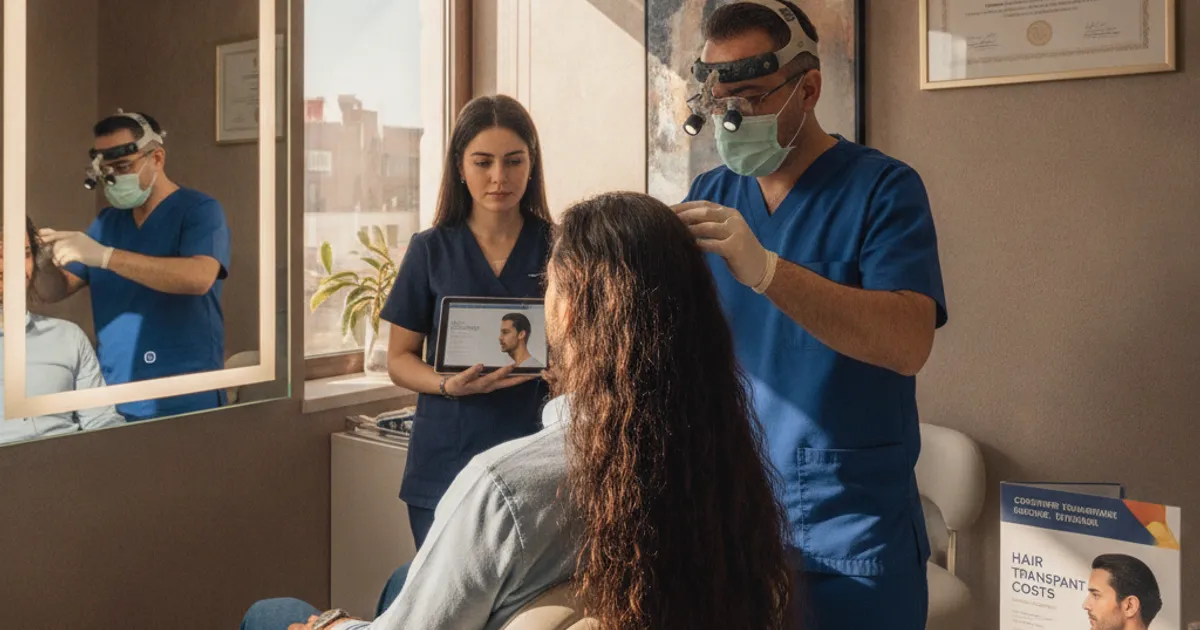
What Is a Hair Transplant for Men with Long Hair?
A hair transplant for men with long hair is exactly what it sounds like: a surgical hair restoration procedure performed on someone who already wears their hair long, or who wants to keep as much length as possible through the process. The core technique is the same as any other transplant — follicles are moved from a donor area (usually the back and sides of the scalp) to thinning or balding zones. What changes is the planning, the shaving strategy, and the aftercare, because long hair introduces practical challenges that short-haired patients don't face.
Most men picture a hair transplant as a shaved-head operation. That's often true, but it's not the only option. Surgeons can work around long hair using techniques like partial shaving, unshaven donor harvesting, or strategic camouflage. The goal is to hide the procedure while it heals and to preserve the patient's existing style as much as possible.
How the Procedure Is Performed on Long Hair
The procedure itself follows the standard steps of follicular unit extraction (FUE) or follicular unit transplantation (FUT), but the surgeon adapts each step to work around longer hair. The main difference is how the donor area is prepared and how the recipient sites are created without cutting a wide swath through the existing style.
- Donor area preparation: Instead of shaving a large strip, the surgeon may trim small patches, use a 'long-hair FUE' approach where individual follicles are extracted with longer hair intact, or shave only a narrow band that can be covered by the surrounding hair.
- Anesthesia: Local anesthesia is injected to numb the donor and recipient areas. This part is the same regardless of hair length.
- Extraction: Follicles are removed one by one (FUE) or as a strip (FUT). With long hair, FUE is more common because it avoids a linear scar and allows the surgeon to work around existing length.
- Recipient site creation: The surgeon makes tiny incisions where the new follicles will go. Long hair can be parted and clipped back to keep the area visible and clean.
- Implantation: Grafts are placed into the incisions. The surgeon angles them to match the natural growth direction of the surrounding hair.
- Camouflage and cleanup: After implantation, the surgeon may use the patient's own longer hair to cover the donor and recipient zones, making the procedure less obvious immediately after.
Recovery Timeline and Aftercare
Recovery from a long-hair transplant is similar to a standard transplant, but the visible downtime can be shorter because the surrounding hair hides the work. That said, you still need to protect the grafts and follow aftercare instructions carefully. The early days and weeks are the most fragile period.
| Timeframe | What's Happening | What You Can Do |
|---|---|---|
| First few days | Swelling, tenderness, small scabs form. Grafts are settling. | Sleep upright, avoid touching the scalp, use prescribed spray or medication. |
| First week | Scabs begin to loosen. Donor area may feel tight. | Gentle washing as instructed. No scratching or picking. |
| Weeks 2–3 | Shock loss may begin — some transplanted and native hairs shed. | Don't panic. This is normal. Keep the scalp clean and moisturized. |
| Weeks 4–8 | Shedding continues; scalp looks thinner before it gets better. | Avoid harsh styling, tight hats, and intense sun exposure. |
| Months 3–4 | New growth starts as fine, thin hairs. | Resume normal washing and gentle styling. Avoid chemical treatments. |
| Months 6–12 | Hairs thicken and mature. Final results become visible. | Enjoy the results. Continue follow-up with your surgeon. |
- Don't cut or color your hair for several weeks unless your surgeon says otherwise.
- Avoid swimming pools, saunas, and steam rooms for the first couple of weeks.
- Wear loose hats or none at all if possible. Tight hats can rub grafts.
- Sleep with your head elevated for the first few nights to reduce swelling.
- Take all prescribed medications and attend follow-up appointments.
Results: What to Expect and When
Results from a long-hair transplant follow the same timeline as any other transplant. You won't see the final outcome for many months. The early months are the hardest psychologically because shedding makes things look worse before they improve. By month four, you may see fine new hairs. By month eight, they're thicker. By month twelve, most patients have a good idea of the final result.
- Months 1–3: Shock loss and shedding. The scalp may look patchy.
- Months 4–6: New hairs emerge, but they're thin and may not match the surrounding length yet.
- Months 7–9: Hairs thicken and darken. Density improves.
- Months 10–12: Significant improvement. Most patients are happy with the result.
- Months 12–18: Final maturation. Hairs reach full thickness and blend naturally.
Who Is a Good Candidate for Long-Hair Transplant?
Not everyone with long hair is a good candidate. The ideal candidate has enough donor hair, realistic expectations, and a willingness to follow aftercare. Long-hair transplants are more technically demanding, so surgeon experience matters even more than usual.
- You have stable hair loss or are on medication to slow it down.
- You have sufficient donor density in the back and sides of the scalp.
- You're willing to avoid cutting or coloring your hair for several weeks.
- You understand that shock loss is temporary but can be alarming.
- You have realistic expectations about density and coverage.
- You're in good general health and don't have active scalp infections.
Cost Considerations for Long-Hair Transplants
Costs for hair transplants vary widely depending on the clinic, country, surgeon experience, and the number of grafts needed. Long-hair transplants often cost more than standard transplants because they take longer and require more meticulous work. Below are average case prices by stage of hair loss. These are meant as a general guide, not a quote.
| Stage of Hair Loss | Average Case Price (USD) | Typical Graft Range |
|---|---|---|
| Early | 1500 | 800–1,200 grafts |
| Moderate | 3000 | 1,500–2,500 grafts |
| Advanced | 5000 | 3,000–4,500 grafts |
Keep in mind that these are averages. Some clinics charge per graft, others charge by session. Long-hair FUE can add a premium over standard FUE because of the extra time and skill required. Always ask for a detailed quote that includes anesthesia, follow-up visits, and medications.
How It Compares to Alternatives
A long-hair transplant isn't the only option for men who want to keep their length. Here's how it stacks up against other common approaches.
| Approach | How It Works | Pros | Cons |
|---|---|---|---|
| Long-hair FUE | Follicles extracted and implanted without shaving the whole head. | Keeps existing length, less visible downtime, no linear scar. | More expensive, longer procedure, not all clinics offer it. |
| Standard FUE | Donor area shaved, follicles extracted and implanted. | Widely available, often cheaper, predictable results. | Shaved donor area, visible downtime, may need to cut hair short. |
| FUT (strip) | A strip of scalp is removed and dissected into grafts. | Can yield more grafts in one session, often cheaper per graft. | Linear scar, longer recovery, not ideal for short hairstyles. |
| Medication (finasteride/minoxidil) | Drugs that slow hair loss and may regrow some hair. | Non-surgical, relatively inexpensive, can be combined with transplant. | Side effects possible, results vary, doesn't restore lost hair fully. |
| Scalp micropigmentation | Tattooed dots mimic hair follicles. | Non-surgical, immediate visual effect, good for shaved looks. | Doesn't grow hair, may fade, not ideal for long hair. |
- If you want to keep your long hair and avoid a shaved look, long-hair FUE is the most direct option.
- If cost is a primary concern, standard FUE or FUT may be more affordable.
- Medication can complement any transplant by slowing further loss.
- Scalp micropigmentation is a cosmetic alternative but doesn't give you real hair.
Choosing a Clinic and Questions to Ask
Long-hair transplants are more demanding than standard transplants, so choose a clinic with specific experience in this technique. Don't assume every clinic offers it just because they offer FUE. Ask direct questions and look for evidence of past work.
- How many long-hair or unshaven FUE procedures have you performed?
- Can you show me before-and-after photos of patients with long hair?
- What is your shaving policy — do you shave the donor area, the recipient area, or both?
- How do you handle shock loss and camouflage during the awkward phase?
- What's included in the quoted price — anesthesia, medications, follow-ups?
- What's your complication rate and how do you handle revisions?
- Do you offer financing or payment plans?
Frequently Asked Questions
Can I keep my long hair during a hair transplant?
Yes, but usually not entirely. Most surgeons will shave a small area in the donor zone to extract follicles, and sometimes a small area in the recipient zone. With long-hair FUE, the surgeon may avoid shaving altogether or shave only tiny patches that are easily covered by surrounding hair. Discuss your goals with your surgeon beforehand.
How long after a long-hair transplant can I cut or color my hair?
Most surgeons recommend waiting several weeks before cutting or coloring. Some advise waiting longer, especially for chemical treatments. Always follow your surgeon's specific instructions, as rushing can irritate the scalp and affect graft survival.
Is a long-hair transplant more expensive than a regular transplant?
Often yes. Long-hair FUE takes more time and skill, so clinics may charge a premium. The exact cost depends on the number of grafts, the clinic's pricing model, and your location. Get a detailed quote that includes all fees.
Will the results look natural with long hair?
When performed by an experienced surgeon, yes. The key is angling the grafts to match your natural hair direction and density. Long hair can actually help camouflage the healing process and blend the new growth.
More Guides
- Hair Transplant for Men With Sensitive Skin: What to Know
Hair transplant for men with sensitive skin: techniques, recovery, results, cost factors, and how to choose a clinic that handles eczema or psoriasis.
- What Happens 10 Days After a Hair Transplant?
A clear, honest look at what happens 10 days after a hair transplant: healing, scabs, shedding, results, costs, and who it suits.
- ARTAS Hair Transplant: How It Works and Who It's For
A clear guide to ARTAS hair transplant: how the robotic system works, recovery, results, cost factors, who it suits, and how it compares to other techniques.
- Facial Hair Transplant: Procedure, Recovery & Results
A clear guide to facial hair transplant: how it works, recovery timeline, results, who suits it, cost, and how it compares to alternatives.