
Hair Transplant for Receding Hairline: Grafts, Recovery, Results
A practical guide to hair transplant for a receding hairline: how it works, graft estimates, recovery, results, and who makes a good candidate.
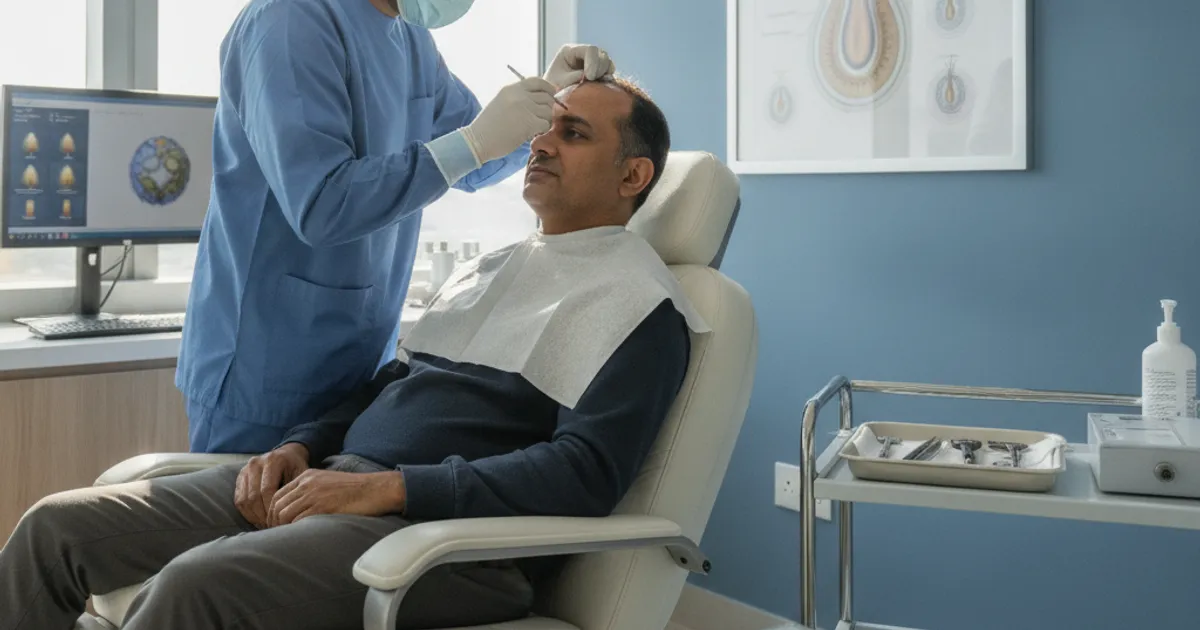
What Is a Hair Transplant for a Receding Hairline?
A hair transplant for a receding hairline is a surgical procedure that moves healthy, hair-bearing follicles from a donor area (usually the back or sides of the scalp) into the thinning or bald sections along the front hairline. The goal is not just to add density, but to rebuild a natural-looking hairline shape that suits your face, age, and future hair loss pattern. Most modern procedures use follicular unit extraction (FUE) or follicular unit transplantation (FUT), and many clinics combine the transplant with medical therapy to protect the remaining native hair.
How the Procedure Works: Step-by-Step
The exact steps vary by clinic and technique, but a typical hairline transplant follows a predictable sequence. The surgeon designs the hairline first, then extracts grafts, creates recipient sites, and places the follicles at specific angles and densities to mimic natural growth.
- Consultation and hairline design: the surgeon assesses your donor supply, hair calibre, and pattern of loss, then draws a hairline that accounts for future recession.
- Donor area preparation: the back and sides of the scalp are trimmed and numbed with local anaesthetic. Some clinics offer sedation.
- Graft extraction: with FUE, a micro-punch removes individual follicular units. With FUT, a strip of scalp is removed and dissected into grafts under a microscope.
- Recipient site creation: the surgeon makes tiny incisions along the new hairline, controlling angle, direction, and density.
- Graft placement: technicians or the surgeon place each graft into a site. This is the most time-consuming part and affects survival rates.
- Dressing and aftercare instructions: the donor and recipient areas are cleaned and covered, and you leave with written care instructions.
How Many Grafts Will You Need?
Graft counts for a receding hairline depend on how much density you want, the size of the area, your hair colour and calibre, and whether you are also filling the crown. A conservative hairline rebuild might need 800 to 1,500 grafts, while a more aggressive restoration across the front and mid-scalp can require 2,500 to 4,000 grafts or more. The table below shows typical ranges by stage of loss, but these are general estimates, not promises.
| Stage of hairline loss | Typical graft range | What it usually covers |
|---|---|---|
| Early (Norwood 2–3) | 800–1,500 grafts | Temple recession and slight hairline lowering |
| Moderate (Norwood 3–4) | 1,500–2,500 grafts | Rebuilding the frontal band and closing temples |
| Advanced (Norwood 5–6) | 2,500–4,000+ grafts | Front, mid-scalp, and sometimes early crown work |
- Hair calibre: thicker hair covers more scalp per graft, so fine hair often needs higher graft counts for the same visual density.
- Colour contrast: dark hair against light skin shows thinning more easily, which can push graft counts up.
- Hairline height: lowering the hairline by even a centimetre can add hundreds of grafts.
- Future loss: surgeons sometimes leave the crown alone and prioritise the front, because the crown can expand over time.
Cost of a Receding Hairline Transplant
Pricing for a receding hairline transplant is usually quoted per graft or as a flat fee for a set number of grafts. The figures below are averaged case pricing medians for early, moderate, and advanced hair loss. They are meant to give you a realistic starting point, not a quote. Your actual price depends on the clinic, surgeon, technique, and how many grafts you need.
| Stage | Typical graft range | Averaged case price (USD) |
|---|---|---|
| Early | 800–1,500 grafts | 1,500–3,000 USD |
| Moderate | 1,500–2,500 grafts | 3,000–6,000 USD |
| Advanced | 2,500–4,000+ grafts | 6,000–12,000+ USD |
Recovery Timeline and Aftercare
Recovery from a hairline transplant is usually straightforward, but the first two weeks matter most. The grafts are fragile for the first few days, and the donor area needs to heal without infection. Most people take a few days off work and avoid strenuous exercise for at least a week.
- Days 1–3: swelling, redness, and small scabs. Sleep with your head elevated and avoid touching the grafts.
- Days 4–7: scabs begin to loosen. Gentle washing is usually allowed with clinic instructions.
- Weeks 2–3: most scabs are gone. Shock loss of native hair can happen and is usually temporary.
- Weeks 3–8: transplanted hairs shed, which is normal. The follicles are dormant, not dead.
- Months 3–6: new growth starts. Results look thin and uneven at first.
- Months 9–12: the hairline matures and density improves. Final results are usually judged at 12–18 months.
| Time after surgery | What you can expect | Activity guidance |
|---|---|---|
| First 3 days | Swelling, redness, scabbing | Rest, no exercise, no direct sun |
| First week | Scabs loosen, donor area tender | Light walking only |
| 2–4 weeks | Shock loss possible | Back to most normal activities |
| 3–6 months | New growth begins | Avoid harsh chemicals on scalp |
| 12–18 months | Final density and hairline shape | Normal hair care |
Results: What to Expect and When
A hairline transplant does not give you a full head of hair overnight. The transplanted follicles go through a resting phase, shed, and then regrow. The first visible improvement usually appears around month three or four, with meaningful density by month six to nine. Final results are typically assessed at 12 to 18 months, once the hair has thickened and the hairline has settled.
- Naturalness: a good hairline transplant should be undetectable. The front edge uses single-hair grafts and irregular placement.
- Density: you will not get the density of your teenage hair. The goal is coverage and framing, not perfection.
- Scarring: FUE typically leaves tiny dot scars that are usually hidden by surrounding hair. FUT leaves a linear scar.
- Longevity: transplanted hair can last decades, but native hair may continue to thin without medication.
Who Is a Good Candidate?
The best candidates for a receding hairline transplant have stable or slowly progressing hair loss, a good donor supply at the back and sides of the scalp, and realistic expectations. Age matters less than pattern stability. A 25-year-old with aggressive loss may be advised to wait or start medication first, while a 45-year-old with a stable receding hairline is often a straightforward case.
- You have enough donor hair density to support the planned graft count.
- Your hair loss pattern has been stable for at least a year, or you are on medication to slow it down.
- You are in good general health and can heal normally.
- You understand that the procedure is a redistribution of hair, not new hair growth.
- You are willing to follow aftercare instructions and attend follow-up visits.
How It Compares to Other Hair Restoration Options
A hair transplant is not the only option for a receding hairline. Medication, PRP, and concealers can all help, but they work differently. The table below compares the main alternatives so you can see where a transplant fits.
| Option | How it works | Best for | Limitations |
|---|---|---|---|
| Hair transplant (FUE/FUT) | Moves permanent follicles to the hairline | Visible recession with stable donor supply | Surgical, costs more, results take months |
| Minoxidil | Topical vasodilator that prolongs growth phase | Early thinning, maintenance | Daily use, not permanent, can irritate scalp |
| Finasteride/Dutasteride | Blocks DHT to slow hair loss | Slowing progression, protecting native hair | Prescription, possible side effects, not for everyone |
| PRP injections | Platelet-rich plasma to stimulate follicles | Early thinning, adjunct to transplant | Results vary, needs repeat sessions |
| Hair fibres/concealers | Cosmetic coverage | Instant visual improvement | Temporary, washes out, no regrowth |
- Medication is often recommended before or alongside a transplant to protect existing hair.
- PRP is sometimes offered as an add-on, but it is not a replacement for surgery in advanced recession.
- Concealers are a quick fix but do not address the underlying loss.
- A transplant is the only option that permanently relocates hair to the hairline.
Choosing a Clinic and What’s Included in the Price
The clinic you choose matters more than the technique name. Look for a surgeon who performs the procedure regularly, shows consistent results, and is transparent about graft counts and pricing. Ask what is included in the quoted price, because two clinics can quote the same number and deliver very different value.
- Surgeon involvement: who designs the hairline, who makes the incisions, and who places the grafts?
- Graft count: is the quote per graft or a flat fee? What happens if more grafts are needed?
- Inclusions: medication, PRP, follow-up visits, and aftercare products are sometimes extra.
- Before-and-after photos: ask to see results at 12 months or later, not just immediate post-op.
- Reviews and complaints: check independent sources, not just the clinic website.
Frequently Asked Questions
How many grafts do I need for a receding hairline?
It depends on the size of the area, your hair calibre, and the density you want. Early recession often needs 800–1,500 grafts, moderate loss 1,500–2,500 grafts, and advanced loss 2,500–4,000+ grafts. A surgeon can give you a more accurate estimate after examining your scalp.
Is a hair transplant for a receding hairline permanent?
The transplanted follicles are usually permanent because they come from a donor area that is resistant to DHT. However, your existing hair can continue to thin, so many patients use medication to protect it. Without medication, the hairline may still change over time.
How long does it take to see results?
Transplanted hair sheds in the first few weeks, then starts regrowing around month three to four. You will see meaningful density by month six to nine, and final results are typically judged at 12 to 18 months.
Can I get a hair transplant if I am still losing hair?
Yes, but many surgeons recommend stabilising the loss first with medication or waiting until the pattern is more predictable. Transplanting into an active area of loss can lead to an unnatural result as the surrounding hair continues to recede.
More Guides
- Hair Transplant for Men With Sensitive Skin: What to Know
Hair transplant for men with sensitive skin: techniques, recovery, results, cost factors, and how to choose a clinic that handles eczema or psoriasis.
- What Happens 10 Days After a Hair Transplant?
A clear, honest look at what happens 10 days after a hair transplant: healing, scabs, shedding, results, costs, and who it suits.
- ARTAS Hair Transplant: How It Works and Who It's For
A clear guide to ARTAS hair transplant: how the robotic system works, recovery, results, cost factors, who it suits, and how it compares to other techniques.
- Facial Hair Transplant: Procedure, Recovery & Results
A clear guide to facial hair transplant: how it works, recovery timeline, results, who suits it, cost, and how it compares to alternatives.