
How to Reduce Scabbing After a Hair Transplant: A Practical Guide
Learn how to reduce scabbing after a hair transplant with practical aftercare tips, timelines, and clinic advice for smoother healing.
What Is Scabbing After a Hair Transplant?
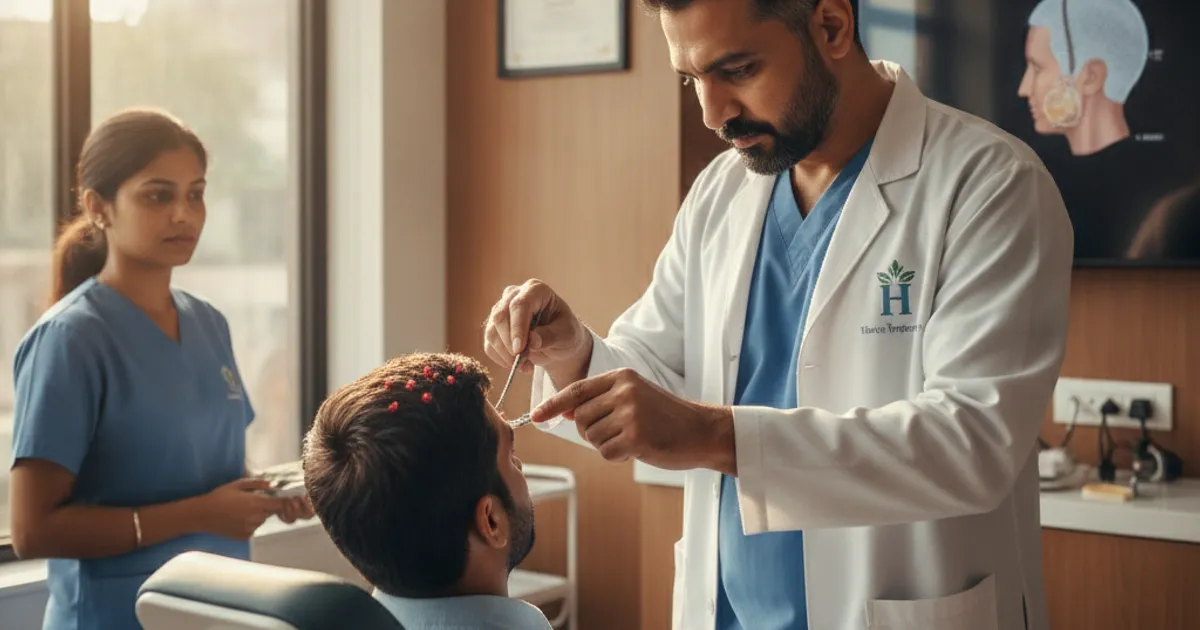
Scabbing after a hair transplant is the crusty layer that forms over the tiny wounds left by graft placement. It's a normal part of healing, but the amount and duration of scabbing can vary a lot depending on your technique, aftercare, and how your skin responds. Understanding what scabs are and why they appear is the first step to managing them well.
Why Scabs Form and What They Protect
Every graft creates a small puncture wound in the scalp. In response, your body sends platelets and clotting factors to seal the area, forming a scab. This scab serves several critical purposes during the early days after surgery.
- Protects the graft from infection while the skin closes over it
- Keeps the graft anchored in place during the initial healing phase
- Prevents excessive fluid loss from the wound site
- Provides a moist environment that supports cell repair
- Signals to the body where healing resources should be directed
The Typical Scabbing Timeline: Day by Day
Scabbing follows a fairly predictable pattern for most patients, though individual healing rates differ. Here's a general timeline you can use as a reference.
| Day | What You'll See | What to Do |
|---|---|---|
| Day 1–2 | Small red dots and early crusts form at each graft site | Leave them alone; follow clinic washing instructions |
| Day 3–5 | Scabs become more visible and may feel tight | Gentle washing with prescribed shampoo; no picking |
| Day 6–10 | Scabs begin to dry and loosen naturally | Continue gentle washing; some scabs may flake off |
| Day 10–14 | Most scabs have fallen off or are easily removed | Light massage during washing if approved by clinic |
| Week 3–4 | Any remaining scabs should be gone | Normal washing routine can resume |
How to Reduce Scabbing: At-Home Care Protocol
Your clinic will give you specific instructions, but these general principles apply to most hair transplant aftercare routines. The goal is to keep the scalp clean and moist without disturbing the grafts.
- Wash your hands thoroughly before touching your scalp
- Use only the shampoo and products your clinic recommends
- Wash gently with fingertips—never scratch or pick at scabs
- Pat dry with a clean towel; avoid rubbing
- Keep your head elevated on pillows for the first few nights to reduce swelling
- Avoid direct sun exposure on the graft area for at least two weeks
- Stay hydrated and eat a balanced diet to support healing
- Don't use hats or helmets that rub against the grafts until cleared by your clinic
What Your Clinic Should Do to Minimize Scabbing
A good clinic doesn't just perform the surgery—it sets you up for smooth healing. From technique choices to post-op support, here's what to look for.
- Use precise graft placement to minimize trauma to the scalp
- Provide clear, written aftercare instructions with a washing schedule
- Offer a post-op check-up or photo review within the first week
- Prescribe or recommend appropriate topical products if needed
- Be available for questions during the first two weeks
- Use techniques like FUE or FUT that align with your skin type and healing history
Recovery and Results: What to Expect
Scabbing is temporary, but the recovery process has several phases. Knowing what's normal helps you avoid unnecessary worry.
- Days 1–3: Swelling and tenderness are common; scabs are forming
- Days 4–7: Scabs are visible but should not be picked; mild itching is normal
- Days 8–14: Most scabs flake away; redness may persist
- Weeks 3–6: Shock loss may occur—temporary shedding of transplanted hair
- Months 3–6: New growth begins; scalp looks more normal
- Months 9–12: Final results become visible as hair thickens and matures
Who Is Most Prone to Heavy Scabbing?
Not everyone scabs the same way. Some factors can lead to more crusting or slower healing. If any of these apply to you, mention them to your clinic beforehand.
- People with oily or sensitive skin
- Those who have had previous scalp surgery or scarring
- Patients who don't follow aftercare instructions closely
- Individuals with certain medical conditions (e.g., diabetes, eczema)
- Smokers—smoking impairs circulation and slows healing
- People who expose the graft area to sun or friction too soon
Cost Considerations for Scab-Reduction Care
Most scab-reduction care is included in the cost of your hair transplant. Clinics typically provide aftercare products and follow-up visits as part of the package. However, some may charge separately for certain items or additional treatments. Always ask for a written breakdown before booking.
How Scab-Reduction Techniques Compare to Alternatives
Different clinics use different approaches to minimize scabbing. Here's a comparison of common strategies.
| Approach | How It Works | Pros | Cons |
|---|---|---|---|
| Standard aftercare | Clinic provides basic washing instructions and shampoo | Low cost, simple | May not suit sensitive skin |
| Enhanced aftercare package | Includes specialized products, more follow-ups | Better support, tailored | Higher cost |
| PRP therapy add-on | Platelet-rich plasma injections to speed healing | May reduce scabbing and improve graft survival | Extra cost, not always necessary |
| Low-level laser therapy | Light therapy to promote healing | Non-invasive, can complement aftercare | Limited evidence, additional sessions |
Frequently Asked Questions
How long does scabbing last after a hair transplant?
Most scabs fall off within 10 to 14 days. Some may linger a few days longer, but by week three they should be gone. If scabbing persists beyond a month, contact your clinic.
Can I pick scabs off my scalp?
No. Picking or scratching can dislodge grafts and cause infection or scarring. Let scabs fall off naturally during gentle washing.
Does scabbing affect hair growth results?
Normal scabbing does not affect final results. However, picking or trauma to scabs can damage grafts and lead to patchy growth.
Are there products that reduce scabbing?
Your clinic may recommend specific shampoos, saline sprays, or ointments. Avoid over-the-counter products unless approved, as some can irritate the scalp.
How to Tell Normal Scabbing From a Problem
Most scabbing is harmless, but a few signs mean you should contact your clinic rather than wait it out. The key distinction is between the dry, crusty scabs that form over each graft and the warning signs of infection or poor graft survival. Knowing which is which helps you act early without panicking over normal healing.
- Normal: small, discrete crusts that sit on top of the skin and gradually loosen and flake off on their own.
- Normal: mild itching, tightness, and pinkness around the graft area in the first two weeks.
- Normal: a few tiny hairs shed along with a scab—this is usually the hair shaft, not the graft itself.
- Contact your clinic: spreading redness, warmth, or swelling that gets worse rather than better after the first few days.
- Contact your clinic: pus, a bad smell, or fluid that keeps weeping from the graft sites.
- Contact your clinic: fever, or pain that increases sharply instead of easing.
- Contact your clinic: large, thick, adherent scabs that do not loosen after two weeks, or bleeding that restarts.
- Contact your clinic: a scab that comes away leaving a visible crater or a graft you can see sitting loose.
The Role of Washing Technique: Getting the Details Right
Washing is where most avoidable scab problems start. Too little cleaning lets dried blood, oil, and dead skin build into thick crusts that are harder to remove later. Too much rubbing or scrubbing lifts grafts before they have anchored. The aim is gentle, frequent cleaning that softens scabs so they release on their own schedule.
Follow your clinic's specific schedule, since protocols differ between surgeons. In general terms, the early washes use a cup or low-pressure stream of lukewarm water rather than a direct shower jet, and shampoo is worked into a lather in your hands before it touches the scalp. Use the pads of your fingers in small circles, or a soft sponge or cup as your clinic directs, and let the water rinse rather than rubbing. Pat dry with a clean towel; do not rub. Avoid very hot water, which dries and irritates the skin, and avoid letting shampoo run directly into the graft area under pressure.
- Lukewarm, not hot, water reduces irritation and dryness.
- Lather shampoo in your hands first so it is diluted before contact.
- Use fingertips or a soft tool as instructed—never fingernails.
- Rinse by pouring or with gentle low pressure, not a hard jet.
- Pat, don't rub, when drying, and use a clean towel each time.
- Keep to the frequency your clinic sets; skipping washes lets crusts harden.
Itching, Sleeping, and Everyday Friction: Managing the First Two Weeks
Itching is one of the most common complaints and the biggest temptation to pick. It usually reflects healing skin and drying scabs rather than a problem. Resist scratching; instead, use cool compresses as your clinic allows, keep the scalp moisturized per instructions, and distract yourself rather than touching the area. If itching is severe or comes with a rash, ask your clinic whether an antihistamine or a change in products is appropriate.
Sleep and friction cause a lot of accidental scab disturbance. Elevating your head on pillows for the first few nights reduces swelling, and sleeping on your back helps avoid rubbing the graft area against the pillow. Loose clothing with a wide or open neckline makes dressing easier without dragging fabric over the scalp. Hold off on hats, helmets, and tight headwear until your clinic clears them, and be careful with glasses, headphones, and anything that rests on the donor or graft zones.
- Sleep on your back with your head elevated for the first few nights.
- Use a clean pillowcase and change it regularly to keep the area hygienic.
- Choose loose, front-opening tops to avoid pulling clothing over the head.
- Avoid scratching; use cool compresses and ask about anti-itch options.
- Keep glasses, headphones, and hats off pressure points until cleared.
- Avoid strenuous exercise, sweating, and swimming until your clinic approves.
Should I try to remove scabs faster?
No. Scabs release when the skin beneath has healed enough. Picking or scrubbing to speed things up risks dislodging grafts and can leave patchy areas. Gentle washing on your clinic's schedule is the safe way to help them loosen.
What happens if a scab falls off with a tiny hair in it?
This is usually normal. The hair shaft often sheds along with the crust, and the graft beneath can still be intact. Mention it to your clinic if you are worried, but a single scab coming away is rarely a sign of graft loss.
Can I use my usual shampoo or styling products?
Stick to what your clinic recommends during early healing. Harsh ingredients, fragrances, and styling products can irritate healing skin. Ask before reintroducing your normal products.
Is it normal for scabbing to look different from one area to another?
Yes. Density of grafts, skin type, and how much you move or rub an area all affect crusting. Uneven scabbing is common and not usually a concern.
When should I stop worrying about scabs?
Most scabs flake away within the first couple of weeks, though timing varies. Once the scalp is clear and your clinic has reviewed it, ordinary washing and care resume. Persistent thick scabs beyond that point are worth a check-in.
More Guides
- Hair Transplant for Men With Sensitive Skin: What to Know
Hair transplant for men with sensitive skin: techniques, recovery, results, cost factors, and how to choose a clinic that handles eczema or psoriasis.
- What Happens 10 Days After a Hair Transplant?
A clear, honest look at what happens 10 days after a hair transplant: healing, scabs, shedding, results, costs, and who it suits.
- ARTAS Hair Transplant: How It Works and Who It's For
A clear guide to ARTAS hair transplant: how the robotic system works, recovery, results, cost factors, who it suits, and how it compares to other techniques.
- Facial Hair Transplant: Procedure, Recovery & Results
A clear guide to facial hair transplant: how it works, recovery timeline, results, who suits it, cost, and how it compares to alternatives.