
Norwood 4 Transplant: Crown vs Hairline Guide
Norwood 4 transplant explained: should you treat the crown or focus on the hairline? Compare procedures, recovery, costs, and candidacy in this expert guide.
Norwood 4 Hair Loss: What It Means for Your Transplant Plan
Norwood 4 is the stage where hair loss stops being subtle. You've got deep recession at the temples, a noticeably thinning or bald crown, but there's still a solid band of hair across the mid-scalp separating the two. That bridge matters — it's the reason Norwood 4 is often considered a reasonable stage for surgical intervention, but also the stage where planning gets tricky. You're not just filling in a receding hairline anymore. You're managing two distinct zones that behave differently, heal differently, and compete for the same limited donor hair.
Many surgeons consider Norwood 4 the point where a Norwood 4 transplant starts to make real sense. You've got enough loss to justify the procedure, but enough existing hair to frame the face while the grafts mature. The question isn't whether to treat it — it's where to start.
- Temple recession: deep recession on each side, often with a visible M-shape
- Crown thinning: a circular or oval bald patch at the vertex
- Mid-scalp bridge: a band of hair that separates the front and back zones — this is your natural anchor
- Donor supply: usually still strong at Norwood 4, but not unlimited — you'll need to prioritize
Why the Crown Is a Different Beast: Blood Supply, Grafts, and Growth Patterns
The crown looks like just another bald spot, but it doesn't behave like the hairline. Blood supply to the vertex is generally considered weaker than the frontal scalp, though this is debated in surgical literature. Grafts placed there may take longer to establish and sometimes grow in slower. The skin at the crown is also often thicker and less mobile, so surgeons have to angle grafts more carefully to avoid popping or poor direction. And because the crown is a swirl, not a line, you can't just pack grafts in a straight row — you have to mimic a natural whorl pattern, which eats up more grafts per square centimeter.
There's also the issue of shock loss. The crown often has more miniaturized hairs hanging on than the hairline does. When you transplant into that area, those weak hairs can shed. Whether that shedding is permanent varies from person to person and isn't universally accepted. Some surgeons may recommend medical therapy like finasteride or minoxidil before crown work to stabilize those follicles first.
Hairline First vs. Crown First: How Surgeons Decide
This is the core dilemma. You've got a finite number of grafts — the exact count depends on your donor density and scalp elasticity — and two areas that both want attention. Many surgeons prioritize the hairline because it frames the face. A strong hairline can make you look more balanced, even if the crown is still thin. The crown, by contrast, is less visible from the front and easier to camouflage with fibers or a slightly longer hairstyle.
But that's not a universal rule. If your crown loss is aggressive and your hairline is relatively stable, treating the crown first can prevent further expansion. Some surgeons also prefer to do the crown in a separate session because it heals differently and may need a second pass to reach density.
| Factor | Favor Hairline First | Favor Crown First |
|---|---|---|
| Visibility | Hairline frames the face — high impact | Crown is less visible from the front |
| Graft efficiency | Hairline needs fewer grafts per cm² | Crown needs more grafts per cm² due to swirl |
| Healing speed | Frontal scalp heals faster | Crown heals slower, may need staged sessions |
| Shock loss risk | Lower risk to existing hairs | Higher risk to miniaturized crown hairs |
| Long-term planning | Preserves grafts for future loss | Addresses aggressive crown expansion early |
The Norwood 4 Transplant Procedure: Step-by-Step
Whether you're treating the hairline, the crown, or both, the surgical process is similar. The difference is in planning and graft distribution. Here's how a typical Norwood 4 transplant unfolds.
- Pre-op planning: Your surgeon maps the recipient zones, calculates graft counts, and decides on a one-session or two-session approach.
- Donor harvesting: Follicular unit extraction (FUE) or follicular unit transplantation (FUT) to remove grafts from the back and sides of the scalp.
- Graft sorting: Grafts are sorted by hair count — single-hair grafts go to the hairline, multi-hair grafts to the crown.
- Recipient site creation: Tiny incisions are made at precise angles — sharper angles for the hairline, more random patterns for the crown swirl.
- Graft placement: Grafts are inserted one by one. Crown placement takes longer because of the angle and pattern requirements.
- Post-op care: Saline spray, antibiotics, and pain management. You'll leave with a bandage or cap depending on the technique.
Recovery Timeline: What to Expect Week by Week
Recovery from a Norwood 4 transplant is not linear. The early weeks are about healing the donor and recipient areas. Then comes the ugly duckling phase — grafts shed, and you look worse before you look better. Real growth typically starts a few months in, but crown grafts often lag behind.
| Timeline | What's Happening | What You Can Do |
|---|---|---|
| Week 1 | Scabs form, swelling peaks, donor area is tender | Sleep elevated, avoid strenuous activity, use saline spray |
| Week 2 | Scabs fall off, grafts are secure | Gentle washing, no scratching, avoid direct sun |
| Weeks 3–4 | Shock loss begins — transplanted hairs shed | Don't panic — this is normal. Keep scalp clean. |
| Months 2–3 | Dormant phase. Little visible change. | Start minoxidil if prescribed. Be patient. |
| Month 4 | Early growth — fine hairs emerge | First signs of progress. Hairline often grows first. |
| Months 6–9 | Significant growth, density improves | Crown may still look thin — this is normal. |
| Month 12+ | Final results for hairline. Crown may take longer. | Evaluate density. Consider a second session if needed. |
Results and Realistic Expectations for Norwood 4
A Norwood 4 transplant can produce good results, but it won't give you a teenage hairline. The goal is restoration, not perfection. You'll get a natural-looking frame for your face and improved coverage on the crown, but density will vary. The hairline usually looks fuller because grafts are placed closer together. The crown may still show some scalp under bright light, especially if you had a large bald spot.
- Hairline: many patients see significant improvement in framing and density
- Crown: good coverage is possible, but a second session may be needed for full density
- Graft survival: typically high with experienced surgeons
- Natural look: depends on graft angle, hair caliber, and curl pattern
- Long-term: without medication, native hair may continue to thin, affecting overall result
Who Is a Good Candidate for Crown Treatment at Norwood 4?
Not everyone with a Norwood 4 crown should treat it. The crown is a graft-hungry area, and if your donor supply is limited or your loss is still progressing, you might be better off stabilizing first. Crown transplant candidacy usually depends on a few key factors.
- Stable hair loss: Your crown hasn't expanded significantly in the past year
- Good donor density: Enough movable grafts available to cover the crown without overharvesting
- Realistic expectations: You understand the crown may need two sessions
- Willing to use medication: Finasteride or minoxidil to protect native hairs
- Healthy scalp: No active infections, psoriasis, or scarring conditions
- Commitment to aftercare: Crown grafts need gentle handling and patience
Cost Considerations: Hairline vs. Crown vs. Combined
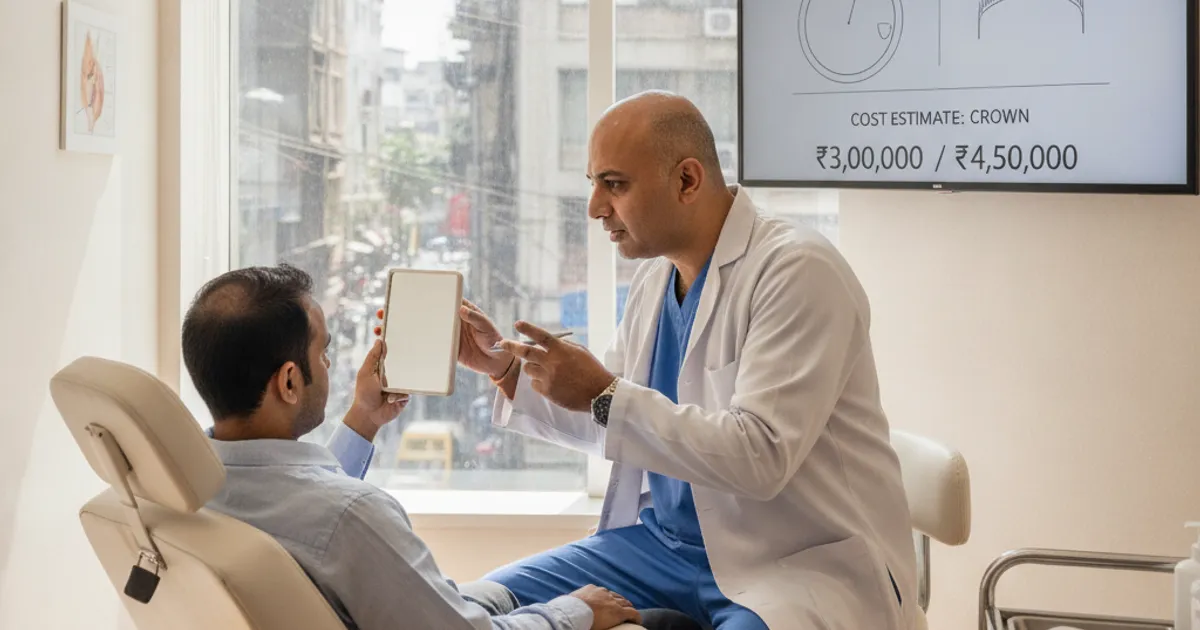
Cost for a Norwood 4 transplant depends on graft count, technique, and whether you're treating one zone or both. Hairline-only procedures typically require fewer grafts, so they cost less. Crown work uses more grafts per area, which drives up the price. Combined sessions are the most expensive but can be more efficient than two separate surgeries.
How Norwood 4 Transplant Compares to Alternatives
Surgery isn't the only option for Norwood 4. Medical therapy, low-level laser therapy, and scalp micropigmentation can all play a role. But they work differently and suit different goals. Here's how they stack up.
| Option | How It Works | Best For | Limitations |
|---|---|---|---|
| Hair Transplant | Moves permanent donor hair to thinning areas | Restoring hairline and crown density | Finite donor supply, surgical recovery |
| Finasteride | Blocks DHT to slow hair loss | Stabilizing loss, protecting native hair | Not for women of childbearing potential; possible side effects |
| Minoxidil | Increases blood flow to follicles | Thickening existing hair | Requires daily use, limited regrowth |
| Low-Level Laser | Stimulates follicle activity with light | Early thinning, post-transplant healing | Modest results, needs consistency |
| Scalp Micropigmentation | Tattoos dots to mimic hair follicles | Camouflaging thinning, creating density illusion | Not real hair, fades over time |
FAQ: Norwood 4 Crown vs. Hairline Transplant
Should I treat my crown or hairline first at Norwood 4?
Many surgeons recommend the hairline first because it frames the face and has a bigger visual impact. The crown can be treated in the same session or a later one, depending on your graft supply and how aggressive your crown loss is.
How many grafts do I need for a Norwood 4 transplant?
The number of grafts depends on the size of the bald areas, your donor density, and desired density. Hairline-only cases typically need fewer grafts than crown-only cases. Combined sessions require more grafts than either alone. Your surgeon will assess graft availability and recommend a plan.
Will my crown hair grow slower than my hairline?
Yes. Crown grafts often mature slower than hairline grafts because of weaker blood supply and the swirling pattern. It's normal for the front to grow in first.
Can I get a second transplant if my crown still looks thin?
Yes, many patients need a second session for crown density. Your surgeon will assess graft availability and whether a touch-up can improve coverage without overharvesting the donor area.
Final Thoughts on Norwood 4 Transplant Planning
A Norwood 4 transplant is a balancing act. You're working with a finite donor supply and two distinct zones that heal and grow at different rates. The decision to treat the hairline first, the crown first, or both in one session depends on your specific pattern, priorities, and long-term goals. There's no single right answer — but understanding the trade-offs helps you have a more productive conversation with your surgeon. Whether you're researching crown vs hairline transplant options or just starting to explore Norwood 4 hair loss treatment, the key is to go in with realistic expectations and a clear plan.
More Guides
- Hair Transplant for Men With Sensitive Skin: What to Know
Hair transplant for men with sensitive skin: techniques, recovery, results, cost factors, and how to choose a clinic that handles eczema or psoriasis.
- What Happens 10 Days After a Hair Transplant?
A clear, honest look at what happens 10 days after a hair transplant: healing, scabs, shedding, results, costs, and who it suits.
- ARTAS Hair Transplant: How It Works and Who It's For
A clear guide to ARTAS hair transplant: how the robotic system works, recovery, results, cost factors, who it suits, and how it compares to other techniques.
- Facial Hair Transplant: Procedure, Recovery & Results
A clear guide to facial hair transplant: how it works, recovery timeline, results, who suits it, cost, and how it compares to alternatives.