
Hair Transplant for Fine Hair: Graft Selection & Density
Fine hair changes how a hair transplant is planned. Learn about graft selection, density limits, recovery, costs, and who suits this approach.
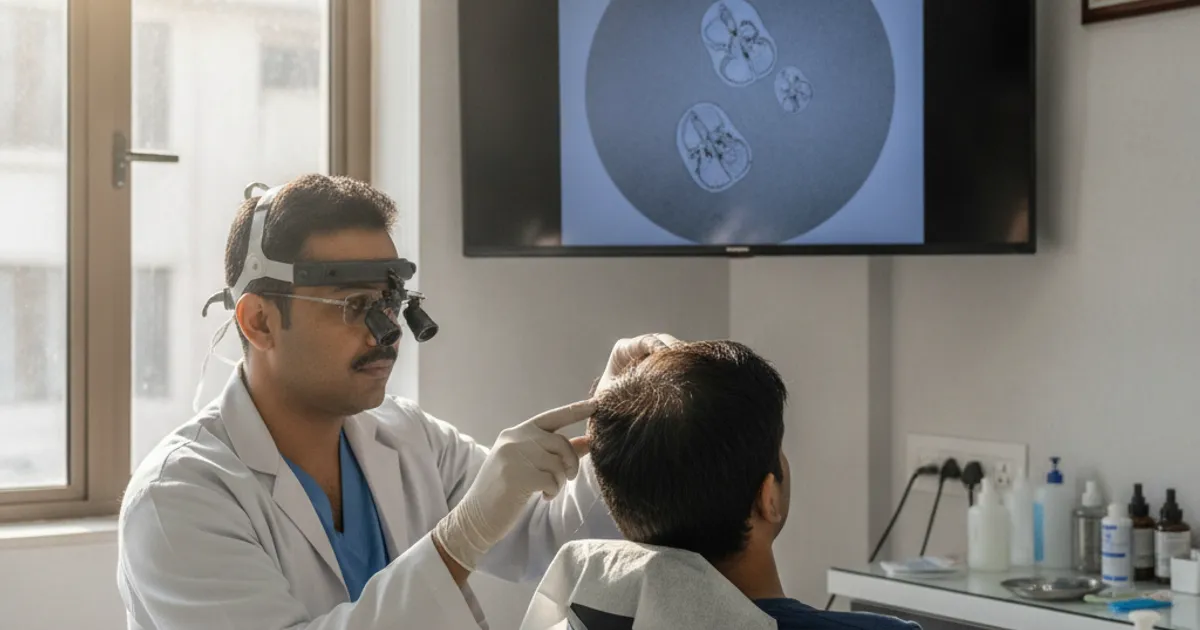
What Is Graft Selection and Density Planning for Fine Hair?
If you have fine hair, a hair transplant is not just about moving follicles from the back of your head to the thinning areas. It is about choosing the right grafts and placing them at a density that your specific hair characteristics can support. Fine hair has a smaller diameter than coarse hair, which means each follicle covers less scalp area. That changes the math on how many grafts you need, where they should come from, and how close together they can be placed without risking poor growth or an unnatural look. Graft selection and density planning is the part of the surgical plan that addresses these issues before any incisions are made.
Why Fine Hair Changes the Surgical Approach
Hair diameter affects coverage. A person with coarse hair can achieve the appearance of fullness with fewer grafts because each hair shaft is thicker and reflects more light. With fine hair, you typically need more grafts to cover the same area, but you also have to be careful not to overpack the recipient sites. Placing grafts too close together in fine hair can compromise blood supply during healing and lead to poor graft survival. There is also the matter of contrast: fine hair often pairs with lighter skin or lower contrast between hair and scalp, which can work in your favor aesthetically, but it also means any gaps or thin patches are more visible. The surgical plan has to account for all of this.
- Fine hair provides less coverage per graft, so more grafts are often needed to achieve the same visual density as coarse hair.
- Donor hair quality matters more: finer donor hair may have lower tensile strength, so graft handling must be gentle.
- Recipient site density must be moderated to protect blood supply and graft survival.
- Hair-to-scalp contrast can influence the perceived density, sometimes allowing for slightly lower graft counts in certain zones.
- Long-term planning is critical because fine hair may show thinning more readily as native hair continues to recede.
How the Procedure Is Performed: Graft Selection and Density
The procedure itself follows the same general steps as any follicular unit transplant, but the planning and execution are tailored to fine hair. Here is how it typically unfolds.
| Step | What Happens | Why It Matters for Fine Hair |
|---|---|---|
| 1. Consultation and hair analysis | Surgeon measures hair caliber, density, and laxity; reviews medical history and goals. | Establishes baseline characteristics that determine graft count and density limits. |
| 2. Donor area assessment | Evaluates density and quality of hair in the back and sides; calculates available grafts. | Fine donor hair may require more careful handling and a conservative harvest plan. |
| 3. Graft selection and dissection | Follicular units are extracted and sorted by hair count (1, 2, 3, or 4 hairs). | Single-hair grafts are prioritized for the hairline to create a soft, natural transition. |
| 4. Recipient site planning | Surgeon designs hairline and maps density across zones (frontal, mid-scalp, crown). | Density is moderated to protect blood supply; fine hair needs more sites but lower packing per site. |
| 5. Site creation | Micro-incisions are made at precise angles and depths. | Angles must mimic natural hair direction; fine hair shows poor angling more readily. |
| 6. Graft placement | Grafts are inserted into recipient sites using forceps or implanters. | Gentle handling is critical because fine hair shafts are more fragile. |
| 7. Post-op care | Cleaning, medication, and instructions for the first week. | Meticulous care supports graft survival, especially in densely packed areas. |
Recovery Timeline After Fine-Hair Transplantation
Recovery from a hair transplant is similar regardless of hair type, but fine hair can make the early stages look a bit more sparse because there is less coverage from the surrounding native hair. The timeline below reflects typical ranges reported in clinical practice; individual healing varies.
| Timeframe | What to Expect |
|---|---|
| First 3–5 days | Swelling, tenderness, and small scabs around graft sites. Sleep elevated and avoid touching the grafts. |
| 1–2 weeks | Scabs fall off. Grafts are secure. You can usually return to work and normal activities. |
| 3–6 weeks | Shock loss may occur, where transplanted hairs shed. This is normal and temporary. |
| 3–4 months | New growth begins. Fine hair may look thin at first because the new hairs are short and fine. |
| 6–9 months | Noticeable improvement in density and coverage. Hair continues to thicken. |
| 12–18 months | Final results typically judged in this window. Density and coverage are established. |
Results: What Density and Coverage to Expect
With fine hair, the goal is not usually a dense, wall-to-wall carpet of hair. It is a natural-looking improvement that frames the face and reduces the appearance of thinning. The final result depends on your donor supply, the size of the area treated, and how your hair characteristics interact with the surgical plan.
- You can expect a noticeable increase in coverage, but the density will be lower than what someone with coarse hair might achieve in the same area.
- The hairline can be made soft and natural using single-hair grafts, which is especially important for fine hair.
- Crown coverage is often more challenging because the area is larger and fine hair provides less coverage per graft.
- Some surgeons may recommend a two-session approach to reach the desired density without compromising graft survival.
- Long-term, you may need to plan for future sessions if your native hair continues to thin.
Who Suits This Approach?
Fine hair does not automatically make you a good or bad candidate. The key is whether your donor area has enough healthy hair and whether your expectations align with what is achievable. Here is who tends to do well.
- Men with fine hair but good donor density in the back and sides of the scalp.
- Those with early to moderate hair loss who want to restore the hairline and frontal zone.
- People who understand that fine hair may require more grafts and possibly more than one session.
- Individuals with realistic expectations about density and coverage.
- Those who are committed to long-term planning, including possible future sessions if hair loss progresses.
Cost Considerations
Cost for a hair transplant varies widely depending on the clinic, location, and the number of grafts required. For fine hair, the graft count may be higher to achieve the desired density, which can push the cost up. The figures below are averaged case pricing by stage of hair loss, intended to give you a general sense of what to expect. They are not quotes and will vary by clinic and region.
How It Compares to Alternatives
A hair transplant is not the only option for fine hair. Medications, low-level laser therapy, and scalp micropigmentation are alternatives or complements. Here is a quick comparison.
| Approach | How It Works | Pros | Cons |
|---|---|---|---|
| Hair transplant | Moves healthy follicles to thinning areas | Permanent hair growth, natural results | Surgical, requires recovery, cost |
| Medications (finasteride/minoxidil) | Slows hair loss and may regrow some hair | Non-surgical, can be effective | Requires ongoing use, side effects possible |
| Low-level laser therapy | Stimulates follicles with light energy | Non-invasive, no downtime | Mixed evidence, requires consistency |
| Scalp micropigmentation | Tattoos the scalp to mimic hair follicles | Immediate visual effect, low maintenance | Not real hair, requires touch-ups |
Choosing a Clinic for Fine-Hair Graft Work
Not every clinic has extensive experience with fine hair. The difference between an average result and a great one often comes down to the surgeon's ability to plan graft selection and density appropriately. Here is what to look for.
- Ask how many fine-hair cases the surgeon handles per month.
- Request to see before-and-after photos of patients with similar hair characteristics.
- Discuss the graft count and density plan in detail; a good surgeon will explain the reasoning.
- Check whether the clinic uses magnification and precise graft handling techniques.
- Look for clinics that offer long-term planning and are honest about what is achievable.
Risks and Aftercare Specific to Fine Hair
Any hair transplant carries standard surgical risks: bleeding, infection, scarring, and poor graft survival. With fine hair, a few issues deserve extra attention. Because fine hair provides less coverage, any temporary shedding or poor growth is more noticeable. That makes aftercare and realistic expectations especially important.
- Poor graft survival: overpacking recipient sites can compromise blood supply; follow your surgeon's density plan.
- Visible scarring: fine hair may not conceal donor scars as well as coarse hair, so discuss closure techniques.
- Shock loss: temporary shedding is normal but can look more dramatic with fine hair; it resolves.
- Folliculitis: minor infection around graft sites; keep the area clean and use prescribed medication.
- Unnatural hairline: fine hair shows poor angling and pluggy grafts more readily; insist on single-hair grafts at the front.
Aftercare basics apply to everyone: sleep elevated for the first few days, avoid strenuous activity for about a week, keep the recipient area clean as instructed, and avoid direct sun exposure. Your clinic will provide specific instructions. If you have fine hair, ask whether any adjustments to washing or styling are recommended to protect the grafts during the early healing phase.
FAQ
Can I get a hair transplant if I have fine hair?
Yes. Fine hair does not disqualify you. The surgeon will assess your donor supply and plan graft selection and density accordingly. You may need more grafts to achieve the desired coverage, and the result will depend on your individual characteristics.
Will my hair look thin after the transplant?
In the first few months, the new hair may look thin because it is short and fine. As it grows and thickens, coverage improves. Final results are typically judged around 12–18 months, though this varies by individual. Fine hair may never look as dense as coarse hair, but a well-planned transplant can significantly improve coverage.
How many grafts will I need?
The number depends on the size of the area being treated, your donor density, and the desired density. Fine hair often requires more grafts than coarse hair for the same area. Your surgeon will provide an estimate after examining your scalp.
Is a second session common for fine hair?
It can be. Because fine hair provides less coverage per graft, some patients opt for a second session to increase density or address areas that were not treated initially. Your surgeon will discuss whether a single session or a staged approach is better for you.
More Guides
- Hair Transplant for Men With Scalp Tattoos: What to Know
Scalp tattoos and hair transplants can coexist. Learn how ink affects surgery, recovery, results, candidacy, cost, and alternatives in this plain-English guide.
- No-Shave FUE Transplant: What It Is and Who It Suits
Learn how a no-shave FUE hair transplant works, who it suits, recovery, results, and cost. A clear, factual guide to this minimally shaven technique.
- Hair Transplant Revision: When to Fix and When to Wait
A practical guide to hair transplant revision surgery: why it's needed, when to fix vs. wait, how it's performed, recovery, costs, and alternatives.
- Hair Transplant Revision: Costs, Timing, and Candidacy
Considering hair transplant revision? Learn what it is, how it's performed, recovery, results, candidacy, costs, and how it compares to alternatives.