
Hair Transplant for Men With Scalp Tattoos: What to Know
Scalp tattoos and hair transplants can coexist. Learn how ink affects surgery, recovery, results, candidacy, cost, and alternatives in this plain-English guide.
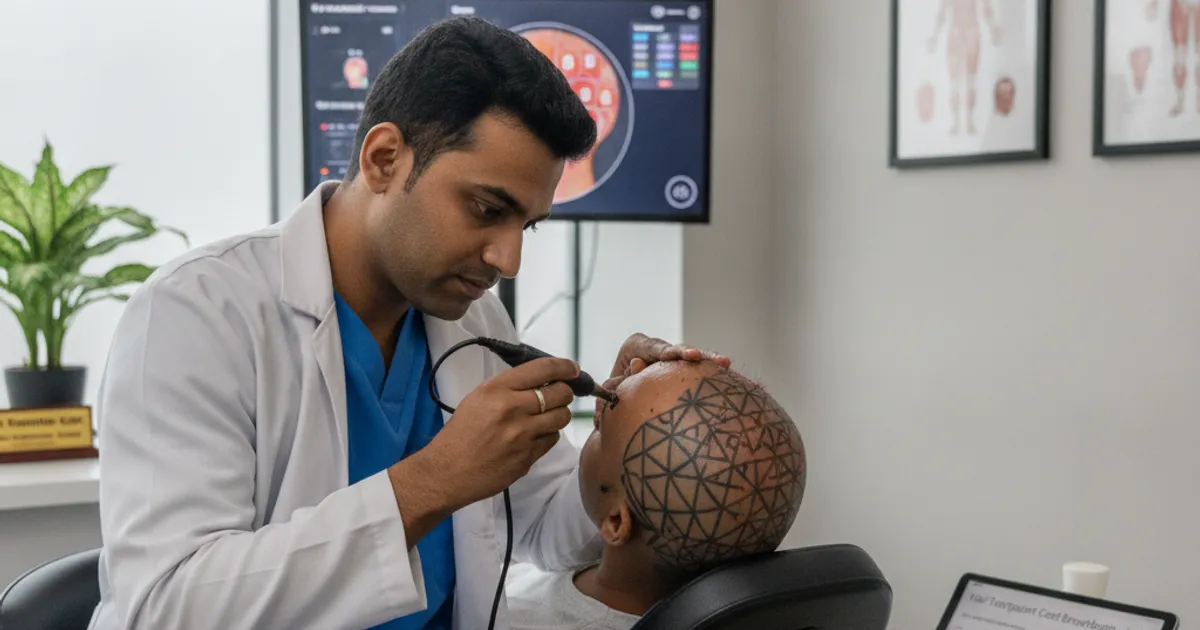
What Is Hair Transplant for Men With Scalp Tattoos?
A hair transplant for men with scalp tattoos is exactly what it sounds like: a standard follicular unit extraction (FUE) or follicular unit transplantation (FUT) procedure performed on a scalp that already carries tattoo ink. The ink might be a small design, a full scalp micropigmentation (SMP) treatment that mimics stubble, or scar camouflage from a previous surgery. The surgery itself does not change because of the tattoo, but the planning, technique, and aftercare do. Surgeons have to work around ink deposits in the dermis, avoid damaging the tattoo where possible, and manage expectations about how transplanted hair will look against a pigmented background. This guide explains how it works, who it suits, what it costs, and how it compares to other options.
How Scalp Tattoos Affect Hair Transplant Surgery
Tattoo ink sits in the dermis, the same layer that houses hair follicles and the tiny blood vessels surgeons rely on during grafting. That overlap creates a few practical considerations. First, scar tissue from tattooing can be minimal, but repeated sessions or heavy ink coverage may leave the skin less pliable. Second, the ink can make it harder to see the natural direction and density of existing hair, so surgeons often use magnification and careful marking. Third, if the tattoo is a dense black SMP, the contrast between ink and new hair growth can affect how natural the final result looks. None of these are dealbreakers, but they change the conversation you will have during consultation.
- Ink depth and density: deeper, denser ink may require more conservative graft placement to avoid trauma to pigmented skin.
- Scarring from previous tattoos: repeated needle trauma can create micro-scarring that affects graft survival, so surgeons may adjust punch size.
- Hair direction visibility: tattooed skin can obscure natural hair angles, making it harder to create a natural hairline without careful planning.
- Contrast and coverage: dark ink behind thinning hair can make gaps more obvious, so graft density may need to be higher in some areas.
- Skin health: tattoos on irritated or keloid-prone skin may need a longer assessment before surgery.
How the Procedure Is Performed on Tattooed Scalp
The core steps of a hair transplant on a tattooed scalp mirror a standard FUE or FUT procedure, but with extra attention to ink distribution and skin condition. Most surgeons prefer FUE because it avoids a long strip scar that could cut through a tattoo, though FUT is still possible if the tattoo is in a safe zone. The procedure is usually done under local anesthesia, takes several hours depending on graft count, and follows a predictable sequence.
Recovery Timeline and Aftercare
Recovery after a hair transplant on a tattooed scalp is broadly similar to a standard procedure, but the tattooed skin may be more sensitive to irritation and inflammation. Most patients experience redness, scabbing, and mild swelling for roughly the first week to ten days, though this varies. The key difference is that you need to watch for signs of infection or ink-related irritation, and you should avoid harsh products on tattooed areas. Below is a typical timeline, though individual healing varies.
| Timeframe | What to Expect | Aftercare Focus |
|---|---|---|
| First few days | Redness, swelling, small scabs forming | Gentle cleansing, avoid touching grafts, sleep elevated |
| First week to ten days | Scabs loosen, itching may start | Moisturize lightly, no scratching, avoid direct sun |
| First few weeks | Shock loss may begin, redness fades | Resume gentle washing, avoid harsh chemicals on tattooed areas |
| First few months | New hair growth starts, tattoo may look uneven temporarily | Keep scalp moisturized, monitor for irritation |
| Six to twelve months | Final density becomes visible, tattoo blends with hair | Normal hair care, sun protection, follow-up with surgeon |
Results: What to Expect With Tattooed Scalp
Results on a tattooed scalp can be excellent, but they depend on how the ink interacts with new hair growth. If the tattoo is a small design or scar camouflage, transplanted hair can blend naturally and even hide the ink. If the tattoo is a dense SMP covering the entire scalp, the new hair will grow through the pigmented skin, and the contrast may be more noticeable in the first few months. Most surgeons aim for a density that looks natural against the tattoo rather than trying to completely cover it. Final results typically appear around nine to twelve months, with some maturation up to eighteen months, though this varies by individual.
- Natural blending: sparse tattoos often become less visible as hair grows in, especially if the ink is close to the hair color.
- Contrast management: dense black SMP may require a slightly different graft pattern to avoid a patchy look.
- Tattoo preservation: a skilled surgeon can work around the tattoo, but some ink may be disturbed at incision sites.
- Hairline design: the hairline is planned to complement the tattoo rather than fight it, which may mean a slightly more conservative shape.
- Long-term look: transplanted hair is permanent, so the tattoo will remain part of the overall appearance unless you pursue laser removal later.
Who Is a Good Candidate?
Not every man with a scalp tattoo is a good candidate for a hair transplant. The best candidates have stable hair loss, good donor hair density, healthy scalp skin, and realistic expectations about how ink and hair will coexist. Surgeons also consider the tattoo's location, size, and age. A fresh tattoo may need to heal fully before surgery, and a tattoo in the donor area can complicate harvesting. If you have a history of keloids or skin sensitivity, you should discuss that openly during consultation.
- Stable hair loss: you are not losing hair rapidly, so the transplant plan will remain appropriate for years.
- Good donor supply: enough healthy hair in the back and sides to support the desired density.
- Healthy scalp: no active skin infections, severe psoriasis, or unhealed tattoos in the treatment area.
- Realistic expectations: you understand that the tattoo will still be visible in some areas and that hair growth takes up to a year.
- Tattoo location: ink outside the main recipient and donor zones is easier to work around.
- No keloid history: a tendency to raised scars may affect healing and graft survival.
Cost Considerations
Cost for a hair transplant on a tattooed scalp is generally in line with standard hair transplant pricing, though some clinics may charge a small premium for the extra planning and care required. Pricing usually depends on graft count, technique (FUE vs FUT), surgeon experience, and location. Because tattooed scalps can require more conservative graft placement, the total number of grafts may be slightly lower or higher than a typical case, which affects the final price. Always ask for a written quote that breaks down graft count, technique, and aftercare.
- Graft count: the biggest cost driver; tattooed scalps may need adjusted density in some areas.
- Technique: FUE is often preferred for tattooed scalps and may cost more than FUT in some clinics.
- Surgeon experience: surgeons who regularly work with tattooed scalps may charge more.
- Location: prices vary widely by country and city; always compare quotes in the same currency.
- Aftercare: some clinics include post-op medication, PRP, or follow-up visits in the price, while others charge extra.
How It Compares to Alternatives
A hair transplant is not the only option for men with scalp tattoos who want more hair or a better look. Some men consider scalp micropigmentation (SMP) to add density to a tattoo, while others look at laser tattoo removal before surgery, or simply accept the shaved look. Each option has trade-offs in cost, commitment, and results. The table below compares the main alternatives in plain terms.
| Option | What It Involves | Pros | Cons |
|---|---|---|---|
| Hair transplant on tattooed scalp | FUE or FUT surgery to move hair follicles into thinning areas | Permanent hair growth, natural look when planned well | Surgery, recovery time, cost, tattoo may still show through |
| Scalp micropigmentation (SMP) touch-up | Additional tattooing to add density or camouflage | Non-surgical, quick, can enhance existing tattoo | Temporary, needs maintenance, does not grow hair |
| Laser tattoo removal first | Several laser sessions to fade or remove ink before transplant | Cleaner canvas for surgery, may improve natural look | Time-consuming, costly, not all ink responds well |
| Shaved look with tattoo only | No surgery; keep hair very short to match tattoo | Low cost, low maintenance | No real hair growth, tattoo remains the main feature |
| Hair system or concealer | Non-surgical cosmetic covering | Immediate result, reversible | Ongoing cost, maintenance, not permanent |
Choosing a Clinic for Tattooed Scalp Hair Transplant
Choosing the right clinic matters more than usual when you have a scalp tattoo. You want a surgeon who has seen tattooed scalps before, can show you relevant before-and-after photos, and is honest about what the tattoo will look like after healing. During consultation, ask specific questions about punch size, graft placement near ink, and how they handle tattooed donor areas. It also helps to compare clinics on price, aftercare inclusions, and follow-up policy. Clinic Reccy lists clinics by city, and you can filter by services and price inclusions to narrow your shortlist.
- Ask for tattooed-scalp cases: request photos of patients with similar ink patterns and hair loss.
- Check surgeon credentials: look for board certification and experience with FUE and FUT.
- Discuss punch size and density: a surgeon who adjusts technique for tattooed skin is a good sign.
- Review aftercare inclusions: confirm whether medication, PRP, and follow-ups are included.
- Read the fine print: ask about revision policies and what happens if graft survival is lower than expected.
- Compare quotes in one currency: use USD for cross-border comparisons to avoid confusion.
FAQ
Can I get a hair transplant if I have a scalp tattoo?
Yes, in most cases. A scalp tattoo does not automatically disqualify you. Surgeons assess ink depth, skin health, and hair loss pattern, then plan the procedure to work around the tattoo. Some clinics may recommend waiting if the tattoo is very recent or if the skin is irritated.
Will the hair transplant damage my scalp tattoo?
It can affect the tattoo at the incision sites, but a skilled surgeon uses small punches and careful placement to minimize damage. Some ink may be disturbed where grafts are placed, and the tattoo may look slightly different after healing. Discuss this openly during consultation so you know what to expect.
How much does a hair transplant on a tattooed scalp cost?
Pricing is generally similar to a standard hair transplant and depends on graft count, technique, surgeon experience, and location. Some clinics may charge a small premium for the extra planning involved. Always get a written quote that breaks down graft count, technique, and aftercare.
Is a hair transplant better than scalp micropigmentation for tattooed scalps?
They serve different purposes. A hair transplant grows real hair and is permanent, while SMP adds pigment and needs maintenance. Some men combine both. The best choice depends on your hair loss pattern, budget, and how you feel about surgery versus ongoing touch-ups.
More Guides
- No-Shave FUE Transplant: What It Is and Who It Suits
Learn how a no-shave FUE hair transplant works, who it suits, recovery, results, and cost. A clear, factual guide to this minimally shaven technique.
- Hair Transplant Revision: When to Fix and When to Wait
A practical guide to hair transplant revision surgery: why it's needed, when to fix vs. wait, how it's performed, recovery, costs, and alternatives.
- Hair Transplant for Fine Hair: Graft Selection & Density
Fine hair changes how a hair transplant is planned. Learn about graft selection, density limits, recovery, costs, and who suits this approach.
- Hair Transplant Revision: Costs, Timing, and Candidacy
Considering hair transplant revision? Learn what it is, how it's performed, recovery, results, candidacy, costs, and how it compares to alternatives.