
Hair Transplant Revision: When to Fix and When to Wait
A practical guide to hair transplant revision surgery: why it's needed, when to fix vs. wait, how it's performed, recovery, costs, and alternatives.
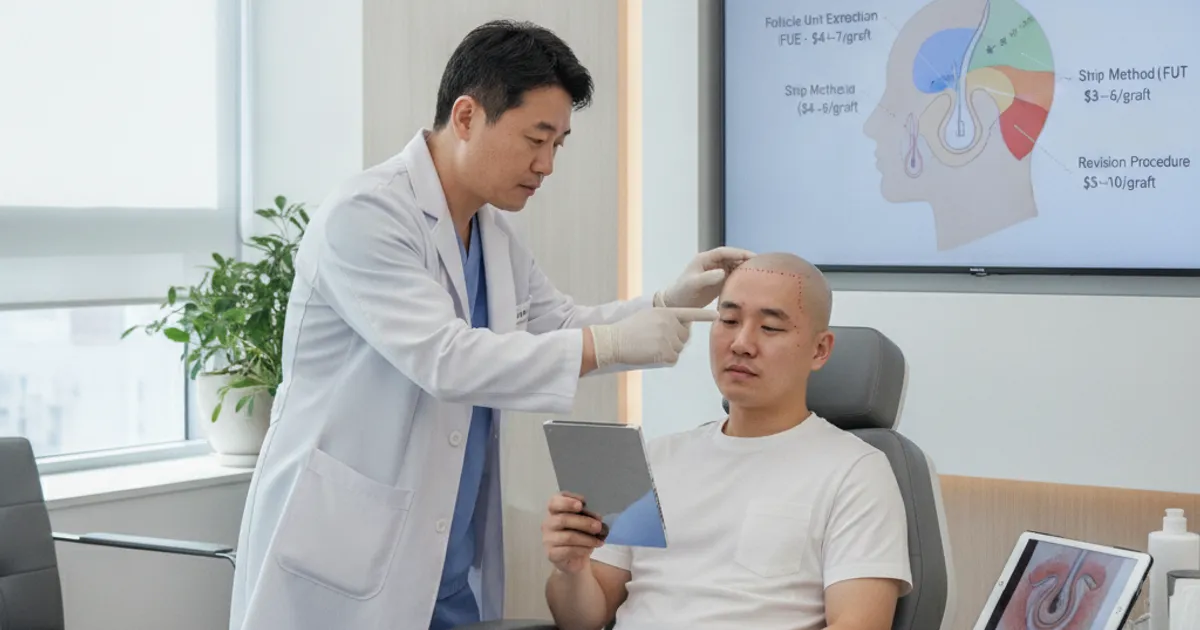
What Is a Hair Transplant Revision?
A hair transplant revision is a second procedure done to correct, improve, or refine the results of a previous hair transplant. It's not simply "topping up" a transplant that's thinned out over time — that's usually called a touch-up or a second session. A true revision addresses a problem: unnatural hairline placement, poor growth, visible scarring, pluggy grafts, or a result that never matched what was discussed. Revision surgery can involve removing and re-implanting grafts, filling in gaps, softening a harsh hairline, or camouflaging scar tissue with new follicular units. It's more complex than a first transplant because the surgeon is working with altered scalp tissue, existing scarring, and limited donor supply.
Common Reasons a Revision Is Needed
Most revisions fall into a few broad categories. Some are caused by poor surgical planning, others by unrealistic expectations, and some by biological factors like poor graft survival that no one could fully predict. Here are the most frequent reasons people seek a revision:
- Unnatural hairline: grafts placed too low, too straight, or in a density that doesn't match the surrounding hair, creating a "doll hair" or pluggy look.
- Poor growth: a significant percentage of grafts failed to survive, leaving patchy or thin coverage.
- Visible scarring: donor or recipient scars that are wider than expected, raised, or poorly concealed by surrounding hair.
- Cobblestoning or pitting: textural irregularities in the recipient area where grafts were placed.
- Donor depletion: over-harvesting in the donor zone that leaves it looking thin or scarred.
- Directional errors: grafts angled incorrectly so the hair sticks out or lies flat in a way that looks unnatural.
- Mismatched density: a transplant that looks sparse next to native hair, or a density that's too high in one area and too low in another.
When to Fix: Signs a Revision Is Appropriate
Not every disappointing result needs surgery. Some improve with time, some are manageable with styling, and some are simply a matter of expectations that weren't aligned before the first procedure. But there are clear signs that a revision is worth discussing with a surgeon:
- The result is fully grown out (generally around 12–18 months post-op, though this varies by individual) and there are obvious gaps, patches, or an unnatural hairline that bothers you daily.
- You have visible scarring that can't be hidden with your normal hairstyle.
- The donor area still has enough density to support another session — this is the single most important limiting factor.
- You're in good general health and have realistic expectations about what a revision can and cannot achieve.
- The original surgeon is unwilling or unable to address the issue, and you've had a consultation with a repair-focused surgeon who confirms a revision is feasible.
When to Wait: Timing and Healing Considerations
Timing is everything in revision surgery. The scalp needs time to heal, grafts need time to grow, and the surgeon needs to see the final result before planning a correction. Rushing into a revision too early is one of the most common mistakes — it can compromise blood supply and lead to worse outcomes. Here's a general timeline of what to consider (these are typical clinical conventions, not hard rules — your surgeon will advise based on your case):
- Many surgeons suggest waiting at least 12 months after the original procedure before evaluating the final result. Grafts can continue to mature and improve up to 18 months.
- If scarring is the main issue, wait until the scar has fully softened and settled — often around 9–12 months.
- If you're considering a revision because of poor growth, give it a full year. Some grafts are slow to emerge.
- Address any underlying medical issues (like uncontrolled scalp conditions) before scheduling surgery.
- If you've had multiple previous transplants, the wait time may be longer to allow donor area recovery.
| Time Since Original Transplant | What to Do |
|---|---|
| 0–6 months | Healing phase. Don't judge the result yet. Avoid consultations for revision unless there's an infection or complication. |
| 6–12 months | Grafts are growing in. You can start discussing concerns with a surgeon, but most will advise waiting. |
| 12–18 months | Final result is visible. This is the earliest appropriate time for a revision consultation. |
| 18+ months | Ideal window for revision if needed. Scar tissue has matured and donor area has recovered. |
How a Revision Procedure Is Performed
Revision surgery follows the same basic steps as a primary transplant, but with extra planning and often more delicate technique. The surgeon may need to remove problematic grafts, revise scars, or work around existing hair. Here's a typical sequence:
- Pre-op planning: The surgeon maps out the problem areas, assesses donor supply, and decides whether to remove, reposition, or add grafts.
- Anesthesia: Local anesthesia is used, sometimes with sedation, to keep you comfortable.
- Graft removal (if needed): Problematic grafts (e.g., pluggy or misangled ones) are carefully extracted, often using small punches or a scalpel.
- Scar revision: If scarring is an issue, the surgeon may excise or revise scar tissue to improve texture and concealment.
- New graft placement: Healthy grafts are harvested from the donor area (or sometimes body hair) and placed into the corrected sites at appropriate angles and densities.
- Closure and aftercare: The donor area is closed, and you'll receive instructions for washing and care.
Recovery and Results Timeline
Recovery from a revision is similar to a primary transplant, though the scalp may be more sensitive due to scar tissue. Most people can return to desk work within a few days, but strenuous activity should wait at least a week or two. Here's a realistic timeline (these are general estimates — your experience may differ):
| Timeframe | What to Expect |
|---|---|
| Days 1–3 | Swelling, tenderness, and small scabs. Sleep elevated and avoid touching the grafts. |
| Week 1 | Scabs begin to fall off. Gentle washing is usually allowed after 48–72 hours. |
| Weeks 2–4 | Shock loss may occur (temporary shedding of transplanted hair). Don't panic — this is normal. |
| Months 3–4 | New growth starts to appear. Hair may look thin and uneven. |
| Months 6–9 | Significant improvement in density and coverage. Most people see the bulk of the result by month 9. |
| Months 12–18 | Final result. Grafts have matured and the hair looks natural. |
Who Is a Good Candidate for Revision?
Not everyone is a candidate for revision. The ideal candidate has realistic goals, adequate donor hair, and a clear understanding of what can be improved. Here's a breakdown:
- You have enough donor hair left to support another session — this is the hard limit for most people.
- Your hair loss has stabilized (or you're on medication to slow it down).
- You're in good health and don't have uncontrolled scalp conditions.
- You have a specific, correctable issue (e.g., hairline shape, scar, gap) rather than a vague dissatisfaction.
- You're willing to wait the full 12–18 months before evaluating the result.
- You understand that revision is a repair, not a guarantee of perfection.
Cost of Hair Transplant Revision
Revision costs vary widely depending on the complexity, the number of grafts, and the surgeon's expertise. Because revision is more labor-intensive, it often costs more per graft than a primary transplant. Many clinics price revision by the session or by the graft count, and some charge a consultation fee that's credited toward surgery. Below are average case prices by stage of hair loss, based on typical revision scenarios. These are medians and should be used as a rough guide only — your actual quote will depend on your specific situation.
Revision vs. Alternatives: Comparison
Revision surgery isn't the only option for a disappointing transplant. Depending on the issue, you might consider non-surgical approaches, a different surgeon for a second opinion, or even camouflage techniques. Here's how revision compares to some common alternatives:
| Option | Best For | Pros | Cons |
|---|---|---|---|
| Revision surgery | Correctable structural issues (hairline, scars, gaps) | Can produce significant improvement; addresses root cause | Expensive; requires adequate donor hair; another recovery period |
| Scalp micropigmentation (SMP) | Camouflaging thin areas or scars | Non-surgical; immediate results; relatively affordable | Temporary (needs touch-ups); doesn't add real hair; can look flat |
| Hair fibers/concealers | Quick cosmetic fix for thin spots | Cheap; easy; no downtime | Messy; temporary; not a solution for large areas |
| Second opinion from another surgeon | Uncertainty about whether revision is needed | Clarifies options; may reveal a simpler fix | Costs time and consultation fees |
| Do nothing / style differently | Minor dissatisfaction | No cost or risk | Doesn't fix the underlying issue |
FAQ
How soon after a hair transplant can I have a revision?
Most surgeons recommend waiting at least 12 months, and ideally 18 months, before considering a revision. This allows the grafts to fully grow and the scar tissue to mature, giving the surgeon a clear picture of what needs correcting.
Will a revision fix a bad hair transplant completely?
It can significantly improve most issues, but "complete" correction isn't always possible — especially if donor hair is limited. A good revision surgeon will be honest about what can and cannot be achieved.
Is revision more painful than a first transplant?
Not necessarily. The procedure uses local anesthesia, so you shouldn't feel pain during surgery. Recovery may be slightly more uncomfortable because scar tissue can be more sensitive, but most people manage with standard pain relief.
Can I get a revision if I don't have much donor hair left?
That's the main limiting factor. If donor supply is very low, a revision may not be feasible. In some cases, surgeons can use body hair or focus on scar revision rather than adding density. A consultation with a repair specialist is essential.
More Guides
- Hair Transplant for Men With Scalp Tattoos: What to Know
Scalp tattoos and hair transplants can coexist. Learn how ink affects surgery, recovery, results, candidacy, cost, and alternatives in this plain-English guide.
- No-Shave FUE Transplant: What It Is and Who It Suits
Learn how a no-shave FUE hair transplant works, who it suits, recovery, results, and cost. A clear, factual guide to this minimally shaven technique.
- Hair Transplant for Fine Hair: Graft Selection & Density
Fine hair changes how a hair transplant is planned. Learn about graft selection, density limits, recovery, costs, and who suits this approach.
- Hair Transplant Revision: Costs, Timing, and Candidacy
Considering hair transplant revision? Learn what it is, how it's performed, recovery, results, candidacy, costs, and how it compares to alternatives.