
No-Shave FUE Transplant: What It Is and Who It Suits
Learn how a no-shave FUE hair transplant works, who it suits, recovery, results, and cost. A clear, factual guide to this minimally shaven technique.
What Is a No-Shave FUE Transplant?
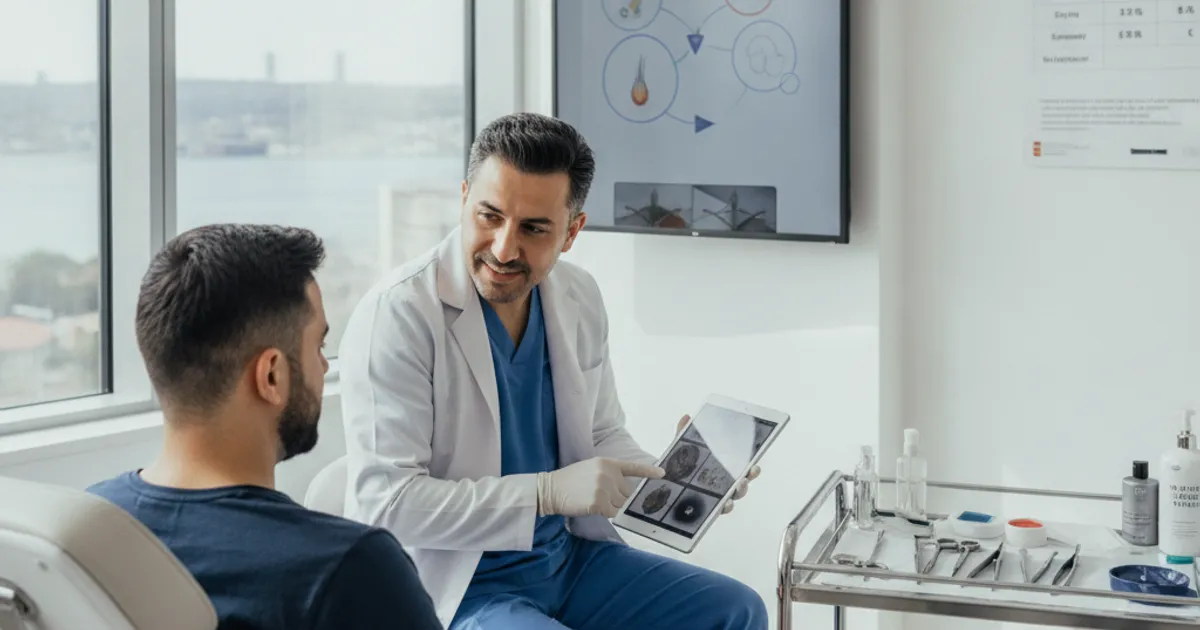
A no-shave FUE transplant is a follicular unit extraction procedure where the surgeon harvests individual hair follicles from the back and sides of your scalp without shaving your entire head first. Instead of trimming the whole donor area down to the skin, the clinic works around your existing hair length. They may trim small patches or individual follicular units, but the overall look stays largely intact. The goal is simple: you can walk out of the clinic and back into daily life without a shaved head announcing that you had surgery. It is still FUE — the same extraction and implantation process — just with a different approach to hair management before and during the procedure.
How No-Shave FUE Is Performed: Step by Step
The procedure follows the same core steps as standard FUE, with extra care taken to preserve the length of your existing hair. Most clinics schedule a full day for the session, and larger cases may span two days. Here is the typical flow.
- Consultation and planning: the surgeon maps your donor area, assesses density, and draws a hairline or crown plan. You agree on how much hair will be trimmed and where.
- Local anesthesia: the donor area and recipient site are numbed with injections. Most patients stay awake and comfortable throughout.
- Targeted trimming: instead of shaving the whole donor zone, the team trims only the specific follicular units being extracted, or works around longer hair to keep coverage.
- Extraction: individual grafts are removed using a small punch tool. The surgeon controls angle and depth to minimize damage to surrounding follicles.
- Graft sorting and holding: extracted grafts are kept in a holding solution and sorted by hair count for precise placement.
- Recipient site creation: tiny incisions are made in the balding or thinning areas at the planned angle and density.
- Implantation: grafts are placed one by one into the incisions. This is the most time-consuming part and determines the final look.
- Cleanup and aftercare briefing: the clinic cleans the area, provides instructions, and may give you a headband or cap for the ride home.
Recovery Timeline After No-Shave FUE
Recovery from no-shave FUE is similar to standard FUE in terms of healing, but the visible downtime is different. You will not have a shaved head, so the initial look is less dramatic. However, the donor area still needs to heal, and the transplanted hairs go through a shedding phase. The table below gives a realistic timeline based on typical patient experiences.
| Timeframe | What to Expect |
|---|---|
| Days 1–3 | Mild swelling, tenderness, and small scabs in the donor and recipient areas. Sleep elevated and avoid touching the grafts. Many people feel ready to return to desk work after about 2–3 days, but this varies. |
| Days 4–7 | Scabs begin to loosen. Gentle washing is usually allowed. Redness is common but fades. Avoid strenuous exercise and swimming. |
| Weeks 2–4 | Transplanted hairs shed — this is normal and expected. The scalp may look patchy, but the donor area is largely healed. You can typically wear a loose hat after about two weeks, once the grafts are secure. |
| Months 2–3 | Early regrowth begins. Hairs may be fine and uneven. Some redness may persist in the recipient area. |
| Months 4–6 | Visible improvement in density and coverage. You can usually style your hair more freely. |
| Months 9–12 | Final results become apparent. Grafts have matured, and the hairline looks natural. Some clinics suggest waiting up to 18 months for full density, as growth rates vary. |
Results: What to Expect and When
No-shave FUE produces the same long-term results as standard FUE because the underlying technique is identical. The difference is purely cosmetic during the early weeks. Final density depends on your donor supply, the number of grafts placed, and how well you heal. Most people see a noticeable change by month six and the full result around the one-year mark. Keep in mind that transplanted hair grows at a normal rate, so patience is part of the process.
- Natural hairline: the surgeon places grafts at angles that match your existing hair growth, which is easier to judge when surrounding hair is longer.
- Density: no-shave FUE does not magically increase graft yield, but it can make the early result look less severe because you are not fully shaved.
- Scarring: tiny dot scars in the donor area are typical of FUE. They are usually less visible when surrounding hair is left longer.
- Maintenance: you may still need medication or future sessions if hair loss continues. No-shave FUE does not stop genetic hair loss.
Who Is a Good Candidate for No-Shave FUE?
No-shave FUE suits people who want to avoid the shaved-head look during recovery, but it is not right for everyone. The best candidates have enough donor density to allow precise extraction without shaving, and they understand the trade-offs. If your hair is very short already, the benefit is smaller. If you have extensive baldness, you may need more grafts than a single no-shave session can provide.
- You have long or medium-length hair that you want to keep during recovery.
- You have good donor hair density on the back and sides of the scalp.
- You are comfortable with a longer procedure, since working around hair takes more time.
- You have realistic expectations about shedding and the timeline for growth.
- You do not have active scalp infections or uncontrolled medical conditions.
- You are willing to follow aftercare instructions carefully to protect the grafts.
Cost of No-Shave FUE: What Affects Pricing
Pricing for no-shave FUE varies widely by clinic, country, and the number of grafts you need. Because the procedure is more labor-intensive than standard FUE, some clinics charge a premium. Others price it the same as regular FUE. The biggest cost driver is graft count, followed by surgeon experience and location. Below are the factors that influence the final bill, followed by general pricing ranges by stage of hair loss.
- Graft count: more grafts means more time and higher cost. The exact number depends on your degree of hair loss and the density you want to achieve.
- Surgeon involvement: clinics where the surgeon performs all extractions and implantations typically charge more than those using technicians for parts of the procedure.
- Location: prices differ significantly between countries and cities. Travel and accommodation add to the total if you go abroad.
- Technique add-ons: PRP, special holding solutions, or additional sessions increase the final bill.
- Clinic reputation: established clinics with long track records often charge more, but that does not automatically mean better results.
No-Shave FUE vs. Standard FUE and FUT
The main difference between no-shave FUE and standard FUE is how the donor hair is managed. Standard FUE usually involves shaving the donor area, which makes extraction faster and gives the surgeon a clear view. FUT (follicular unit transplantation) removes a strip of scalp from the donor area and leaves a linear scar. No-shave FUE avoids both the full shave and the strip scar, but it takes longer and may not be suitable for every case. The table below compares the three.
| Feature | No-Shave FUE | Standard FUE | FUT |
|---|---|---|---|
| Donor hair shaved? | No, or only small targeted areas | Yes, usually full donor area | Yes, strip area is trimmed |
| Scarring | Tiny dot scars | Tiny dot scars | Linear scar |
| Procedure time | Longer | Moderate | Moderate |
| Visible downtime | Lower — you keep your hair length | Higher — shaved head initially | Higher — shaved strip area |
| Best for | People wanting to hide surgery from others | Most candidates | Large sessions, high graft counts |
| Graft limit per session | Often lower due to time | Higher | Highest |
Choosing a Clinic for No-Shave FUE
Not every clinic offers true no-shave FUE. Some advertise it but still trim more hair than you expect. The best approach is to ask specific questions during consultation and look for evidence of experience with this exact technique. Always confirm the details in writing before booking.
- Ask how much hair will be trimmed and where. Get a clear answer, not a vague promise.
- Request before-and-after photos of no-shave FUE cases specifically, not just standard FUE.
- Confirm who performs the extraction and implantation — the surgeon or technicians.
- Check what aftercare is included: follow-up visits, medication, and washing instructions.
- Read independent reviews and look for consistent feedback about results and communication.
- Ask about the clinic's policy if you need a second session or if grafts fail.
91% of Istanbul clinics on Clinic Reccy offer Online Consultation
Frequently Asked Questions
Can I wear a hat after no-shave FUE?
Usually yes, but not immediately. Most clinics advise waiting a few days and then wearing a loose-fitting hat that does not rub the grafts. Tight hats or helmets should wait until the scalp has healed, often around two weeks. Follow your clinic's specific instructions.
Is no-shave FUE more painful than standard FUE?
Pain levels are similar because both use local anesthesia. Some patients report slightly more discomfort during the trimming phase, but the extraction and implantation feel the same. Any soreness afterward is typically managed with over-the-counter pain relief.
How soon can I go back to work after no-shave FUE?
Many people return to desk work within two to three days. If you have a physical job or need to wear a helmet, you may need one to two weeks off. The advantage of no-shave FUE is that your hair covers the donor area, so you may feel more comfortable returning sooner.
Will no-shave FUE leave visible scars?
FUE leaves tiny dot scars in the donor area, and no-shave FUE is no different. Because the surrounding hair is left longer, these dots are often easier to conceal. Scarring depends on your healing and the surgeon's technique. FUT, by contrast, leaves a linear scar.
More Guides
- Hair Transplant for Men With Scalp Tattoos: What to Know
Scalp tattoos and hair transplants can coexist. Learn how ink affects surgery, recovery, results, candidacy, cost, and alternatives in this plain-English guide.
- Hair Transplant Revision: When to Fix and When to Wait
A practical guide to hair transplant revision surgery: why it's needed, when to fix vs. wait, how it's performed, recovery, costs, and alternatives.
- Hair Transplant for Fine Hair: Graft Selection & Density
Fine hair changes how a hair transplant is planned. Learn about graft selection, density limits, recovery, costs, and who suits this approach.
- Hair Transplant Revision: Costs, Timing, and Candidacy
Considering hair transplant revision? Learn what it is, how it's performed, recovery, results, candidacy, costs, and how it compares to alternatives.