
Hair Transplant Anesthesia: What You'll Feel & How It Works
A clear guide to hair transplant anesthesia: how it's given, what each stage feels like, recovery, cost, and how it compares to alternatives.
What Is Hair Transplant Anesthesia?
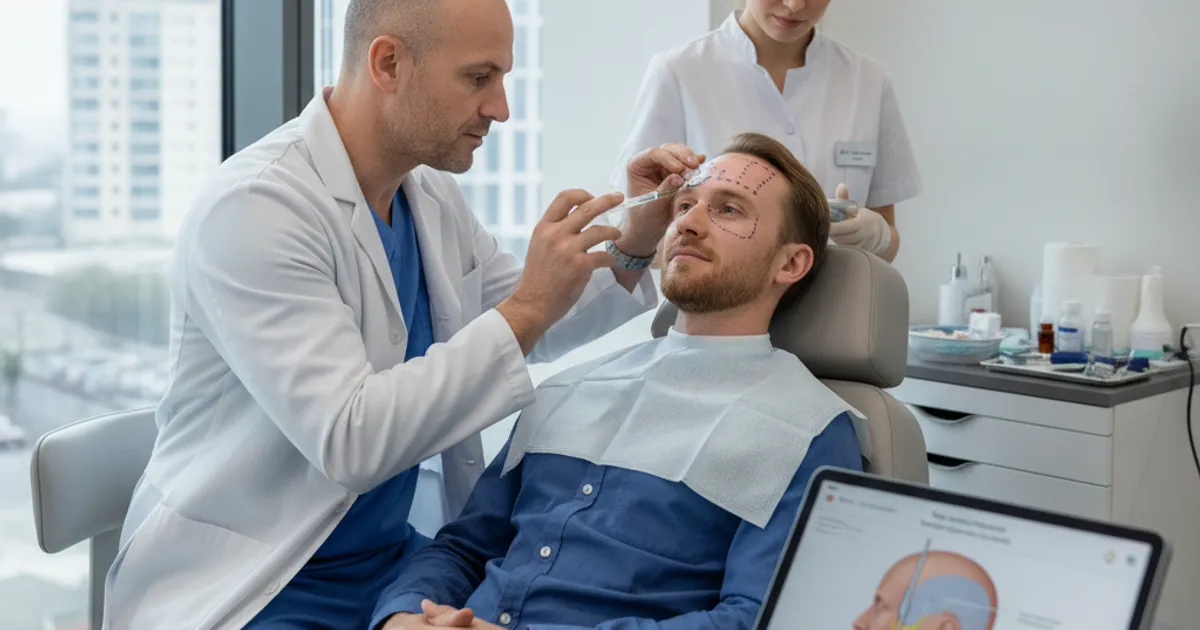
Hair transplant anesthesia is the medication used to make the procedure comfortable. In almost all cases, it's local anesthesia — a numbing injection given directly into the scalp — sometimes combined with light oral sedation to take the edge off. You stay awake, you can talk, and you can get up and walk out afterward. General anesthesia (where you're fully unconscious) is rare for hair transplants and is usually reserved for very specific medical situations. The goal is simple: block pain signals in the donor and recipient areas so the surgeon can work precisely without you feeling sharp discomfort.
How Anesthesia Is Administered During a Hair Transplant
The process is straightforward but has a few steps. First, the clinic cleans the scalp and may apply a topical numbing cream to reduce the sting of the injections. Then the surgeon or a nurse injects a local anesthetic — typically lidocaine mixed with epinephrine (to narrow blood vessels and reduce bleeding) — in a ring pattern around the donor area at the back and sides of the head. Once that area is numb, they move to the recipient area where grafts will be placed. Some clinics use a vibrating device or cold air to distract from the injection sensation. If you opt for sedation, you'll take a pill before the injections start, which makes you drowsy and relaxed but still responsive.
- Topical numbing cream applied before injections to reduce sting
- Local anesthetic injected in a ring block around the donor area
- Additional injections in the recipient area as needed
- Optional oral sedation (e.g., diazepam) taken before injections
- Vibration or cooling devices sometimes used to reduce injection discomfort
- Anesthesia topped up during the procedure if you feel any sensation return
What You'll Feel: Sensations at Each Stage
The honest answer is that you'll feel some things, but pain is usually brief and manageable. The injections themselves are the most noticeable part — a series of quick stings that many people describe as similar to a dental injection but shorter. After that, the scalp goes numb within minutes. During the procedure, you may feel pressure, tugging, or a vibrating sensation as grafts are extracted and placed, but not sharp pain. If you feel anything sharp, tell the surgeon — they can top up the anesthetic. After the procedure, as the numbness wears off, expect some soreness and tightness in the donor area, which is typically managed with over-the-counter pain relief.
| Stage | What You'll Feel | Duration |
|---|---|---|
| Topical numbing | Cool, slightly wet sensation | Varies |
| Injections | Quick stings, pressure | Brief |
| Numbness onset | Tingling then loss of sensation | Minutes |
| Extraction | Pressure, vibration, tugging | Depends on graft count |
| Implantation | Pressure, occasional tugging | Depends on graft count |
| Numbness wearing off | Soreness, tightness | Hours after procedure |
Recovery After Anesthesia: What to Expect
Recovery from the anesthesia itself is quick. Most people feel normal within a few hours, though if you took oral sedation, you may feel drowsy for the rest of the day and should arrange a ride home. The numbness in your scalp typically fades within a few hours, and you may notice some swelling in the forehead or around the eyes for a few days — this is normal and usually resolves on its own. Soreness in the donor area is common for the first few days and is usually managed with acetaminophen or ibuprofen. Avoid alcohol and blood-thinning medications for a few days as advised by your clinic.
- Arrange a ride home if you opt for oral sedation
- Numbness usually wears off within a few hours
- Mild swelling in the forehead or eyes can last a few days
- Donor area soreness is common initially and improves over time
- Follow clinic instructions on pain relief and avoiding blood thinners
- Most people return to desk work after a few days, but follow your clinic's advice
Results: How Anesthesia Affects Your Experience and Outcome
Anesthesia doesn't directly affect how well the grafts grow — that's down to surgical technique, graft handling, and aftercare. But it does affect your experience and, indirectly, the outcome. Good anesthesia means you're comfortable and still, which lets the surgeon work precisely. Poorly managed anesthesia can lead to movement, stress, and a longer procedure. The type of anesthetic also matters for bleeding: epinephrine reduces blood flow, which can help visibility. Most modern clinics use a balanced approach. In short, anesthesia is a comfort tool, not a growth factor, but it sets the stage for a smooth procedure.
Who Is a Good Candidate for Hair Transplant Anesthesia?
Almost anyone having a hair transplant is a candidate for local anesthesia. It's safe for the vast majority of healthy adults. However, some people need extra precautions: those with allergies to lidocaine or related anesthetics, people with certain heart conditions (epinephrine can affect heart rate), pregnant or breastfeeding women, and those on blood thinners. If you have a history of fainting or severe anxiety, talk to the clinic about sedation options. General anesthesia is reserved for rare cases and requires a full medical review. Always disclose your full medical history and medications during consultation.
- Healthy adults with no anesthetic allergies
- People with mild anxiety (sedation can help)
- Those who can lie still for several hours
- Patients not on blood thinners (or who can pause them safely)
- People with well-controlled medical conditions after clearance
- Not recommended without medical review for pregnancy, severe heart conditions, or lidocaine allergy
Cost of Hair Transplant Anesthesia
Anesthesia is almost always included in the overall hair transplant price — clinics don't usually bill it separately. The total cost depends on the number of grafts, the clinic's location, and the technique. Below are average case prices by stage of hair loss. These are all-in prices that typically cover anesthesia, the procedure, and standard aftercare. Always confirm what's included before booking.
How Anesthesia Compares to Alternatives
The main alternatives are local anesthesia alone, local plus oral sedation, local plus IV sedation, and general anesthesia. Local alone is the most common and has the fastest recovery. Oral sedation adds relaxation but requires a ride home. IV sedation is deeper and used by some clinics for anxious patients or long sessions. General anesthesia is rare and carries more risk and cost. There's also the option of no anesthesia (not recommended) or topical numbing alone (insufficient for surgery). The table below compares the common approaches.
| Approach | Awake? | Recovery | Typical Use |
|---|---|---|---|
| Local anesthesia only | Yes | Fastest | Most standard transplants |
| Local + oral sedation | Yes, drowsy | A few hours | Anxious patients |
| Local + IV sedation | Yes, relaxed | Several hours | Long sessions, high anxiety |
| General anesthesia | No | Full day | Rare, medical need |
Choosing a Clinic: Questions to Ask About Anesthesia
Not all clinics handle anesthesia the same way. Some have a dedicated anesthesiologist on site; others rely on the surgeon or nurses. The type of anesthetic, monitoring, and emergency protocols matter. Ask direct questions during your consultation and don't feel shy about it. A good clinic will answer clearly and without pressure.
- What type of anesthesia do you use, and who administers it?
- Is sedation included, and is there an extra cost?
- How do you monitor patients during the procedure?
- What is your protocol if I feel pain during surgery?
- Do you have emergency equipment and trained staff on site?
- What are the instructions for eating, drinking, and medications before the procedure?
Frequently Asked Questions
Will I be asleep during a hair transplant?
In most cases, no. Hair transplants are typically done under local anesthesia, so you're awake and can talk. Some clinics offer oral or IV sedation to help you relax, but you're still conscious. General anesthesia is rare and reserved for specific medical situations.
Does the anesthesia injection hurt?
The injections are the most noticeable part — a series of quick stings that many people compare to a dental injection. Topical numbing cream, vibration devices, or cooling can reduce the sensation. After the injections, the scalp goes numb within minutes and you shouldn't feel sharp pain.
How long does the numbness last after a hair transplant?
The numbness usually wears off within a few hours after the procedure. As it fades, you may feel soreness and tightness in the donor area, which is typically managed with over-the-counter pain relief. Swelling in the forehead or around the eyes can last a few days.
Is anesthesia included in the hair transplant cost?
Yes, in almost all cases anesthesia is included in the overall procedure price. Clinics generally don't bill it separately. Always confirm what's included — anesthesia, aftercare, medications — before you book.
More Guides
- Hair Transplant for Men With Scalp Tattoos: What to Know
Scalp tattoos and hair transplants can coexist. Learn how ink affects surgery, recovery, results, candidacy, cost, and alternatives in this plain-English guide.
- No-Shave FUE Transplant: What It Is and Who It Suits
Learn how a no-shave FUE hair transplant works, who it suits, recovery, results, and cost. A clear, factual guide to this minimally shaven technique.
- Hair Transplant Revision: When to Fix and When to Wait
A practical guide to hair transplant revision surgery: why it's needed, when to fix vs. wait, how it's performed, recovery, costs, and alternatives.
- Hair Transplant for Fine Hair: Graft Selection & Density
Fine hair changes how a hair transplant is planned. Learn about graft selection, density limits, recovery, costs, and who suits this approach.