
Hair Transplant for Redheads: Graft Survival & Colour Match
Hair transplant for redheads: how pigment affects graft survival, colour matching, procedure steps, recovery, costs, and who suits it best.
What Is Hair Transplant for Redheads?
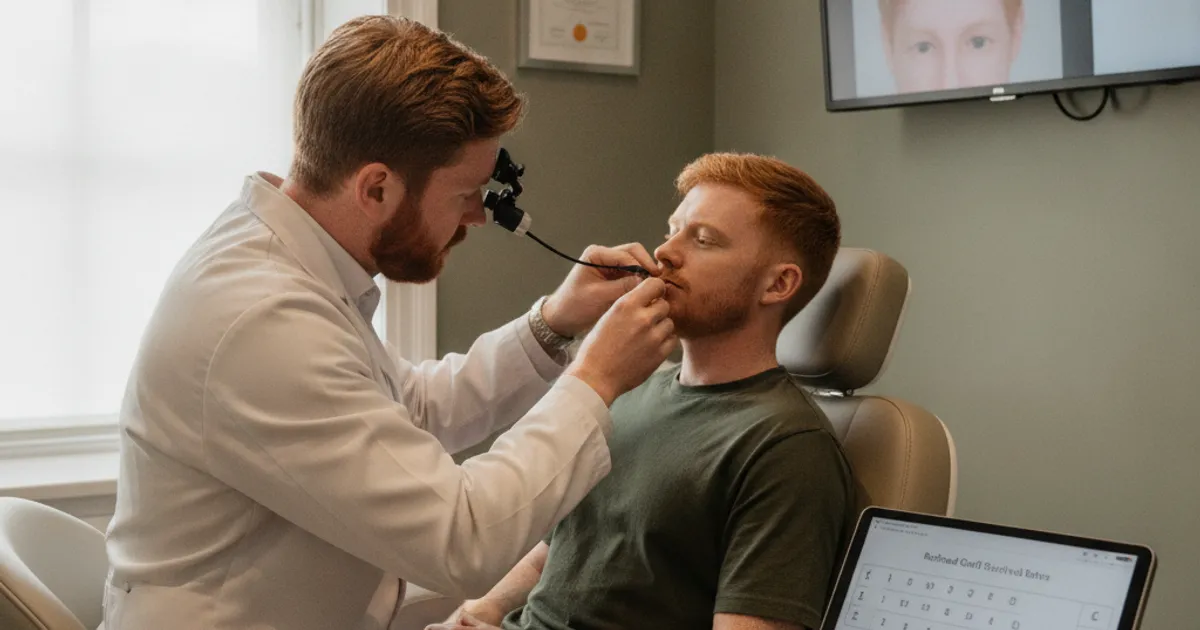
A hair transplant for redheads is the same basic procedure as for anyone else: hair follicles are taken from a donor area (usually the back and sides of the scalp) and moved to thinning or balding areas. The difference is in the details. Red hair comes from a specific variant of the MC1R gene, which changes how pigment is produced and stored in the hair shaft. That affects follicle structure, how grafts behave during surgery, and how carefully a surgeon has to match colour when placing new hair next to existing red hair. If you have red hair and are considering a transplant, the core questions are whether your grafts will survive at the same rate as other hair types and whether the result will look natural in colour and texture.
Why Red Hair Is Different: Pigment, Follicle Structure, and Graft Survival
Red hair gets its colour from pheomelanin, a type of pigment that is more common in people with the MC1R gene variant. Compared with brown or black hair, which is rich in eumelanin, red hair shafts tend to be finer in some cases but also more variable in diameter. The follicles themselves can be more sensitive to handling, and the skin around them may be paler and more prone to visible redness after surgery. None of this means red hair grafts are fragile in a way that dooms a transplant, but it does mean the surgical team needs to be gentle and precise. Graft survival depends on how the follicles are extracted, stored, and implanted, and red hair grafts benefit from the same best practices as any other hair type: minimal trauma, proper hydration, and careful placement.
- Pheomelanin pigment makes red hair more prone to fading and colour variation under light, so matching new grafts to existing hair requires attention to tone and undertone.
- Red hair follicles can be more sensitive to dehydration and mechanical stress during surgery, so handling technique matters.
- Scalp skin in redheads is often fair and may show more temporary redness after surgery, which can affect the early healing appearance.
- Red hair can be coarser or finer than average, and the curl pattern varies, so graft selection should match the texture of the surrounding hair.
- There is no reliable evidence that red hair grafts survive at a fundamentally different rate from other hair types when standard surgical protocols are followed.
How the Procedure Is Performed: Step-by-Step
The procedure itself follows the same general sequence as any follicular unit transplant, whether it is FUE (follicular unit extraction) or FUT (follicular unit transplantation). The difference for redheads is in the planning and execution details. Here is the typical step-by-step process.
Colour Matching in Redhead Hair Transplants
Colour matching is one of the most important parts of a redhead hair transplant. Red hair spans a wide range, from strawberry blonde and copper to deep auburn and burgundy. The donor hair on the back and sides of the scalp may not be exactly the same shade as the hair on top, especially if the top has been exposed to more sun or has started to grey. The surgeon needs to select grafts that will blend with the existing hair in the recipient area, not just the donor area. This means looking at undertones, lightness, and how the hair reflects light. In some cases, a surgeon may recommend a small test session or a careful mix of grafts from different donor zones to create a natural blend.
- Assess the full range of red tones in your donor area, not just the average colour.
- Match grafts to the recipient area's existing hair, which may be a different shade than the donor area.
- Consider how sun exposure and ageing have changed the colour of the hair on top versus the back and sides.
- Group grafts by tone and texture during placement to avoid a patchy or uniform look.
- Plan for future grey hair: as you age, red hair may fade or turn grey, and the transplant should still look natural.
| Red Hair Tone | Common Characteristics | Colour Matching Consideration |
|---|---|---|
| Strawberry blonde | Light, warm undertones, fine texture | Match to lighter grafts; avoid darker grafts that create contrast |
| Copper | Bright orange-red, medium texture | Use grafts with similar warmth; check for fading under light |
| Auburn | Red-brown mix, variable texture | Blend red and brown tones; pay attention to undertone |
| Deep red / burgundy | Dark red, cooler undertones | Match depth and coolness; avoid warm grafts that clash |
| Grey-red mix | Red with grey strands | Mix pigmented and grey grafts to mimic natural variation |
Recovery Timeline and Graft Survival
Recovery after a redhead hair transplant follows the same general timeline as any hair transplant. The first few days involve scabbing and tenderness. Around two to three weeks, the transplanted hair sheds, which is normal and not a sign of failure. New growth typically starts around three to four months, with fuller results visible at nine to twelve months. Graft survival depends on surgical technique and aftercare, and for redheads, the main concern is handling sensitivity rather than a fundamentally lower survival rate. There is no reliable published evidence that red hair grafts survive at a different rate from other hair types when standard protocols are followed, but individual results vary.
| Recovery Stage | What to Expect | Graft Status |
|---|---|---|
| Days 1–3 | Swelling, scabbing, tenderness | Grafts are settling; avoid touching |
| Week 1–2 | Scabs fall off, redness fades | Grafts are anchoring |
| Week 2–4 | Transplanted hair sheds | Normal shedding; follicles remain |
| Month 3–4 | New growth begins | Grafts are producing new hair |
| Month 6–9 | Visible improvement | Most grafts have grown |
| Month 12+ | Final result | Mature hair; assess density and colour match |
Who Is a Suitable Candidate?
Redheads are suitable candidates for hair transplant if they have sufficient donor hair density and are in good general health. The same criteria apply as for anyone else: stable hair loss pattern, realistic expectations, and a donor area that can spare enough follicles. Red hair colour itself is not a limiting factor. However, because red hair can be more variable in texture and tone, the consultation should include a detailed discussion of colour matching and how the surgeon plans to handle it. Candidates with very fine red hair or extensive thinning may need a more conservative plan, and some may be better served by a combination of transplant and medical therapy.
- You have a stable pattern of hair loss and enough donor hair on the back and sides of the scalp.
- You are in good overall health and do not have conditions that impair healing.
- You have realistic expectations about density and colour blending.
- You understand that red hair may require extra attention to colour matching and graft handling.
- You are committed to aftercare and follow-up appointments.
Cost: What Affects Pricing for Redhead Patients
Cost for a redhead hair transplant is generally in line with standard hair transplant pricing. The main factors are the number of grafts needed, the technique used (FUE or FUT), the surgeon's experience, and the clinic's location. Red hair does not typically add a premium, but if the surgeon needs to spend extra time on colour matching or graft selection, that can affect the overall quote. Pricing is usually presented by stage of hair loss: early, moderate, and advanced. The figures below are typical ranges for each stage, but actual quotes vary by clinic and individual case.
- Number of grafts: more extensive hair loss requires more grafts, which increases cost.
- Technique: FUE is often priced per graft, while FUT may be priced per session.
- Surgeon experience: highly experienced surgeons and clinics may charge more.
- Location: clinic location affects pricing due to overhead and demand.
- Colour matching complexity: if extensive matching is needed, it may add time and cost.
How It Compares to Alternatives
A hair transplant is the only permanent way to restore hair in thinning areas, but it is not the only option. Redheads may also consider medical therapy (such as minoxidil or finasteride), low-level laser therapy, or cosmetic concealers. Each has trade-offs. A transplant offers permanent results but involves surgery and recovery. Medical therapy can slow hair loss and sometimes regrow hair, but it requires ongoing use and may not work for everyone. Concealers are temporary and cosmetic. The table below compares the main alternatives.
| Option | Permanence | Invasiveness | Best For |
|---|---|---|---|
| Hair transplant (FUE/FUT) | Permanent | Surgical | Stable hair loss with good donor density |
| Minoxidil | Temporary (requires ongoing use) | Non-surgical | Early thinning, adjunct to transplant |
| Finasteride | Temporary (requires ongoing use) | Non-surgical | Male pattern baldness, slowing loss |
| Low-level laser therapy | Temporary | Non-surgical | Mild thinning, adjunct therapy |
| Hair fibres/concealers | Temporary (cosmetic) | Non-surgical | Quick cosmetic coverage |
Choosing a Clinic: Questions to Ask
Choosing the right clinic is critical, especially for redhead patients who need a surgeon experienced with colour matching and careful graft handling. Ask potential clinics about their experience with red hair, how they plan colour matching, and what their protocol is for graft survival. It also helps to ask about pricing transparency, aftercare, and what happens if graft survival is lower than expected. The questions below are a good starting point.
- How many redhead patients have you treated, and can you show examples of colour matching?
- What technique do you recommend for my hair type and why?
- How do you handle graft selection and colour matching during surgery?
- What is your protocol for graft storage and handling to maximise survival?
- What is the total cost, including any fees for additional sessions or aftercare?
- What aftercare support do you provide, and how do you monitor graft survival?
FAQ
Is a hair transplant safe for redheads?
Yes. Red hair does not make the procedure unsafe. The main considerations are careful graft handling and colour matching, but the procedure itself is the same as for other hair types.
Do red hair grafts survive as well as other hair types?
There is no reliable evidence that red hair grafts survive at a different rate from other hair types when standard surgical protocols are followed. The key is gentle handling and proper hydration during surgery, but individual results vary.
How do surgeons match red hair colour?
Surgeons assess the range of red tones in your donor area and match grafts to the recipient area's existing hair. They may group grafts by tone and texture to create a natural blend.
Does red hair affect the cost of a transplant?
Not typically. Cost is based on graft count, technique, and clinic, not hair colour. However, if extra time is needed for colour matching, it could affect the quote.
More Guides
- Hair Transplant for Men With Scalp Tattoos: What to Know
Scalp tattoos and hair transplants can coexist. Learn how ink affects surgery, recovery, results, candidacy, cost, and alternatives in this plain-English guide.
- No-Shave FUE Transplant: What It Is and Who It Suits
Learn how a no-shave FUE hair transplant works, who it suits, recovery, results, and cost. A clear, factual guide to this minimally shaven technique.
- Hair Transplant Revision: When to Fix and When to Wait
A practical guide to hair transplant revision surgery: why it's needed, when to fix vs. wait, how it's performed, recovery, costs, and alternatives.
- Hair Transplant for Fine Hair: Graft Selection & Density
Fine hair changes how a hair transplant is planned. Learn about graft selection, density limits, recovery, costs, and who suits this approach.