
Hair Transplant for Women With Long Hair: Planning & Aftercare
A practical guide to hair transplant for women with long hair: how it's done, planning, recovery, aftercare, results, cost, and alternatives.
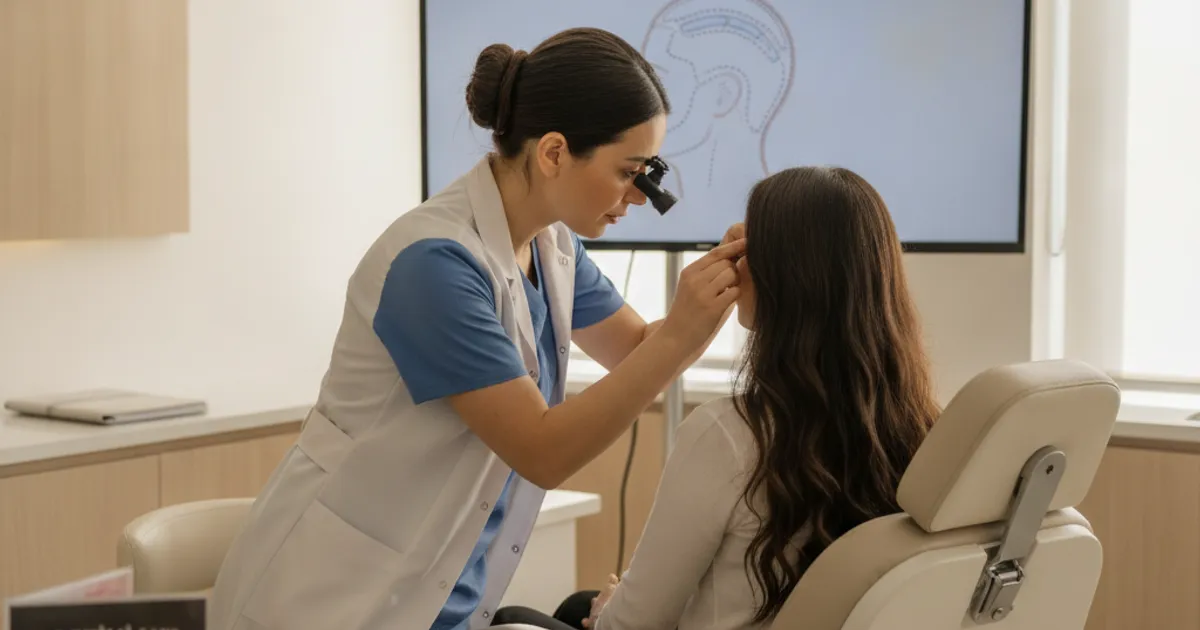
A hair transplant for women with long hair is the same basic procedure as for anyone else — hair follicles are moved from a donor area to thinning or bald spots — but the planning and aftercare are different because you're working around length, styling habits, and the way you wear your hair day to day. Long hair changes where incisions can be hidden, how you sleep, how you wash, and how quickly you can get back to normal. This guide walks through what the procedure involves, how to prepare, what recovery looks like when you're protecting long hair, and how it compares with non-surgical options.
What Is a Hair Transplant for Women With Long Hair?
It's a surgical procedure that takes healthy hair follicles from a donor zone — usually the back and sides of the scalp — and implants them into areas where hair is thinning or absent. For women with long hair, the main difference is logistical: the donor area is often camouflaged by surrounding length, and the recipient area may be partly covered by existing hair. That can make healing less obvious, but it also means the surgical team has to plan around your hair's natural fall and part line so the final result blends in. Most female patients opt for a follicular unit excision (FUE) approach because it leaves tiny dot-like scars rather than a linear strip scar, which matters if you ever wear your hair up.
How the Procedure Is Performed: Techniques and Considerations for Long Hair
The two main techniques are FUE and follicular unit transplantation (FUT). FUE extracts individual follicular units with a small punch tool; FUT removes a strip of scalp from the donor area and dissects it under a microscope. For long-haired women, FUE is generally preferred because it avoids a linear scar and allows the surgeon to shave only small patches rather than the whole donor zone. Some clinics offer a 'long hair FUE' or 'non-shaven FUE' where the surgeon works around existing length, trimming only the individual follicles being extracted. That approach is typically slower and often costs more, but it lets you keep your length through the recovery period. These are general observations — ask your clinic about their specific approach and pricing.
- FUE: individual follicles extracted with a micro-punch; minimal scarring; suitable for long hair because only small areas are trimmed.
- Non-shaven FUE: surgeon works around existing length, trimming only the donor follicles; typically slower and more expensive but preserves appearance during healing.
- FUT: strip removal; faster for large sessions but leaves a linear scar that can be hard to hide with short or pulled-back styles.
- Recipient site planning: the surgeon angles incisions to match your natural hair direction so new growth blends with existing long hair.
- Graft counts: women may need fewer grafts than men in some cases because thinning is often diffuse rather than concentrated in one bald patch, but this varies widely and should be assessed individually.
| Technique | Scarring | Suits Long Hair? | Typical Session |
|---|---|---|---|
| FUE | Tiny dot scars | Yes — easy to hide | 1 day; graft counts vary by case |
| Non-shaven FUE | Tiny dot scars | Yes — preserves length | 1–2 days; fewer grafts per session |
| FUT | Linear scar | Less ideal if hair is often up | 1 day; graft counts vary by case |
Planning Your Transplant: Pre-Surgery Steps for Long-Haired Women
Planning starts weeks before the procedure. Because long hair takes longer to wash and style, you'll want to arrange help and clear your calendar for the first week. Your clinic should give you specific instructions, but the general steps look like this:
Recovery and Aftercare: Protecting Long Hair During Healing
The first 10–14 days are the most delicate. Scabs form around each graft, and the newly implanted follicles are fragile. With long hair, the main risks are tangling, pulling, and accidentally catching scabs while washing or styling. Many clinics recommend gentle washing with a cup or spray bottle rather than direct shower pressure, and no conditioner on the recipient area for the first week. You'll also need to avoid swimming, saunas, and heavy sweating for at least two weeks. These are typical guidelines — your surgeon will give you a specific schedule based on your graft count and healing.
- Sleep with your head elevated at 30–45 degrees for the first 3–5 nights to reduce swelling.
- Don't touch, scratch, or pick at scabs — they should fall off on their own within 7–14 days.
- Wash gently with a mild, fragrance-free shampoo; pat dry with a clean towel, don't rub.
- Avoid tight hairstyles, hair dryers on high heat, and styling products for at least two weeks.
- Skip dye, bleach, and chemical treatments for at least four weeks, or as advised by your surgeon.
- Wear a loose hat or scarf outdoors to protect the recipient area from sun and dust.
| Timeframe | What's Happening | Long-Hair Care |
|---|---|---|
| Days 1–3 | Swelling, tenderness, tiny scabs form | Sleep elevated; no washing unless instructed |
| Days 4–10 | Scabs loosen and fall off | Gentle cup washing; no styling products |
| Weeks 2–4 | Shock loss may begin | Loose styles only; avoid heat tools |
| Months 1–3 | Dormant phase; new growth not visible | Normal washing resumes; still avoid tight styles |
| Months 4–6 | New hair starts to emerge | Light styling okay; avoid bleach and dye |
| Months 9–12 | Full results visible | Normal hair routine, including color if cleared |
Results and Timeline: What to Expect With Long Hair
Results follow the same timeline as any hair transplant, but long hair can make the early stages easier to hide. Transplanted hair typically sheds within the first month — this is normal and not a sign of failure — then regrows from around month three or four. By month six you'll see noticeable density, and by month nine to twelve the result should be close to final. Because long hair adds weight and coverage, many women find the new growth blends in faster than it would with short hair. The transplanted follicles are permanent, but they won't stop age-related thinning in the rest of your hair, so some women combine surgery with ongoing medical treatment.
Who Is a Good Candidate?
Not every woman with long hair and thinning is a candidate. The best outcomes happen when hair loss is stable, the donor area is dense enough, and the cause has been properly diagnosed. Women with active autoimmune conditions, uncontrolled thyroid disease, or recent pregnancy should wait until things settle. If you have diffuse thinning across the whole scalp rather than a defined area, a transplant may not give you the density you're hoping for — your surgeon should be honest about that.
- Stable hair loss for at least 12 months, with a clear diagnosis.
- Good donor density at the back and sides of the scalp.
- Realistic expectations about density and the need for ongoing treatment.
- No active scalp infection, skin condition, or uncontrolled medical issue.
- Willingness to follow aftercare instructions, including avoiding tight styles and chemical treatments during healing.
Cost Considerations
Cost depends on the number of grafts, the technique, the clinic's location, and whether you choose a non-shaven approach. Prices vary widely between countries and even between cities in the same country. We don't have real-time pricing data for this topic, so we can't provide averaged figures. The best way to get an accurate cost is to consult with a clinic directly and ask for a written estimate after an in-person assessment.
How It Compares to Alternatives
Surgery isn't the only option, and for many women with long hair it isn't the first step. Medical treatments like minoxidil and finasteride (or spironolactone for women who can't take finasteride) can slow or partially reverse thinning, but they don't restore hair in areas that are already bald. PRP injections and low-level laser therapy are less invasive but have modest, variable results. Hair transplants give the most permanent density in a defined area, but they don't stop future loss. Many women combine approaches — surgery for the front hairline, medical treatment for the crown.
| Option | Invasiveness | Permanence | Best For |
|---|---|---|---|
| Hair transplant (FUE) | Surgical, local anesthetic | Permanent in treated areas | Defined thinning or receding areas with good donor hair |
| Minoxidil | Topical, daily use | Temporary — loss resumes if stopped | Early diffuse thinning |
| Finasteride / spironolactone | Oral medication | Temporary — ongoing use needed | Hormone-related hair loss (prescription only) |
| PRP injections | Minimally invasive, repeated sessions | Variable; needs maintenance | Early thinning, adjunct to other treatments |
| Low-level laser therapy | Non-invasive, at-home device | Variable; needs ongoing use | Mild thinning, supportive care |
Choosing a Clinic: Key Questions to Ask
The clinic matters as much as the technique. Look for a surgeon who regularly treats female patients and can show you results on women with long hair — not just short-haired male cases. Ask about the non-shaven option, who performs the extraction and implantation, and what happens if you need a touch-up. A good clinic will welcome these questions rather than rush you.
- How many female patients with long hair do you treat each year?
- Do you offer non-shaven FUE, and does the quote include it?
- Who performs the extraction and who performs the implantation — the surgeon or technicians?
- What's included in the price: consultation, medication, follow-up, touch-up?
- Can I see before-and-after photos of women with similar hair loss and length?
- What's your policy if the result doesn't meet expectations?
Frequently Asked Questions
Can I keep my long hair during a hair transplant?
Often yes, if the clinic offers non-shaven FUE. The surgeon trims only the individual follicles being extracted and works around your existing length. It's slower and usually costs more, but it means you don't have to shave your donor area. Ask specifically about this during consultation, because not every clinic offers it.
How soon can I wash and style my long hair after surgery?
Many clinics allow gentle washing after 48–72 hours, using a cup or spray bottle rather than direct shower pressure. Avoid conditioners, heat tools, and styling products on the recipient area for at least a week, and skip tight ponytails or buns for two weeks. Your surgeon will give you a specific schedule based on your graft count and healing — these are typical guidelines, not universal rules.
Will the transplanted hair match my existing long hair?
The surgeon angles each incision to follow your natural hair direction and selects grafts that match the texture and color of the surrounding hair. Because transplanted hair grows at the same rate as the donor hair, it should blend in over time. The first few months can look uneven, but by month nine to twelve the result should look natural.
Is a hair transplant worth it for women with long hair?
It can be, if you have stable, defined thinning and good donor density. It won't restore a full head of hair if your loss is diffuse, and it doesn't stop future thinning, so many women combine it with medical treatment. A consultation with a surgeon who treats female patients regularly is the best way to find out whether it's worth it for your specific case.
More Guides
- Hair Transplant for Men With Scalp Tattoos: What to Know
Scalp tattoos and hair transplants can coexist. Learn how ink affects surgery, recovery, results, candidacy, cost, and alternatives in this plain-English guide.
- No-Shave FUE Transplant: What It Is and Who It Suits
Learn how a no-shave FUE hair transplant works, who it suits, recovery, results, and cost. A clear, factual guide to this minimally shaven technique.
- Hair Transplant Revision: When to Fix and When to Wait
A practical guide to hair transplant revision surgery: why it's needed, when to fix vs. wait, how it's performed, recovery, costs, and alternatives.
- Hair Transplant for Fine Hair: Graft Selection & Density
Fine hair changes how a hair transplant is planned. Learn about graft selection, density limits, recovery, costs, and who suits this approach.